


Seafood fraud in Canada is minimal but seafood labels still lack critical consumer information, a project has found.
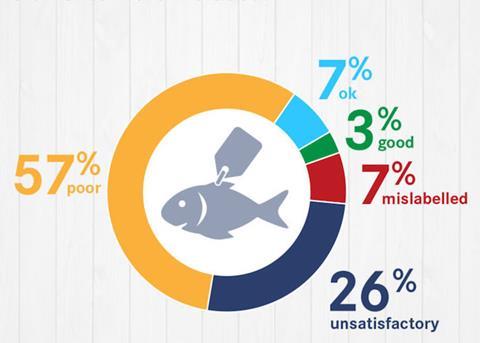
The SeaChoice project found that just 1% of the seafood tested across Canada was not what the label said it was and 7% of tested seafood was mislabelled where fish were sold under a name that was not compliant with the Canadian Food Inspection Agency’s labelling regulations.
In contrast, a 2008 study of North American retailers and restaurants found 25% substitution or mislabelling.
Common name labelling
Colleen Turlo, SeaChoice representative from the Ecology Action Centre, said: “The good news is that retailer efforts appear to have significantly reduced actual fraud. That said, more work needs to be done as there is still seafood being sold with noncompliant and generic common names.”
Canada only requires seafood labels to display the species’ common name and of the near 500 samples processed by SeaChoice, 5% included the species scientific name, 16% included the country of harvest, 58% included whether the seafood was wild-caught or farmed and 4.5% of labels contained information about the gear type used or farming method.
Kelly Roebuck, SeaChoice representative from the Living Oceans Society, said: “Based on our results, less than 2% of Canadian labels would meet international best practices for seafood labelling.”
Best practise
SeaChoice is in the process of sharing results with Canadian retailers, and providing them voluntary best practice guidelines for seafood labelling.
SeaChoice partnered with the University of Guelph Centre for Biodiversity Genomics’ Life Scanner program to engage 300 volunteer “citizen scientists” across Canada. Each was provided with two DNA ID kits to sample seafood in their local grocery stores.