

Marel’s new approach to removing pinbones from whitefish
Marel, the world’s largest fish processing equipment manufacturer, has set up a new unit in the research and development centre at its Icelandic headquarters.
Formed earlier this year as part of the company’s innovation team, although acting independently of it, the unit is responsible for long term thinking.
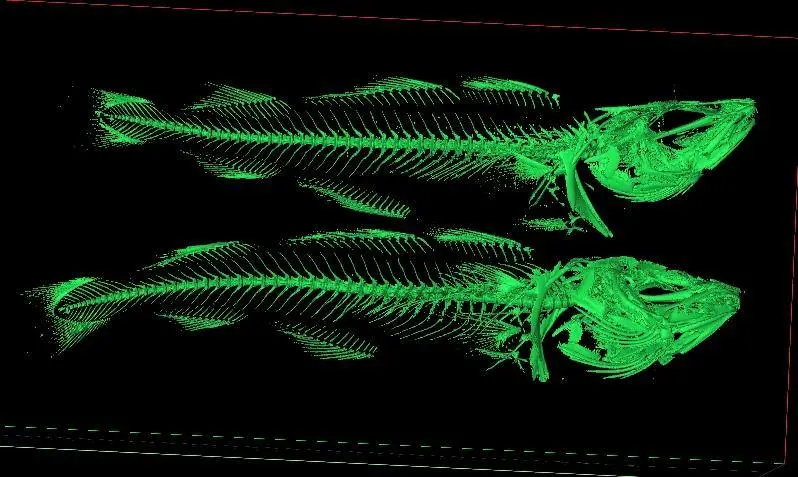
“We want a different approach,” says Kristján Hallvarðsson, director of product development. “For example, in our work to remove pinbones from fish fillets, we want to travel inside a cod fillet to understand the bone and muscle connection; to find out why the connection is so strong, and to try and loosen up the bone.
“In 2001, we carried out a project to try to remove the pinbones in cod in the same way as we did in salmon. We tried an engineering approach by looking at a machine to do this. Now we want to understand the food science behind the material and then develop the equipment.
“We want to find out why things do, or do not work. We don’t want to trust on luck, but on ideas fed back to our development team to try out.”
The new unit so far consists of two employees. One has a PhD in food engineering, plus degrees in food science, and the other a master’s degree in mechanical engineering and a bachelor’s degree in industrial engineering.
Running parallel to the unit’s focus on pinboning whitefish fillets, Marel is leading a project which it has started with SINTEF (the Foundation for Scientific and Industrial Research) in Norway, Norway Seafoods and Samherji. Called Apricot, the project is seeking to develop automatic pinboning equipment. “It is a really challenging project,” Mr Hallvarðsson says.
The equipment will consist of high resolution 3D X-ray detection, image control and a cutting mechanism for removing pinbones. “The goal is to achieve as much as 2-4% improvement in yield,” says Mr Hallvarðsson, “which represents significant added value for our customers. At present 8-10% of the fillet is removed manually by the V-cut to take out the pinbones.
“Not only will the equipment improve the yield but it will also make a more high value product. Cutting out less flesh on the V-cut will leave more on the loin.
“We aim to have a working prototype in 2014 that will be commercialised by the end of that year.”
The 3D X-ray detection aspect is the most high risk element of the project, Mr Hallvarðsson says. “Determining the orientation of the bones is critical to improving the yield.”
Marel has already developed X-ray machines which can detect bones down to 0.5mm in thickness in the final product. “This is one of our strengths,” says Mr Hallvarðsson. “We have been involved with this technology for over eight years now.”
The success of the pinboning project is crucial, for instance, for the Norwegian whitefish processing industry. If nothing is done to improve yield and increase automation in Norway within two to four years, then the risk is that there will be significantly less whitefish processing left in Norway, according to Mr Hallvarðsson. “It will be too expensive, Norway can’t compete [on cost] with re-processing whitefish in China.
“Exports of whole frozen cod are just increasing from Norway.”