A new selective trawl is being used by fishermen catching Norway lobster in the Kattegat.

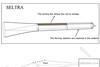
The SELTRA-trawl has been designed to replace the rearmost end of the fishermen’s own trawl. Illustration: Niels Madsen, DTU Aqua

The SELTRA-trawl has been designed to replace the rearmost end of the fishermen’s own trawl. Illustration: Niels Madsen, DTU Aqua

After decoding the behaviour of Norway lobsters and cod, researchers from DTU Aqua in Denmark developed the SELTA-trawl, which ensures that fewer cod end up as bycatch in the Norway lobster fishery.

The Norway lobster fishery is the most economically important fishery in the Kattegat, however, the cod population has declined severely in the last 20-30 years. Senior research scientist, Niels Madsen from DTU Aqua says that if it had not been possible to reduce the bycatch of cod by implementing the SELTRA-trawl, the Norway lobster fishery would have to be reduced significantly in order to protect the cod. Mr Madsen was in charge of developing and testing the SELTRA-trawl.

Challenge

The challenge for the researchers was to design a trawl that selectively catches Norway lobsters while letting cod and other unwanted bycatch escape through the meshes. Norway lobsters are relatively small, and a small mesh size is thereby required to retain them in the codend. These small meshes also retain fish the size of or larger than the Norway lobsters, which is the reason that previously there has been a great deal of bycatch when fishing Norway lobsters.

The researchers came up with the idea of replacing the traditional round codend with a codend shaped like a square box. This square-shaped box proved to be more stable in the water, enabling the researchers to take advantage of the cods’ and Norway lobsters’ behaviour.

When using this codend, the researchers discovered that the Norway lobsters are passive and prefer the bottom part of the codend, while the cod are more active and prefer the upper part of the codend and try to swim against the current to escape.

Sorting box

Based on the knowledge of the differences in behaviour, the researchers at DTU Aqua created the “sorting box” that has a larger mesh size and is placed in the front end of the SELTRA-trawl, allowing the cod to escape.

In order to keep the costs of the SELTRA-trawl relatively low, the SELTRA-trawl was developed to be added to the fishermen’s own trawl.

“The fishermen fishing for Norway lobsters have their own trawl already, and all they need to do is to place the seven metre long SELTRA-trawl with the sorting box and the square codend instead of the rearmost part of their own trawl. In this way, the fishermen do not have to buy a complete new trawl,” explains Mr Madsen.

Project SELTRA was initiated in 2005 and completed at the end of 2008. Then the SELTRA-trawl was tested at the Norwegian company SINTEF’s flume tank in Hirtshals.

The SELTRA-trawl has been used on commercial fishing vessels in the closed areas in the Kattegat. The closed areas are areas in which the Danish Ministry of Food, Agriculture and Fisheries has prohibited cod fishing in order to protect spawning cod.

“In some places in the closed areas, the fishermen have been required to use the SELTRA-trawl when fishing for Norway lobsters. The fishermen, who have now used the SELTRA-trawl for a couple of years, say that they have not experienced significant reductions in the amount of Norway lobsters that they catch,” says Mr Madsen.

He concludes that during the development work and following tests, the researchers have seen up to 90% of the cod escape from the SELTRA-trawl.