


Scaling up
At the end of November 2022, kelp restoration and sea urchin aquaculture venture Urchinomics opened a commercial ranching site in Nagato, Japan, with seafood processor Maruyama Suisan. In attendance were guests including existing and potential Urchinomics investors, ENEOS Innovation Partners, representatives of the Norwegian embassy, the Nagato City mayor, National Federation of Fisheries Co-operative Associations, Yamaguchi Fisheries Coops executives and selected local fishers and restaurant owners.
“We are incredibly excited by the speed and quality of products soon to be brought to market,” said Brian Tsuyoshi Takeda, CEO and Founder of Urchinomics. “This launch further proves the viability of our business model. Although both Urchinomics and Maruyama Suisan invested in the venture, it was supported by visionary partners including Norinchukin and Hagi Yamaguchi Shinkin Bank, who provided bank financing to the Nagato operations.”
After meeting for the first time at the Seafood Show in Osaka in 2020, Takeda and the CEO of Maruyama Suisan, Shinta Yamada, entered into a collaborative agreement, which resulted in Urchinomics and Maruyama completing initial ranching trials with a flow-through system in 2021.
Following a spate of system tests, ranching is now underway at the 35-tonne Nagato facility.
Local strategy
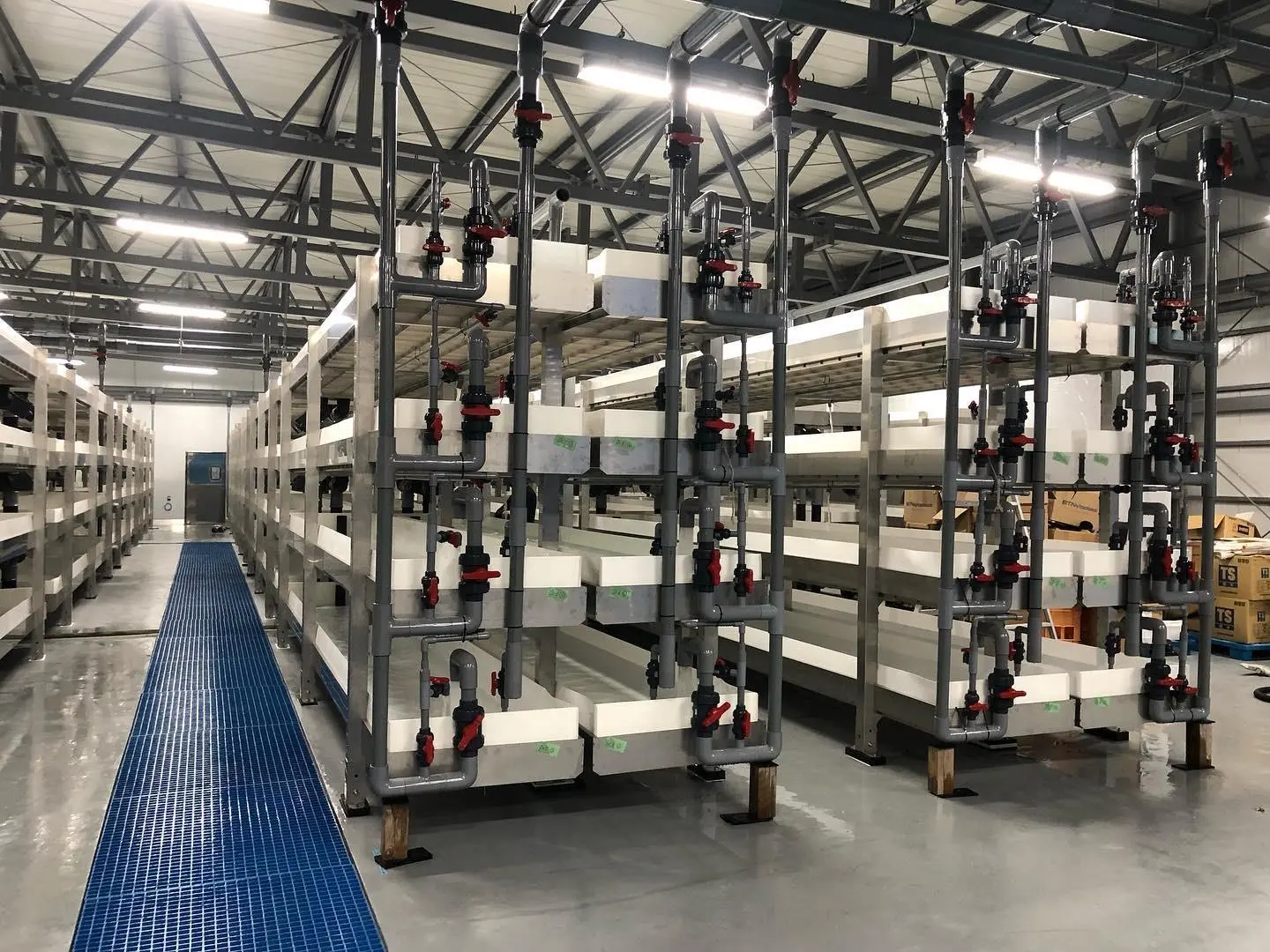
Compared to Urchinomics’ first site in Japan, which had 84 raceways, the Nagato facility houses 200 raceways using a recirculating aquaculture system (RAS). This is a more typical commercial size operation for an urchin ranch in Japan, explained Takeda.
The size is also due to Japan’s very fragmented coastal fisheries industry, while real estate for buildings like ranches is relatively small.
Urchinomics’ strategy in Japan will be to build smaller ranches throughout the country in comparison to establishing a handful of very big facilities in countries such as Norway or Canada.
“Construction of the Nagato facility officially started in March, with testing completed about a week or two before opening,” said Takeda. “As Covid restrictions lifted, we were able to send our European technical team to Japan to see how the facility was being constructed and make any necessary adjustments. We expect to sell our first batch of ranched urchins from the new facility in January 2023.”
Engaged markets
With local demand extremely high and Japan already a sufficiently large market for urchins, the Nagato facility will first target local regions in western Japan before expanding to big urban centres like Osaka, Kyoto, Kobe and eventually Tokyo, once there is more product than local markets can absorb.
But Takeda believes that most urchins from the Nagato facility will be bought by customers in the region for some time to come.
“There are key markets, such as Hong Kong, Singapore and Taiwan, that are willing to pay high prices and where it may make economic sense to establish a brand and export small quantities so that we can develop those markets in the long term,” said Takeda. “But for now, the vast majority of our products are likely to be consumed locally and regionally. Also, our focus now is about proving to ourselves and our investors that we can operate at scale before we deploy elsewhere.”
By partnering with local fisheries and paying local fishers to harvest the urchins, Urchinomics engages with local stakeholders and creates a supplemental income stream for fishers, bringing direct economic value to communities like Nagato.
The company also has a co-investment approach in which local stakeholders, including banks and other financing partners, are invited to co-invest. While providing opportunities such as these, Urchinomics is planning to scale-up its pilot sites worldwide and replicate its work in Japan in other countries like eastern Canada and Norway.
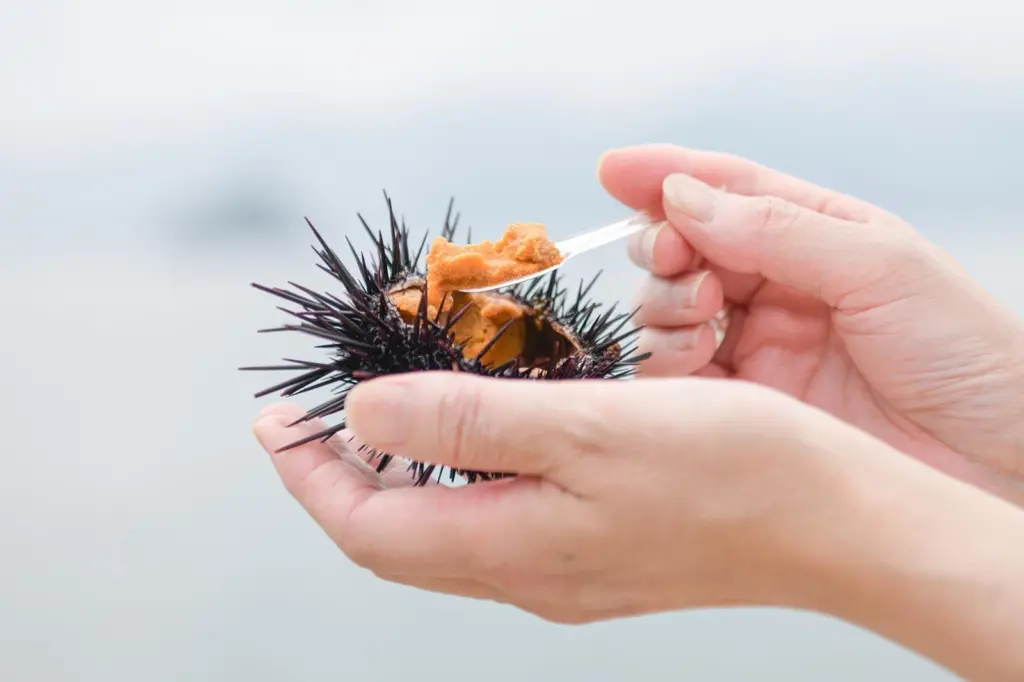
Urchinomics, and its Japanese subsidiary Uninomics K.K, is a pioneering aquaculture venture that aims to turn ecologically destructive sea urchins into high valued seafood products that can be consistently supplied nearly year-round.
The Urchinomics methodology helps restore kelp forests, which in turn supports greater marine biomass, biodiversity and capacity to sequester atmospheric CO2, all while creating meaningful, full-time employment in rural, coastal communities around the world.
Related Articles
 AQUACULTURE
 AQUACULTURE
 AQUACULTURE