


Norwegian RAS venture boosted by nanobubbles
Nanobubble technology leader Moleaer Inc has reported that significant results were achieved from its recent collaboration with Lødingen Fisk, a recirculating aquaculture system (RAS) facility in Norway and early adopter of the new technology.
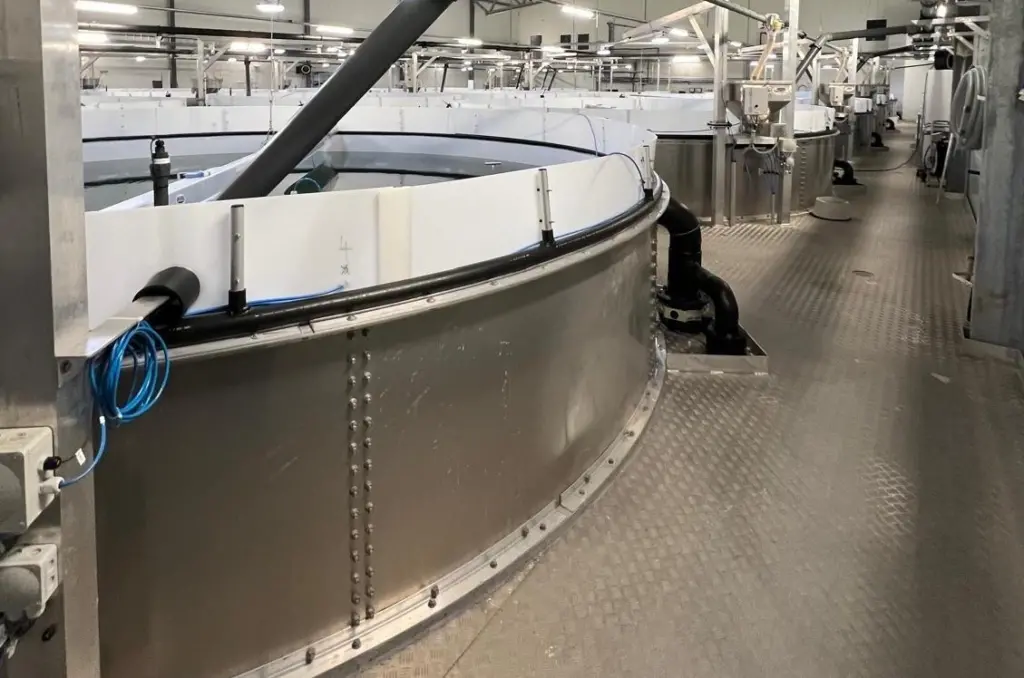
According to Moleaer, the incorporation of its Trinity Nanobubble Generator and the optimisation of key operating parameters led Lødingen Fisk to achieve notable performance improvements in water quality, fish health and operational efficiency.
Lødingen Fisk, which manages over 1.7 million Atlantic salmon, recorded the following gains:
A 94% oxygen transfer efficiency – increased by 71% compared to conventional methods, enhancing fish health and growth. A 23% increase in dissolved oxygen and a 30% reduction in water
Turbidity – resulting in a 67% decrease ozone usage, cutting operational costs and contributing to a cleaner, more sustainable environment
Enhanced biofilter efficiency – nitrite accumulation reduced by 70%, with ammonia nitrification rates improving by over 60%, leading to more efficient waste processing and system optimisation
Biofilm scrubbing effect – nanobubbles loosened biofilm from surfaces, increasing suspended solids, which were then filtered out, improving overall water quality. Moleaer’s study showed that within the first 48 hours of nanobubble integration, there was an immediate increase in oxygen transfer and biofilm removal. The second set of measurements, taken after 50 days, revealed clearer water and improved nitrification rates, helping to significantly reduce toxic nitrite accumulation by 70%
“Our work with Lødingen Fisk demonstrates the transformative potential of nanobubble technology to unlock new levels of productivity within the aquaculture industry,” said Jan Eric Haagensen, Senior Director of Scandinavia at Moleaer. “The results not only validate our technology but also demonstrate how strategic application can drive substantial improvements, offering a pathway toward improved fish welfare and more efficient, cost-effective and sustainable aquaculture facilities.”
Moleaer added that these gains highlight the importance of not only introducing advanced technology but also integrating it into systems with precision. It said that Lødingen Fisk experienced the benefits of this approach through lower feed conversion rates (FCR), improved fish growth and reduced operational expenses.
Nanobubbles, typically measuring between 80-200 nanometers in size, remain suspended in water for extended periods. Their unique properties, including neutral buoyancy and strong negative surface charge, allow them to increase oxygen transfer efficiency and improve water quality by removing biofilm and particles from the water.
Related Articles
 AQUACULTURE
 AQUACULTURE
 AQUACULTURE