




Krill fishing companies back call to protect Antarctic Ocean
A Greenpeace campaign to protect the Antarctic Ocean, backed by 1.7 million people globally, has received the unprecedented support of the vast majority of krill fishing companies operating in Antarctic waters. The companies making the commitment, Aker BioMarine, CNFC, Insung, Pescachile and Rimfrost, represent 85% of the krill fishing industry in the Antarctic and are all members of the Association of Responsible Krill harvesting companies (ARK).
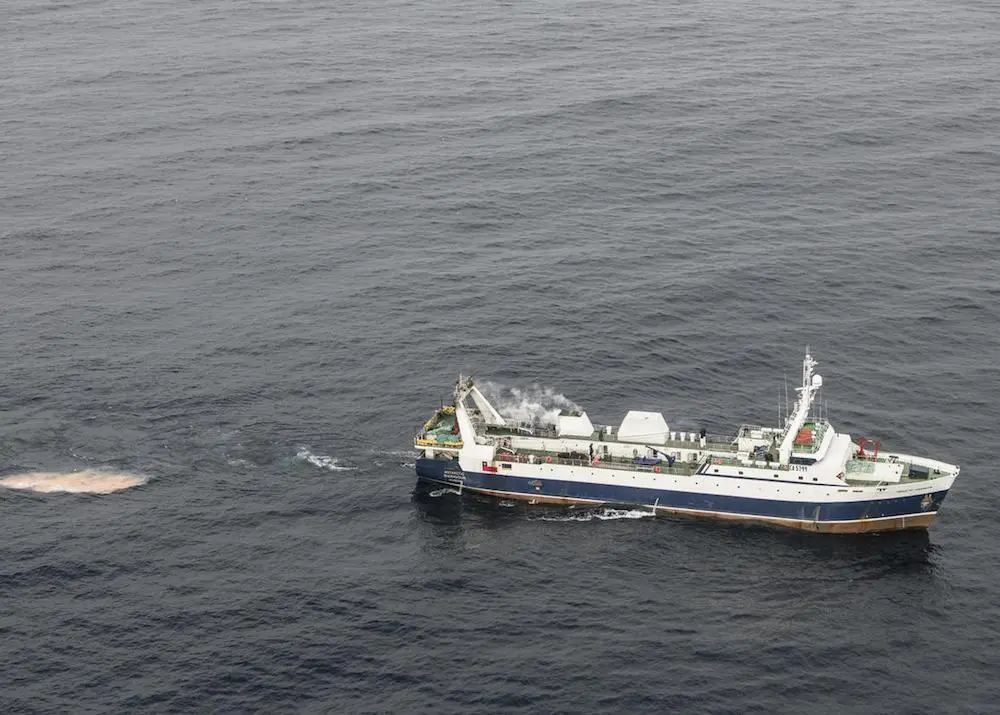
The move was announced at Greenpeace’s Antarctic 360° event in the UK, and this will see this group of the largest krill fishing companies operating in the Antarctic voluntarily stop fishing in huge areas around the Antarctic Peninsula, including ‘buffer zones’ around breeding colonies of penguins, to protect Antarctic wildlife. Krill is a small crustacean which is a keystone species in the Antarctic food web, eaten by penguins, seals, whales and other marine life.
The companies have also pledged to support the scientific and political process for the creation of a network of large-scale marine protected areas in the Antarctic, including areas in which they currently operate. The companies are all members of the Association of Responsible Krill harvesting companies (ARK), and represent 85% of the krill fishing industry in the Antarctic.
“Safeguarding the Antarctic ecosystem in which we operate is part of who we are. Our ongoing dialogue with ARK members, scientists and the community of environmental NGOs, including Greenpeace, is what makes additional efforts like this possible. We are positive that ARK’S commitment will help ensure krill as a sustainable and stable source of healthy omega-3s for the future,” said Aker BioMarine EVP Kristine Hartmann.
“Through our commitment we are showing that it is possible for no-fish zones and sustainable fisheries to co-exist. Our intention with this commitment is to support CCAMLR’s work on establishing a network of large-scale science-based marine protected areas in the Antarctic.”
In dialogue with Greenpeace, these leading krill companies have committed to stop fishing in some of the identified ecologically sensitive areas recommended for protection. From 2020, these krill companies will observe a permanent closure of these areas, whilst continuing to support the process to create a vast protected area in the region.
“WWF welcomes the initiative by Aker BioMarine and other ARK members to voluntarily commit to protecting Antarctica and its extraordinary wildlife,” commented Chris Johnson, WWF’s Antarctica programme lead.
“A comprehensive and effective network of marine protected areas surrounding the continent – which must include no-take marine sanctuaries – is essential for safeguarding biodiversity and improving sustainable fisheries. The accelerating impact of humanity on fragile ocean ecosystems, including from climate change, makes this commitment to Antarctic protection all the more timely.”
“Many animals, including penguins, seals and whales, depend upon krill in the Antarctic,” said Dr Phil Trathan OBE, Head of Conservation Biology at the British Antarctic Survey and Lead Ecological Adviser for the UK Delegation to CCAMLR.
“For over 20 years the Conservation Biology group at BAS, has worked alongside the international community, tracking key species to identify favoured feeding areas at different times of year. This work underpinned the UK call, from 2016, for the Commission for the Conservation of Antarctic Marine Living Resources to prohibit krill fishing in coastal zones adjacent to the Antarctic Peninsula, especially during the summer breeding season,” he said.
“CCAMLR has yet to take such a step, so it is to be welcomed that the majority of krill companies have decided to take these voluntary steps. Ongoing work is still required to assess the risks associated with krill fishing practices, so I hope that these companies will be equally responsive as the science continues to develop.”
According to Kristine Hartmann, who heads Aker BioMarine’s Transformation department and holds overall responsibility for sustainability, ARK has Chilean, Chinese, Norwegian and Korean members and its mission is to facilitate an industry contribution to an ecologically sustainable krill harvest.
“Our members agree that the industry must develop sustainably to ensure long-term viability of the krill stocks and the predators that depend on it. Today, we are moving forward with a pioneer initiative, implementing voluntary restricted zones for the krill fishery in the Antarctic Peninsula. We hope to help the scientists collect information which allows us to better understand the krill’s behaviour and the interactions of the fishery with other predators in the Antarctica,” she stated.
Related Articles
 FISHERIES
 FISHERIES
 WORLD FISHING EVENTS