



It may seem strange to start a series of processing columns by talking about packaging, writes new World Fishing columnist, Andrew Martin. But packaging is just as much an integral part of the business of selling fish.
More than 30 years ago, the fish technologist for Marks & Spencer, an upscale British retail chain, told an audience of fishing executives in Hull, UK, that unless a customer could be persuaded to part with his or her money to buy a pack of fish, then the fishermen might just as well not bother to put to sea.
Marks & Spencer, which only sells packaged fish, used to claim that it was the country’s top fishmonger, so knows how to sell seafood.
Those were the days when the top fishing skipper in Hull used to win a prize for landing the most fish. The fact that the fish could be 15 days old when landed and very nearly at the stage when it was not fit to eat, didn’t seem to matter.
Fortunately, the industry has moved on since then and fishermen realise that quantity is not the be-all and end-all of their industry.
So what part does packaging play in persuading people to buy fresh (chilled) fish? People don’t like to handle fresh fish. It is slimy to the touch and can bring with it a lot of moisture or ‘drip’ so can’t be carried with other shopping. It can smell in the refrigerator at home they say.
So the trend to packaged fish is unavoidable for these reasons alone. But packaging does a lot more. It acts as a marketing tool. A customer has to be persuaded to pick up fish from the chill cabinet in the first pace, so it has to look attractive.
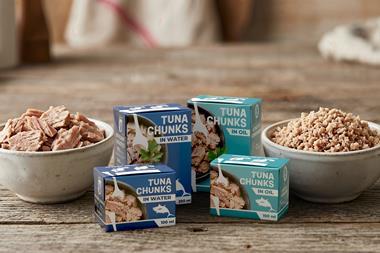
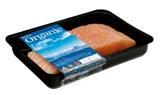
Processors use packaging to re-enforce their brand image and get a message across about the product inside. It can tell the customer that the product is convenient and easy to use. It can carry information about nutritional value, provide cooking and storage instructions, and so on.
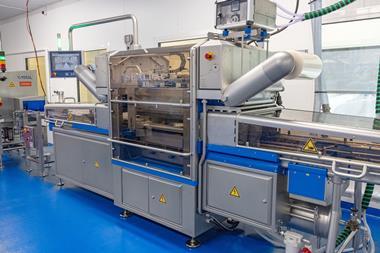
More than ever now, however, packaging is used to prolong product shelf-life. This can be done by altering the gas mixture inside a pack so it does not contain just air, but a controlled mixture of gases – oxygen, carbon dioxide and nitrogen. Thus the rate of spoilage of the fish is reduced depending on the percentage of each gas included.
Pelagic fish have a high oil content and spoil more rapidly than white fish when the oxygen level is high. So for these species it is reduced – it can be excluded altogether, of course, in a vacuum pack. The presence of carbon dioxide extends shelf-life by preventing the growth of spoilage micro-organisms. Nitrogen is an inert gas and therefore added to make up the necessary volume required.
It is unlikely that what is usually referred to as modified atmosphere packaging (MAP) will be used onboard a fishing vessel for individual retail packs, but it could be used for packing fresh fish in bulk. Any technique for prolonging the shelf-life of a highly perishable product has to be considered.