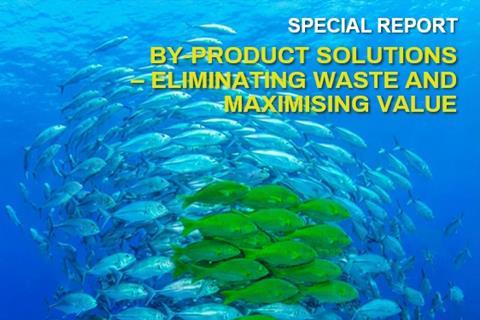



The International Seafood Sustainability Foundation (ISSF) has adopted three new and two amended conservation measures to facilitate what it calls continuous improvement across global tuna fisheries.
These five measures, which go into effect on 1 January 2018, cover reducing incidental capture of sharks and marine turtles, supply and tender vessel monitoring, trans-shipment observers and capacity management.
“ISSF continually reviews its conservation measures to update existing standards or to create new measures based on scientific research, fishing methods and conservation needs,” said ISSF President Susan Jackson.
“With about 75% of the world’s canned tuna processing capacity conforming to multiple ISSF measures for sustainability best practices, and with major tuna companies being transparently audited against those measures, we have a real opportunity to make changes on and off the water.”
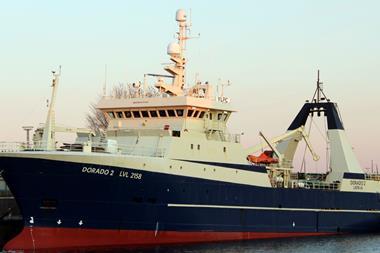
Two new measures are the first to affect longline vessels specifically on the back of the ISSF Status of the Stocks report showing that longline fishing accounted for 12% of the tuna catch globally in 2015.
ISSF is committed to supporting the global use of circle hooks and monofilament lines and or the prohibition of “shark lines” to reduce the catch of non-tuna species, by longline vessels.
To that end, the new ISSF Conservation Measure 3.6 Transactions with Vessels Implementing Best Practices for Sharks and Sea Turtles has been adopted to further support the implementation of RFMO conservation measures for bycatch mitigation in longline tuna fisheries.
The ISSF measure requires participating tuna companies to conduct transactions only with those longline vessels that commit to follow such best practices to protect sharks and marine turtles.
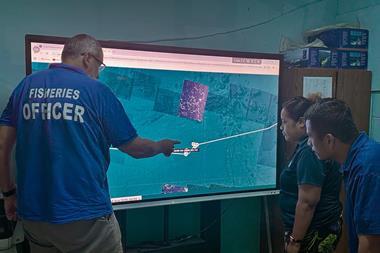
ISSF has adopted new Conservation Measure 7.4 Supply and Tender Vessels to further support the implementation of RFMO conservation measures for supply and tender vessels, and the collection of data and effective monitoring, control and surveillance (MCS) of such vessels.
The new measure applies to ISSF participating companies that have controlled supply or tender vessels that operate with purse seine vessels fishing for skipjack, yellowfin and bigeye tuna.
New ISSF Conservation Measure 4.4 (c) Transshipment At Sea – Observer Coverage requires tuna companies that do business with large-scale longline vessels to conduct transactions only with longliners whose at-sea transshipment activities are 100% monitored by human observers, either onboard the main vessel or onboard the transshipment vessel.
This measure aims to improve tuna product traceability and to curtail illegal, unreported, and unregulated (IUU) fishing.
Amended ISSF Conservation Measure 6.2(a) Requirements for Inclusion in Record of Large-Scale Purse Seine Vessels Fishing for Tropical Tunas, first adopted in 2012, is amended to clarify when a new large-scale purse seine vessel is permitted to be added to the ISSF Record of Large-Scale Purse Seine Vessels as a replacement for a vessel already on the Record that has sunk, has been scrapped, or otherwise permanently transferred out of the tropical tuna fishery.
Lastly, amended Conservation Measure 7.2 Threshold Requirement for PVR Listing, first adopted in 2014, is amended to specify procedures regarding ISSF Record of Large-Scale Purse Seine Vessels and ProActive Vessel Register listing that must be followed when a vessel owner is replacing a vessel that is being scrapped. Read more on the new conservation measures at https://iss-foundation.org/