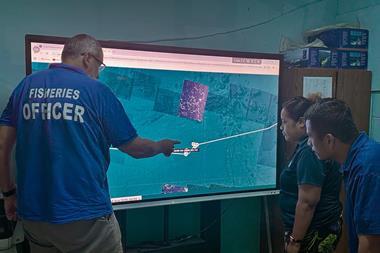





The International Seafood Sustainability Fund (ISSF) is calling for the use of vessel monitoring systems (VMS) by regional tuna fisheries management organisations and national governments globally.
Released in its position statement ahead of the 19th International Commission for the Conservation of Atlantic Tunas (ICCAT) taking place in Italy next week, ISSF said the ICCAT’s measures for VMS are “outdated” and not in line with international best practices.
“ICCAT is currently behind the curve on observer coverage,” said Susan Jackson, president, ISSF. “Comprehensive observer coverage is a critical component of sustainable fisheries management. Observer coverage not only aids in combating IUU fishing activities and monitoring compliance with conservation management rules and national laws, it also results in the collection of much needed data.”
“The lack of 100% observer coverage in the purse fishery in ICCAT is a serious impediment to successfully and sustainably managing these fisheries,” she added. “ISSF is urging ICCAT to extend 100% coverage of large-scale purse seine vessels to the entire year.”
ISSF says it also strongly supports the Standing Committee on Research and Statistics (SCRC) recommendation for the creating of a working group on FADs that involves all stakeholders and urges all ICCAT member countries to provide this data starting 1 January 2015 if they have not already done so, as required by ICCAT in 2013.
While other tuna RFMOs have adopted tuna catch retention measures, ICCAT has not taken steps to do the same. ISSF is now encouraging the adoption of a comprehensive catch retention measure for all tuna.
Other improvements addressed in the ISSF position statement include adoption targets consistent with SCRS advice for albacore and bluefin tuna to allow stocks to continue to rebuild.
The ICCAT Special Meeting will take place in Genoa, Italy, from 10 to 17 November.