


Three months that became 25 years
Gísli V Jónsson, this year’s Outstanding Icelandic Skipper, discusses his remarkable career
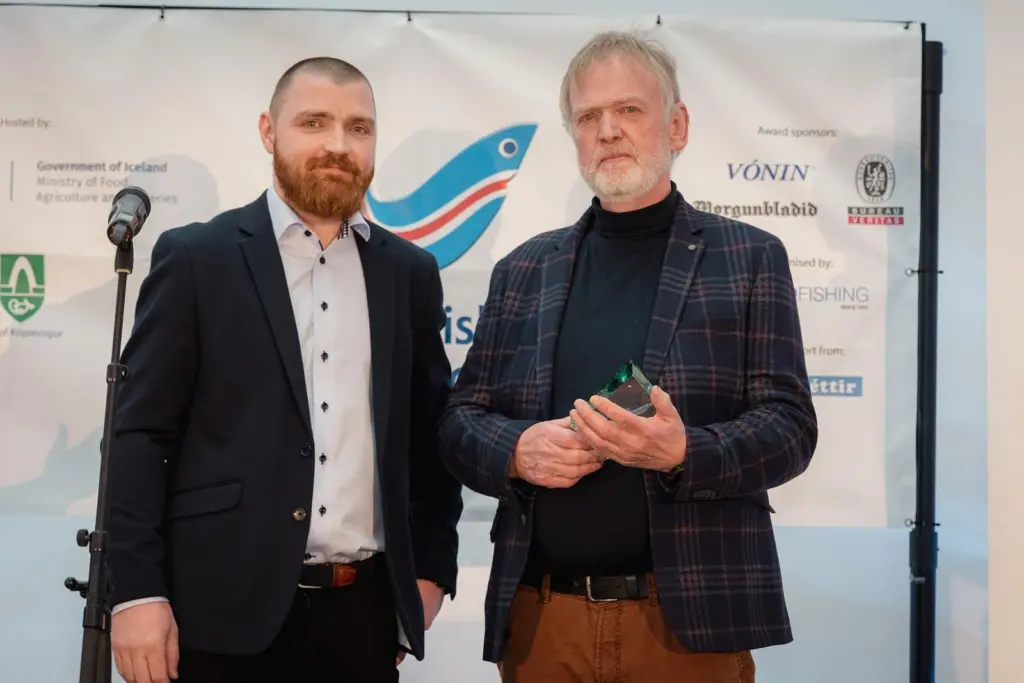
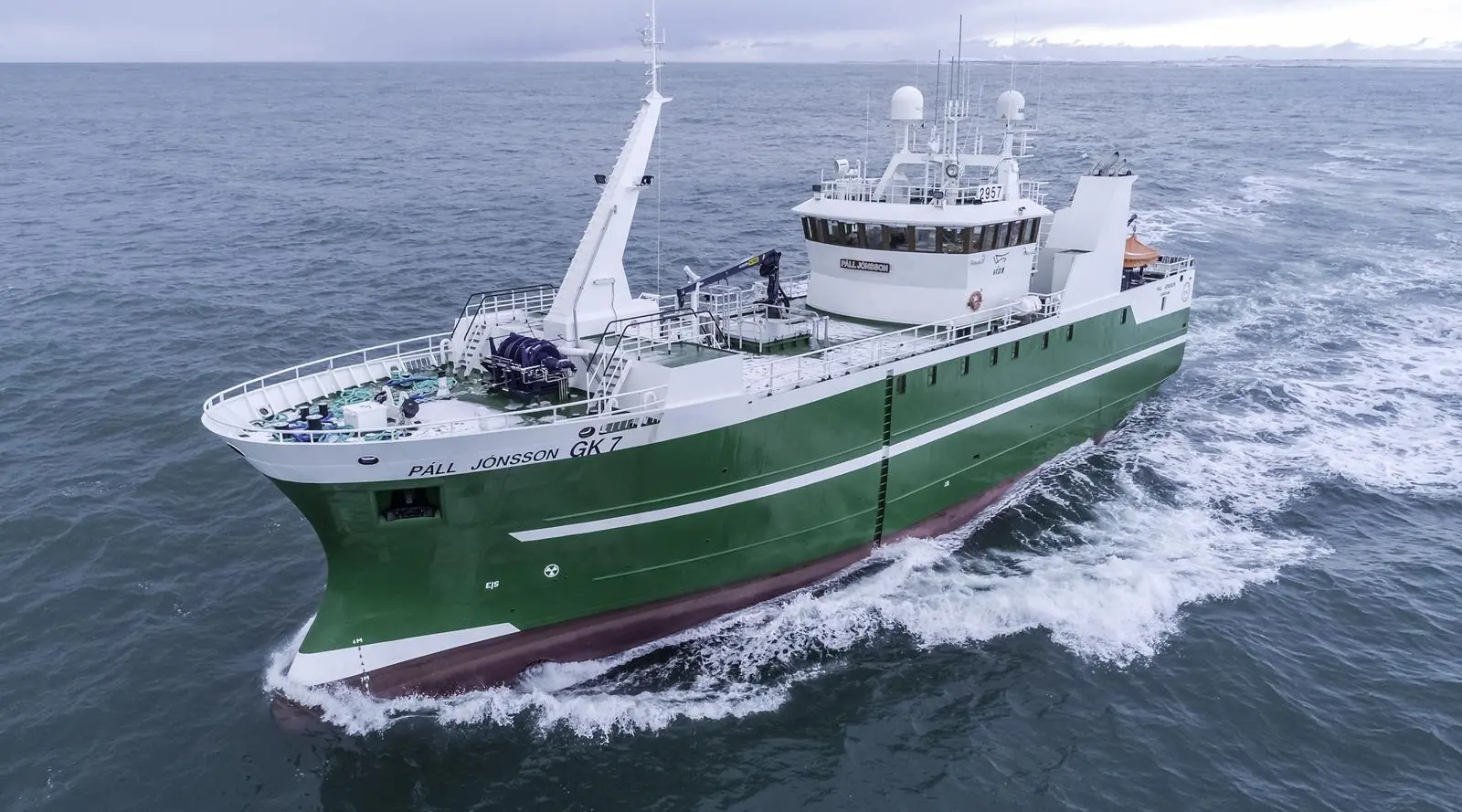
The second-half of Gísli V Jónsson’s seagoing career was spent in the wheelhouse of Vísir’s longliner Páll Jónsson GK-7 – both the original vessel and the newbuild that replaced it in early 2020. In fact, he joined the Grindavík fishing company for what was expected to be just a few months, which turned into 25 years, until he retired last year after more than 50 years at sea – practically all of them as skipper.
“I’m from the countryside – east of Stokkseyri and went to sea when I was coming up to 16. That was the 1965-66 season, fishing from Stokkseyri,” he said.
Keen to broaden his horizons, he went from there to fishing from Eskifjörður and later Neskaupstaður in the east of Iceland. “This was all purse-seining for herring in the North Sea, and this took us to land fish in Fraserburgh and Peterhead in Scotland, sometimes in the Faroes, in Bremerhaven and Cuxhaven in Germany, Skagen and Hirtshals in Denmark, and in Bergen in Norway,” he said.
This was also when he took time out to spend a couple of winters in Reykjavík to study for his skipper’s ticket.
“At that time there was nothing unusual about doing this at a young age,” he said. “I was 19 and one of the crew of Barði when I went to Reykjavík to navigation college after the 1961 herring season and graduated in 1971.”
Back in the east of Iceland with his brand-new full skipper’s qualifications and by now one of the crew of purse seiner Birtingur, things changed when he saw an advert in a newspaper for a skipper on a boat fishing from Eyrarbakki, not far from where he had grown up.
“I applied and hadn’t expected to get the job. But this was the time when the new stern trawlers were joining the fleet, and nobody wanted to work on the smaller boats. So, I started as skipper on 1 January 1973, and have only sailed as skipper after that.”
He stayed in Eyrarbakki until 1975, before skippering several other boats and in 1983 joining fishing company Glettingur.
“At that time this was the largest family-run company in Thorlákshöfn, with netting boats, and they also had the foresight to introduce seine netting. Up to 1990 I was skipper of Dala-Röst, seine netting for groundfish and trawling for prawns. We did very well and had the top landing spot a couple of times,” he said.
“Then I took the new Stafnes, which was seine netting, as well as purse seining for the autumn herring season, with the catch frozen on board.”
A few years on, Jónsson and engineer Steingrímur Matthíasson embarked on their own venture with Freyr, and the operation was expanded with a leased vessel for fishing redfish and in the Loophole. Although the fishing side of this went well, legal complications concerning this and other leased vessel brought the venture to an abrupt end, and Freyr was also sold in 1996.
Joining Vísir
“Vísir bought Freyr in 1996, and they had difficulties with the boat in getting it fishing properly,” he recalled. “I went on board for what was supposed to be three months, which turned into 25 years.”
The 200gt Freyr was alternating seine netting and longlining when the regulatory regime provided some added advantages.
In 2001, Vísir bought Örfirisey, which became Páll Jónsson, named after one of the company’s founders, and Jónsson remained skipper of this vessel right up until steaming its replacement home from the Alkor Shipyard in Poland in 2020.
“We did well on the old Páll Jónsson, and always had a good crew,” he said, adding that throughout his career he had always been able to keep good crews with him.
“The old Páll Jónsson was a good ship, but it was tired. It had been built in 1967, and we did well. But it had been through a lot, and it was time to upgrade,” he said.
Vísir went to Navis to design the new Páll Jónsson, which was built in Poland, and resulted in expected retirement being postponed for a couple of years.
“I’ve known chief engineer Ingibergur Magnússon since were children, and we have sailed together for the last 20 years. We were both looking to retire, but also wanted to be involved with the new longliner,” he said.
Although the new vessel was built on largely classic lines, it still contains a wealth of new technology on the catch handling deck, the engine room and especially in the wheelhouse, where the usual control position on the starboard side, overlooking the hauling hatch, was done away with. Instead, there is a central control position and the skipper monitors activity at the hauler via CCTV.
“This was the arrangement I wanted when the layout was being designed,” he said. “There were some big changes that took place there and I was proud of us old guys who coped with the 20 or so computers in the wheelhouse, and more throughout the ship. But an echo sounder is still an echo sounder, regardless of the technology that presents the information. Technology alone is no benefit if you don’t know how to use it, and I have always made a point of keeping up with technological advances. That’s very important.”
70,000 tonnes
New Páll Jónsson has the latest Mustad systems on board, but the reality is that the rate of change in longlining technology over the years has been unbelievably slow, Jónsson said.
“The same baiting machines worked for years and years, and there are baiting machines in use today that date back to the 1980s. As long as they get proper maintenance, they last practically for ever,” he said, adding that changes came with the introduction of new technology in developing computer-controlled systems.
“The Mustad gear we have used just worked right from the start, so there wasn’t a great need for changes.”
There have been a few other changes, such as the switch to Pacific saury when this was seen as a bait that would be less likely to attract cod in the years when cod quotas were particularly tight, but now herring and squid are used as the main bait types.
Despite being retired and now living in the countryside an hour’s drive to the east in the area where he grew up near Stokkseyri, the links with Grindavík and Vísir remain strong.
“Vísir is a family company, and I know them all. These people are friends and I’m always welcome there. I don’t miss the work, but I can’t help missing the company. That’s where my friends are,” he said.
Jónsson retired after running the new Páll Jónsson for a year-and-a-half and calculated that over three vessels during his time with Vísir, he and his crew landed around 70,000 tonnes of fish – and it’s noticeable that in making this comment, he used the words “my crew and I”, highlighting the importance of a co-ordinated crew in fishing successfully, not least over such a long period of years.
“Páll Jónsson has already had its best year ever this year and they’ll have finished their quota by mid-June, so won’t be back fishing until the new quota year in September,” he said. “Right now, longlining is better it has ever been.”
Related Articles
 INTERVIEWS
 PROCESSING & REFRIGERATION
 PROCESSING & REFRIGERATION