



Seaweed farming up close
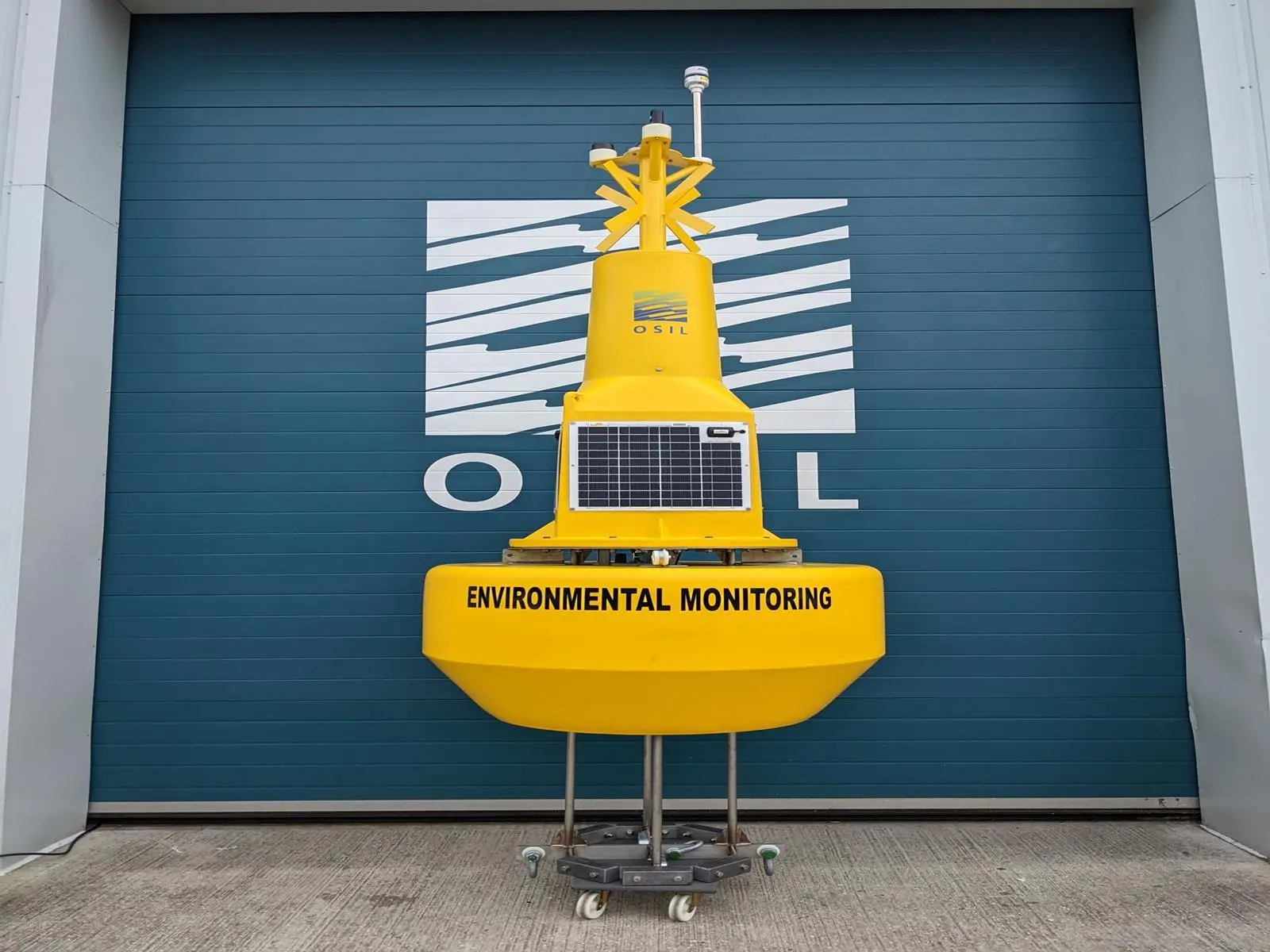
As production gathers pace worldwide, one UK firm has launched a new buoy to help farms better monitor and cultivate their crops.

Celebrated for its sustainability credentials, seaweed has amassed considerable attention in recent years, not least because it has minimal reliance on limited natural resources, requires no fresh water, no fertilisers and no pesticides. Seaweed also has multiple positive impacts on the ocean, such as increasing biodiversity, countering acidification and improving water quality.
Today, it is the fastest growing of all aquaculture sectors globally, with an estimated worth in excess of US$5 billion a year. And in response to this growth, one UK company is tapping into the sector with the launch of a new Aquaculture Monitoring Buoy.
Developed by marine systems manufacturer Ocean Scientific International Ltd (OSIL), the buoy is designed to provide data to meet the demands of an up-and-coming sector.
“We’ve been manufacturing buoys for over 20 years and integrating a range of oceanographic sensors into them to monitor parameters such as temperature, dissolved oxygen, pH, waves, currents and meteorological conditions,” Iain White, Applications Manager at OSIL, told WF.
“The seaweed farming market is growing, and so too is the demand for a better understanding of the environment in which seaweed grows and the impacts on that environment. Our work, and the data and information required by seaweed farming, are closely connected, which is why we decided to focus on this particular sector.”
Specific data needs
The new buoy offers a full range of meteorological data including waves and currents, as well as information on water quality. A Pan Tilt Zoom (PTZ) camera with up to 40X zoom is also installed to help farmers remotely view their sites and moorings in high definition to identify any problems and better manage their mooring systems during the growing season.
Multiple secure telemetry options – LoRaWAN, GPRS, 3/4/5G and satellite – also provide meteorological and water quality data. And, thanks to its flexibility, one buoy per site is usually sufficient to meet the needs of most farms.
OSIL decided to work with seaweed farming for two other reasons, said White – a lack of infrastructure and monitoring equipment in the sector compared to large-scale fish farms, and because seaweed farms are more prone to requiring a standalone platform that can provide farmers with the information they require.
“The buoy measures current speed and direction, wave height, temperature, salinity, dissolved oxygen, pH, the level of nitrates and phosphates and solar radiation available per metre square,” he said. “It can also look on and below the surface of the water to see how much of that light is available at certain depths.
“We have quite a few requests for camera systems and being able to monitor farms remotely, which has a lot of value in risk management and helps to reduce operator costs as it eliminates the need to send a boat out to a farm.
“Our buoys are also always tailored to our customers’ requirements. Some are looking to monitor something relatively simple like water quality only, while others want more detailed information such as how the water is moving around an area or tension on the seaweed lines. In this situation, we would run many more sensors that require larger platforms and more batteries.”
White continued, “The buoy can be set up to provide alert signals when certain parameters are reached but the onus is on the operator to ultimately interpret and react to this information.”
Environment adaptability
Adhering to stringent environmental standards is key to seaweed farming. Due to its rapid growth and increasing economic importance, it is likely to face more challenges, while negative ecological implications due to large-scale seaweed cultivation is always a possibility.
One example of such an implication is the altering of marine habitats, while overproducing seaweed may reduce the amount of natural light that is available to other marine species that rely on photosynthesis. In this sense, buoys and sensors will be required to help farms responsibly select and maintain growing sites and better understand the conditions at those sites.
OSIL’s new buoy will offer farmers peace of mind by providing information and data to calculate such things as the right time to put seed in the water or where to site their farm. Maximising the potential of seaweed farming requires a full understanding of the environment and biological interactions that can influence the growth of seaweed during cultivation, explained White.
The company is currently working with Norway and Scotland, with other enquiries coming in from Africa and Europe. With all trials now complete, feedback has been positive.
“The buoy is helping farmers reduce the risks on their farms and maximise profit,” said White. “If data can be collected without having to send somebody out to a farm, that offers a sense of security and comfort as farmers can simply check in and make sure everything is ok without having to make too many manual operations. We provide the data to the customer, and they can then act accordingly – depending on what they receive.”
Tailored solutions
But there are some challenges, such as the vast differences in depths, wave heights and currents at particular sites.
There is also no single solution that meets everyone’s requirements, and the difficult balancing act of meeting client requirements, budgets and designing a system to meet demanding environments can vary from location to location, White said.
Working closely with the client and discussing these points makes it possible to put together a bespoke tailored system that aims to meet all clients’ requirements.
“Customer education is one of our biggest challenges, but our customers understand that there are limitations to the platforms that we use and it’s not one-size-fits-all,” said White.
“We are dealing with many different environments when it comes to seaweed farms. But customers can go away and use the data we provide in a way that they need to, and that leads to more efficient and streamlined operations. It’s all about how we are able to adapt to particular situations and environments in line with our customers’ requests.”
Going forward, OSIL will be continuing its efforts to promote the buoy and communicate with as many parties as possible, getting its message across to end users and working with them in line with their requirements.