


Russia in turmoil
Fish sector faces a perfect storm of export restrictions, a lack of equipment and the logistics chaos – all caused by sanctions from the west
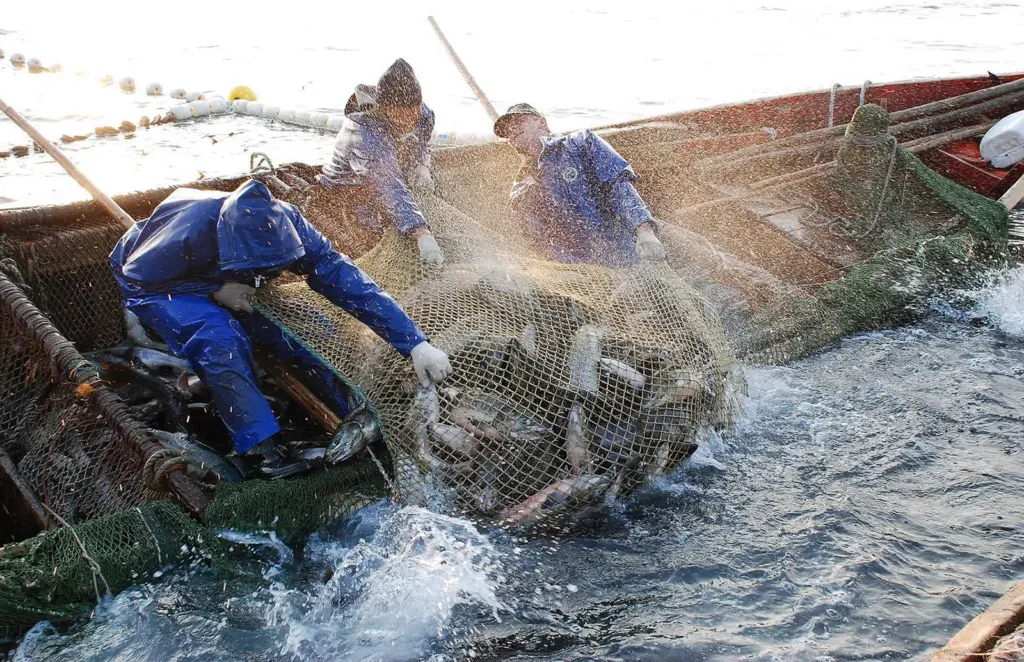
Collectively, Russian fishermen may see their revenues fall by as much as $4.3 billion this year as a result of the industry’s plummeting exports, estimates the Russian union of fishermen Varpe. Such an outcome will be in stark contrast to the 2.1 million tonnes of fish and other seafood products sold to overseas markets for $6.7 billion in 2021. Overall, Russia’s fish industry revenues amounted to almost $12.7 billion last year.
With their season already well underway, Russian crabbers are among the first to feel the sting of the Western sanctions. It’s mooted the sector could suspend operations as early as August.
In March, following the invasion of Ukraine, the United States imposed its ban on Russian seafood imports, including crab. This measure came into force on 23 June, since when Russian crab catchers have experienced difficulties exporting their crab to North America, having already seen the European market disappear in April.
In 2021, the US imported 31,895 tonnes of crab (mainly brine-frozen) from Russia, with the trade worth $1.2 billion. Russia’s total crab catch stood at 96,000 tonnes last year, and some 90% of that was sold to non-Russian customers. The sector’s overall export value stood at $2.52 billion, reported the Russian federal agency for fisheries, Rosrybolovstvo.
On top of the cease of certain trades, an acute shortage of refrigerated container capacities and ocean transport fleet have hampered export prospects in other directions too, while supplies on the domestic market are being impacted by legal hurdles.
Sergey Gusev, Deputy General Director of MaC-G International confirmed most Russian crabbers are focused on brine-freeze crab production and that retooling ships to produce live crabs would require imported equipment, supplies of which are now restricted.
Gusev told WF that MaC-G was forced to supply crab to warehouses and may suspend catching in August.
Russian Alaska pollock producers have also voiced export concerns. They catch pollock from January to April, which is known as season A, and then from August to November (season B). In 2021, Russia caught 1.7 million tonnes of Alaska pollock, exporting 780,000 tonnes, primarily to the EU. Season A passed smoothly since most pollock was contracted before the Western sanctions were introduced, but season B could look very different, with the Russian association of pollock catchers already warning there’s no market big enough to replace the EU.
Fish for roubles?
In addition to sanctions and logistics issues, Russia’s fish industry has reported problems obtaining payments for delivered goods – a situation that isn’t helped by nearly 80% of the country’s banking sector being subject to sanctions. Several fishing company sources have also confirmed that making and receiving payments in US dollars, euros and British pounds has become challenging.
In March, Russian fishermen complained that payments in US dollars not only got lost on transactions with Western companies but also with Chinese buyers. To avoid this problem, Russian authorities are mulling switching all commodity trade with Western countries to roubles.
This wouldn’t be a first. Since May, Russia has demanded European countries pay for gas supplies in roubles, while in April, top Russian lawmaker Vyacheslav Volodin said Russia should demand payments in roubles for a wider range of goods like oil, timber and agricultural products.
A spokesman for one Russian fishing company told WF the idea of exporting fish for roubles has been put forward during recent government meetings but has faced strong resistance from fishermen. He offered that as Russia tries to gain a foothold in Southeast Asia, demanding new customers pay in roubles would be like “shooting yourself in the foot”, but added that the desire to make a strong political move could outweigh common sense.
Countersanctions in the pipeline
Russia has been considering other ways of hitting foreign businesses. In June, for example, the Russian Foreign Ministry announced it had suspended its agreement with Japan on the Far Eastern fishing quotas in response to the country freezing annual payments under the agreement.
While German Zverev, President of Varpe, believes this step will have minimal impact on Russia’s fishing industry, other similar agreements may fall victim to the political standoff. For example, under the Russia-US agreement, Russia is allowed to catch 400,000 tonnes of fish in the Bering Sea annually, compared to the US’s 1.4 million tonnes.
If Russia withdraws from that agreement, it could possibly secure additional revenue of RUB 150-180 billion ($2.8-3.2 billion) for the Russian fishermen per year, estimates Varpe. Meanwhile, in March, Rosrybolovstvo chief Ilya Shestakov proposed revising the existing quotas for fishing in the Bering Sea bringing it to a level of 50:50 with the US.
Clock is ticking
There have also been concerns raised by Russian fishers over the lack of components and spare parts necessary to build new ships and keep the existing fleet running. But Maxim Kozlov, President of the fishing industry association of Sakhalin Oblast, estimates that fishing companies have sufficient resources to last for several months.
“Every company plans its own operations, but for large enterprises, we see that, in principle, the margin of safety can probably be calculated to be about a year – more or less,” said Kozlov. “We have an opportunity to repair our ships, and to understand what kind of production we lack.”
With regards to shipbuilding, Kozlov said, “I think we can hold out for roughly a year. Then it will be necessary to find internal resources. We really hope we will restore [components] production. In the USSR, we built our steamships and provided ourselves with everything we needed. Let’s hope we can raise our production and provide ourselves with the necessary spare parts.”
Despite these claims, problems sourcing spare parts are already being seen, with some fishing companies struggling to buy on the domestic market.
“Fishermen are forced to make idle runs from port to port, wasting fuel without a guarantee of finding the right spare part,” said Konstantin Drevetnyak, General Director of the Union of Fisheries of the North.
Falling demand for aquaculture
Furthermore, and in addition to its production problems, Russia’s fish farming sector is expected to be hampered this year by the population’s falling purchasing power.
Ivan Milovanov, Founder of Azov-Don Sturgeon Co, said that in 2021 his company laid out plans to quadruple production to 200 tonnes of sturgeon and 1,000 tonnes of black caviar.
“Plans can be adjusted, as the market is passing through a storm caused by huge uncertainty. Demand has changed. Our sales have decreased by about 50%, but they have not completely disappeared,” Milovanov said.
Anastasia Kharkovskaya, Deputy General Director of sturgeon producer ARC Beluga LLC, has also seen her company’s development plans scrapped due to the sudden drop in demand.
“Now we are changing plans; sales have dropped tremendously,” she said, explaining that this is not only about domestic sales, but also about exports. “In particular, we lost a buyer in Australia.”
Arsen Chomaev, Chairman of trout breeding farm Resurs SPSK, said farmers have found themselves between a hammer of rising costs, and an anvil of falling incomes.
“Undoubtedly, demand has decreased. We noted the decline even before February since trout is not the cheapest commodity. But we think that the situation in the industry will stabilise,” he said.