

Source of inspiration
Iceland is well positioned to offer the United Kingdom a lot more than just its favourite whitefish
Give a man a fish and you feed him for a day, but teach him how to fish and you feed him for a lifetime. Advocating the more bountiful benefits brought by long-term focus over those generated by shorter-term actions, it’s a well-worn proverb, but one that’s stood the test of time, with direct relevance to many different sectors today. In this regard, there’s a strong case for flagging its applicability for the United Kingdom’s fisheries and seafood industry, which in the post-Brexit/COVID-recovery landscape is ripe for some reinvention.
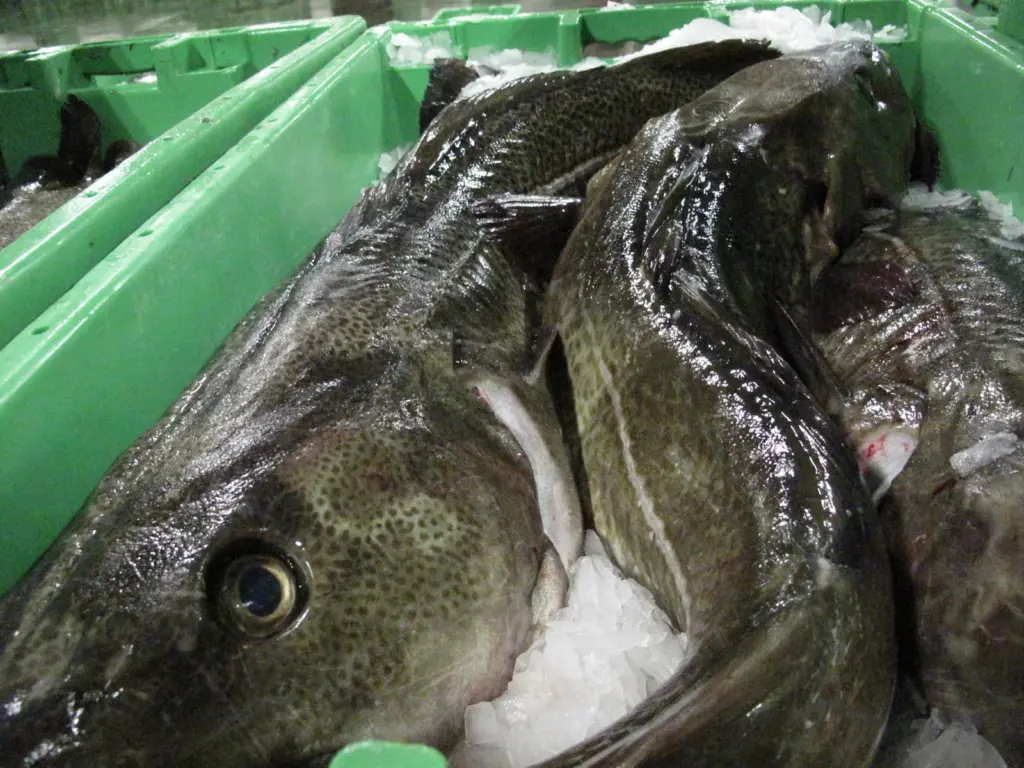
A recent meeting in London’s Fishmongers’ Hall brought together decision makers from both the UK and Iceland with the intention of exploring opportunities generated by the free trade agreement (FTA) that the two countries signed in the summer. Besides acknowledging the fact that Brits consume more Icelandic cod and haddock than any other nation, discussions also honed in on how investment in new technologies and innovation, including state-of-the-art ships and processing plants, has served Iceland’s seafood economy very well over the past few decades, including making it particularly resilient during the coronavirus pandemic.
“At first, when COVID started, we were afraid that the seafood industry would fall to its knees. But that didn’t happen. 2020 for Icelandic seafood was very good,” Fisheries Iceland’s CEO, Heiðrún Lind Marteinsdóttir, told the meeting.
“There were obviously some market failures, and some segments were worse affected than others, but with longstanding, solid business relationships in the UK, together with the strength and flexibility of Iceland’s seafood industry, we ensured a strong position, and I hope that will be the case for years to come,” she said.
Well paid
According to figures from Statistics Iceland, the country’s marine exports totalled 604,129 tonnes in 2020. Going to 95 countries, these products generated revenues of €1.7 billion, which accounted for 40% of the overall value of all its exported goods.
It was also confirmed that around 80% of Iceland’s seafood exports were sold to Europe, and that cod was the single most valuable species, accounting for 49% of 2020’s seafood export value.
Given the dependence that Icelanders and the Icelandic economy have on these natural resources, Heiðrún Lind Marteinsdóttir stressed the national importance of finding the right balance between the three pillars of environment, economy and society.
To this end, companies in the country’s fisheries sector have made significant investment in recent years, she said. At the same time, the industry also pays very good wages, with fishermen ranking highest – enjoying an average monthly salary in excess of ISK 1.3 million (approx. €8650), while jobs in processing are comparative to the national average with ISK 630,000 (€4200).
“Iceland is a high wage country and while this creates some difficulties for the fisheries sector when it comes to competition with other nations processing fish on a large scale, especially those in eastern Europe and Asia, that is precisely why Icelandic companies have been a driving force in implementing innovation.
“Unmanned processing on ships and automated processing on land are part of the competitiveness of the Icelandic fisheries sector. We cannot and will not compete with nations that pay significantly lower wages, but we have managed to tackle that problem by developing automated technologies that reduce labour costs,” Heiðrún Lind Marteinsdóttir said.
New standards

Despite such progress, the Icelandic fisheries sector is not perfect, with plenty room for improvement remaining, she said.
Therefore, in 2020, Fisheries Iceland started work on a corporate social responsibility programme for the entire industry, based on the UN Sustainable Development Goals. While this still needs work in some areas, she is positive about what it will bring to the sector.
“It was difficult, but we managed to put together a policy, and that will bring strong confidence in providing that stamp of sustainability,” she said.
At the same time, a new standard is in development that focuses on crew welfare and the provision of decent working conditions onboard vessels, advised Fisheries Iceland’s Senior Advisor for Fisheries and International Affairs, Kristján Thórarinsson.
Called “FISH” (standing for fairness, integrity, safety and health), participating companies will be able to certify their fleets, as will inshore and family-owned vessels, with the option for group certification.
Work is about to start with certification bodies and potential FISH certificate holders on pilot audits in Alaska, Namibia, Iceland, US/Canada east coast, New Zealand and Papua New Guinea, he said.
FISH will also apply for recognition by the Consumer Goods Forum Sustainable Supply Chain Initiative (SSCI) benchmark for At-Sea Operations schemes upon completion of the requisite number of audits, with this recognition demonstrating credibility in the global marketplace.
“This is business-to-business tool, providing assurances that a vessel has been audited through a credible system. It will not be a consumer facing logo or revenue generating,” Kristján Thórarinsson said.
Fisheries Iceland is also looking to extend the internationally-recognised Icelandic Responsible Fisheries Management (IRFM) scheme with the development of a shared chain of custody standard with other RFM programmes such as Alaska, and also help introduce new national RFM programmes in other markets.
Learning lessons
The UK is alert to Iceland’s success, confirmed Colin Faulkner, Deputy Director of External Fisheries Negotiations & Trade Policy with the Department for Environment, Food and Rural Affairs (Defra), which has the remit to help drive and grow the relationship between the two countries over the coming years.
“As a new independent coastal state, we look at Iceland with great interest; both because of the enormous economic importance of the country in terms of the seafood trade, but also because we have much to learn from it as an independent coastal state.
“We will be taking forward a really significant programme of reform in our fisheries over the next few years, and Iceland is teaching us many lessons – both on the fisheries side but also in the seafood trade,” he said.
Meanwhile, Sturla Sigurjónsson, Ambassador of Iceland to the United Kingdom, told the meeting that he believed the new trade relationship and possible further co-operations could be of mutual interest and benefit to both nations.
“It is always a source of pride for myself and my colleagues to discuss level of sustainability achieved by the industry, the emphasis on high quality and the awareness of the need for competitive pricing and dependable supply. All of this appeals to the discerning British consumer, who is becoming increasingly environmentally conscious and interested in clean and wholesome food.
“The UK is Iceland’s single biggest market for seafood, including high-end products, and long may this remain so,” Sturla Sigurjónsson said.
Similarly, the recently appointed UK Trade Envoy to Iceland and Norway, Felicity Buchan, shared her hopes for the “already strong relationship” that exists between the two countries, and underlined the importance that both place on fisheries.
“I see the free trade agreement as not being an end but a beginning. I see it as an agreement that not only consolidates our existing concerns but also develops them further.
“There’s no question that this relationship is very important to the UK. If we look at Grimsby and the Humber, Iceland supports 5000 jobs in that community, which is incredibly important. And we all know about British fish and chips – I understand that about 95% of the cod and haddock that goes into our fish and chip [sector] actually comes from Iceland.
“I think that there is so much more that we can do collectively. Not only in fisheries and seafood, but also across renewable energy, green power and tourism,” she said.