



Smart salmon farm enters second phase
A smart farm which uses AI and machine learning to improve fish welfare is entering its second phase, fully testing the concept and technology.
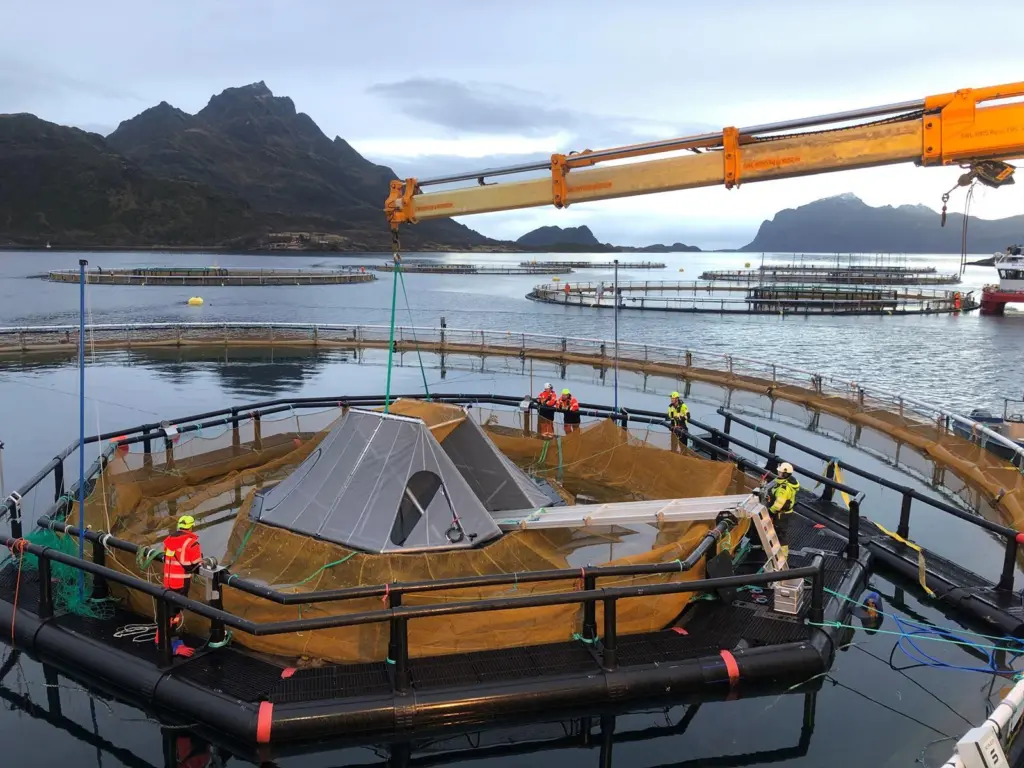
The entire Langøyhovden sea site in Vesterålen, Norway is now equipped with the Cermaq iFarm setup in all the net pens, after the fish was stocked there this autumn.
In the first phase, which began in January last year, iFarm equipment was rigged in individual net pens at Martnesvika in Steigen. Valuable experience has been gained and adjustments made to this second phase. “Among other things, we have seen that the design of the sensor housing and the openings the fish must swim through to get to the surface affect the fish’s swimming pattern,” said iFarm project manager Karl Fredrik Ottem.
“In this phase we are putting out six different sensor houses with different geometric designs, to test which houses the salmon prefer,” he continued. “Then we will also know which sensor houses we will use in phase three.”
Fewer sealice
The net pens are installed at a depth of eight metres with the fish kept ten metres down in the pens. This has resulted in fewer sea lice being observed. “We reckon that we have saved a minimum of one de-licing operation during phase one at Martnesvika, even though we only have iFarm set-up in single net pens there,” said Karl Fredrik Ottem.
“At Langøyhovden we have iFarm set-up in all the net pens, and it will be very interesting to see what effect it will have on lice levels eventually,” he added.

Related Articles
 AQUACULTURE
 AQUACULTURE
 AQUACULTURE