

SINTEF: Net materials, cleaning methods can dramatically cut microplastic emissions from fish farms
Fresh research led by SINTEF and funded by the Norwegian Fisheries and Aquaculture Industry’s research funding body (FHF) reveals that smarter choices in nets, ropes and cleaning technologies could slash microplastic pollution from aquaculture operations — with nylon nets under high-pressure washing releasing up to five times more particles than polyethylene, and cleaning robots emerging as a far gentler alternative.
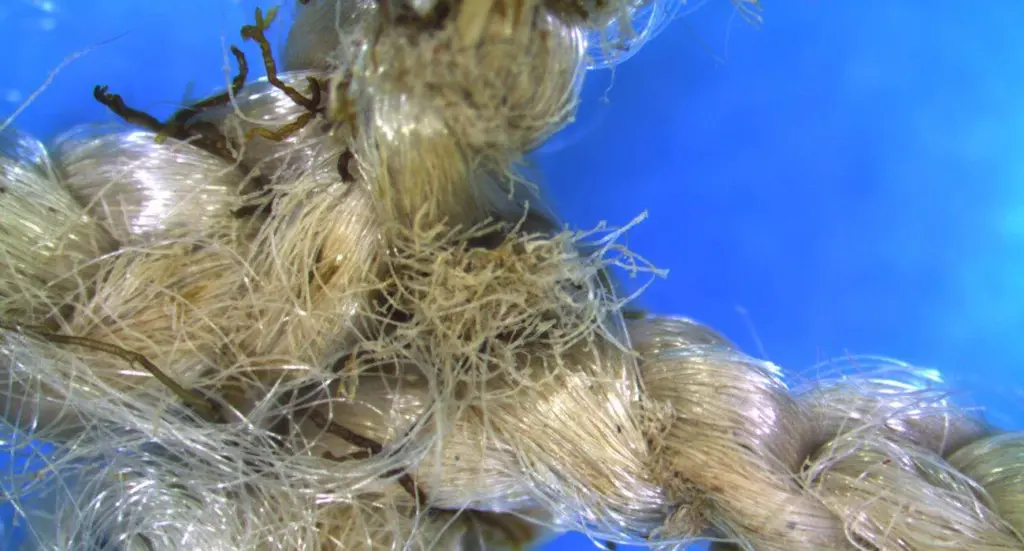
The goal of the SMARTER research project is to help the aquaculture industry select the right combinations of nets, impregnation, cleaning methods and ropes, so that emissions of microplastics are as low as possible.
“This can help to significantly reduce the environmental footprint of farming,” said Eirik Ruud Sigstadstø, Head of Science at FHF.
The researchers found that nylon nets subjected to regular high-pressure cleaning can release up to five times more microplastics than nets made from the plastic type polyethylene. Used nets and ropes, as well as ropes made from recycled plastic materials, also release more microplastics than new products, laboratory testing has demonstrated.
Among the cleaning methods, the use of a cleaning robot stands out as more gentle than high-pressure washing and cavitation cleaning. Lab tests on smaller nets made for the project showed that the robot brushing caused less damage and more even wear on the impregnation. At the same time, very few microplastic particles were collected during the cleaning itself with all three technologies, and the levels were often difficult to distinguish from background levels.
Field samples taken during routine cleaning of nets at a commercial fish farm showed sporadic releases of microplastics.
To get a comprehensive picture, researchers have simulated worst-case scenarios, both in the laboratory, in the field and through modelling.
“The project has tested and developed important tools that can be used and further developed to control and reduce emissions of microplastics,” said Andy Booth, Project Manager at SINTEF Ocean.
“The findings provide the industry with an important knowledge base for making better choices of materials and cleaning methods. This can help to significantly reduce the environmental footprint of aquaculture,” Sigstadstø said.
The project is led by SINTEF Ocean AS. Partners are Norce Research AS, NCE Aquatec Cluster, ScaleAQ, Watbots AS and Brynsløkken AS. It has a budget of NOK 11.4 million.