


iFarm – sorting first fish
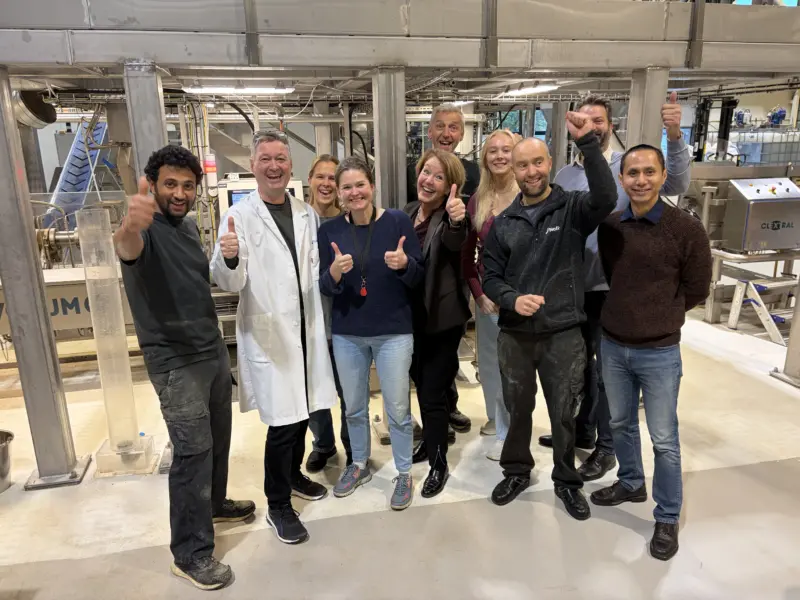
Salmon farming company Cermaq and Norwegian tech firm BioSort have for the first time tested a new mechanism that uses machine learning and artificial intelligence (AI) to sort fish in a net pen in order to provide them with customised follow-up support.

According to the partners, seeing the difference between fish is crucial for improving fish health and welfare in the net pens and will be a big step forward for increased survival in salmon farming.
With the goal to improve fish health and fish welfare through new technologies, the iFarm project is a collaboration between BioSort and Cermaq. ScaleAQ is the main supplier of the farming equipment to the project.
BioSort has developed a so-called “sorter” – a machine that will be able to sort and separate individual fish based on specific characteristics, using machine learning and AI. The goal of sorting is to be able to take out fish that need adapted follow-up, and in that way ensure better fish health for the fish in the net pen.
“To my knowledge, no one has previously sorted swimming fish in a net pen before, so this is a big step towards individual-based handling of fish,” BioSort Managing Director, Geir Stang Hauge, said.
BioSort has been working on the development of the sorter for two years.
The iFarm sorter, which is controlled by a number of underwater electric motors, has first been tested in BioSort’s lab and pool at the firm’s Oslo facility, then in the sea outside the city, before it was installed and tested in net pens at Cermaq’s sea site in Vesterålen in northern Norway.
“The purpose of this first test was to show that the sorter actually manages to sort swimming fish in a net pen, and it worked as we hoped, so it was a successful test,” Hauge said.
Currently, the sorter is controlled manually, but the goal is for it to be autonomous so that it, together with the sensor system in iFarm, can make its own decisions based on defined criteria.
However, the partners say this is a complicated and extensive development that will take time.
“Now that we have shown that it is possible to sort out swimming fish, the work will be intensified. The development team takes the learnings from this test to the development of the next generation prototype of the sorter that will be able to function under even more conditions,” Hauge said.
Related Articles
 AQUACULTURE
 AQUACULTURE
 AQUACULTURE