



Gene-editing yet to become a game-changer for aquaculture
Fish genetically edited using CRISPR technology are beginning to hit store shelves. But on a broader scale, aquatic products with edited genomes still have a long way to go before reaching consumers’ plates and the road will be bumpy.
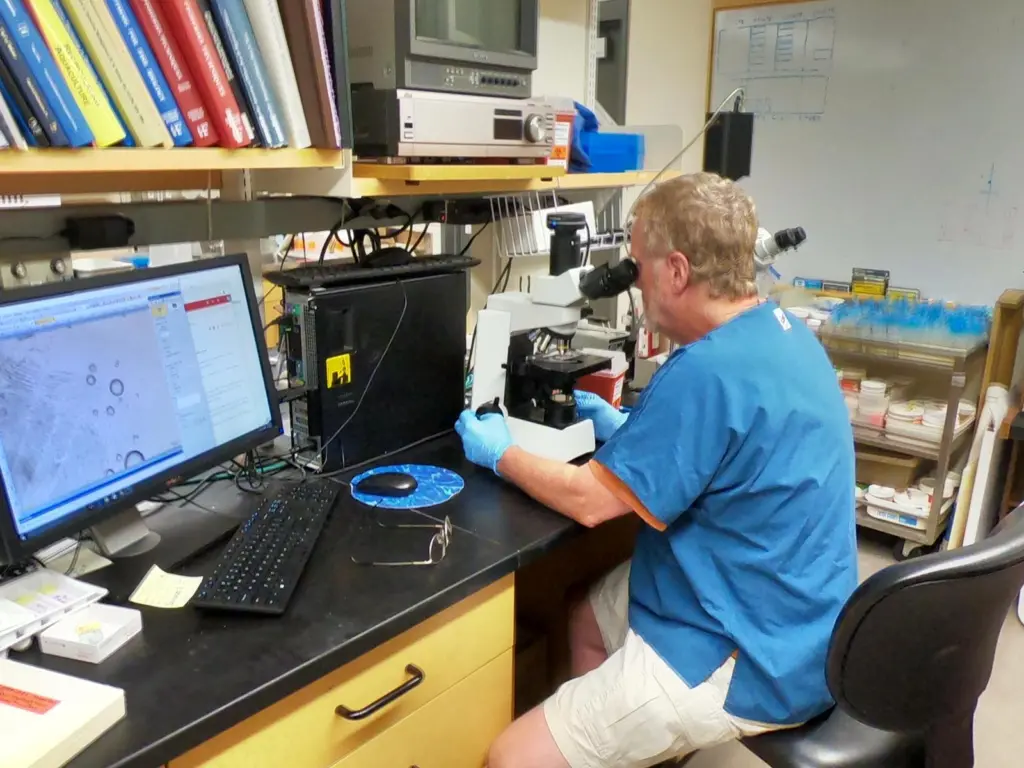
Gene editing technologies have been around for several decades, with Clustered Regularly Interspaced Palindromic Repeats (CRISPR) first described in 1987 by Yoshizumi Ishino at Osaka University. Still, only in the past few years have the technologies enjoyed booming public attention, with new genetic editing tools starting to offer immense transformative potential in food, healthcare and environment.
Genome editing is one of the technologies with the potential to radically change the aquaculture industry, commented Milthon B Lujan Monja, an Aquaculture Biologist with a master’s degree in Science and Innovation Management.
“Research in genome editing of aquaculture species focuses on disease resistance, improved growth and productivity, adaptation to climate change, including tolerance to temperature increases or low oxygen levels, reproduction control and enhanced nutritional quality,” Monja said.
The main traits of interest for aquaculture fishes are fillet yield, colouration, disease resistance and sex determination, said Eric M Hallerman, Professor Fellow at the Virginia Polytechnic Institute and State University.
According to Monja, the most-studied species in genetic editing research are Nile tilapia (Oreochromis niloticus) and Atlantic salmon (Salmo salar). However, experiments have also been conducted on carp, marine shrimp, freshwater shrimp and molluscs, among other species.
There are several goals the scientists are chasing, trying to modulate the genome of aquatic organisms.
The San Diego-based Center for Aquaculture Technologies (CAT) commercialises 100% sterility in farmed fish through genome editing, disclosed Dr John Buchanan, CEO of CAT.
“We see sterility as a necessary prerequisite to the commercialisation of other beneficial genome edits in aquaculture. Farmed fish that are 100% sterile also provide a solution to governmental regulation of gene editing technology, offer environmental benefits through preservation of biodiversity, and improve productivity and economics,” Buchanan said.
In general, scientists at CAT are working on two types of research. The first is gene editing that will create variation in genes leading to improvement in commercial performance, leading to advances in economics and sustainability of fish farming.
The second is building the tools to conduct gene editing on a commercial scale in finfish and shellfish. Such tools are necessary to effectively deliver gene editing to the global industry. The potential of gene editing is to increase genetic progress by orders of magnitude greater than is achieved in conventional breeding for key traits.
Increased disease resistance, rapid growth and better tolerance to a changing environment will lead to higher production, contributing to global food security, Monja said. Other objectives are associated with a reduction of the environmental footprint of the aquaculture industry by decreasing dependence on antibiotics, improving feed efficiency, and better adaptation to a changing environment.
In general, the studies are aimed at securing improved economic benefits due to increased production, reduced production costs, and the production of higher-value products, Monja added.
The scientific work of the past few years has brought some tangible results. “Myostatin knockout fishes do indeed show increased fillet yield. I’m excited with the prospects of reproductively confined Atlantic salmon, as well as the technical possibility of restoring fertility in those individuals that would be used as broodstock,” Hallerman said.
“There are promising inroads for achievement of heightened disease resistance and heightened omega-3 fatty acid content, but those lines of research need further development.”
Stigma of the Frankenfood
The further progress of gene editing technologies in aquaculture is largely associated with whether these tools will manage to get rid of a notorious halo surrounding genetically modified organisms (GMOs). Opponents of food products with edited genomes call them “Frankenfood”, reflecting concerns about their safety.
“Gene editing in our food system is a very bad idea,” said Dana Perls, Senior Programme Manager for Food and Agriculture at Friends of the Earth United States. “Despite claims of precision, gene editing can cause off-target effects and interfere with gene functioning. This could cause ripple effects on how other genes function or impact traits not intended by scientists.”
Unlike earlier transgenic technology used to produce GMOs, organisms enhanced with CRISPR-Cas9 and other gene-editing methods generally do not contain DNA from other species. Instead, scientists use these tools to delete or modify the plants or animal’s existing genetic material.
For this reason, experts often describe gene editing as an acceleration of traditional breeding techniques or precision breeding. Moreover, according to scientists, there is no way to distinguish a mutation induced by gene editing from one induced by a traditional or conventional breeding technique.
However, there are certain risks to be reckoned with.
“A growing body of science suggests that gene-edited salmon may pose serious environmental and public health risks, including potentially irreversible damage to wild salmon populations that are critical to the livelihoods of Indigenous and fishing communities,” Perls insisted.
There are two approved genome-edited fish on the market – both in Japan, both edited to have increased muscle yield and grow more rapidly – a Red Sea Bream and a Tiger Puffer, respectively, commented Alison Van Eenennaam, PhD, Distinguished Professor of Cooperative Extension, Department of Animal Science at the University of California.
A genome-edited tilapia for improved yield from AquaBounty has been deregulated in Argentina and Brazil.
“Though it is not currently farmed, it could be,” Dr Buchanan said.
Van Eenennaam said that, in her opinion, gene editing technologies make a lot of sense for aquaculture, and fish are relatively easy to edit because they spawn their eggs – as compared to mammals where the edited embryo has to be transferred to a recipient female.
However, the fish with an edited genome getting a green light immediately for sale is rather an exception than a general rule.
“Depending where you are, government oversight policies range from permissive (Brazil, Argentina) to neutral (US) to restrictive (EU),” Hallerman said.
The use of genetically-modified organisms is subject to various regulations, and only a few countries – in addition to Japan, these are the US and Canada – have progressed in allowing the commercialisation of products for human consumption, Monja stated.
“It largely depends on the regulatory approach being used to govern these products. Japan has an approach that if there are no unique DNA sequences introduced into the fish, then this is really just analogous to the genetic variation that is present in the genome of all animals – and is the basis of conventional breeding programmes,” Van Eenennaam said.
Japanese authorities treat such edited fish no differently than conventionally bred fish. Most of South America and Australia have the same approach. However, the EU, New Zealand and the United States FDA treat them very differently – effectively using the regulations they developed for GMOs and using them to regulate edited fish irrespective of the nature of the edit, Van Eenennaam admitted.
Big money is yet to come
The existing uncertainty around the future status of the fish with edited genomes hampers the inflow of investment in the industry.
The main impediments to the work are the technical difficulty of establishing, testing, and scaling up the development of a gene-altered line, said Hallerman.
“This is very hard to do with grant funding, so until companies become interested and devote money to these efforts over a period of years, the development of gene-altered lines will proceed only slowly,” Hallerman admitted.
“It is a very expensive and lengthy process to get regulatory approval and will make it very difficult for small companies to use this technology. Interestingly, a lot of the work on editing salmon is being done in Norway, so it will be interesting to see if commercialisation is possible there,” Van Eenennaam added.
Besides, aside from convincing regulators to permit the sale of aquaculture products with edited genomes, the industry also faces a challenge to convince consumers such food is safe. In this direction, the outlook is a bit brighter.
“Consumers in Japan can purchase these fish – so I would say that consumers are ready as there are commercialised varieties,” Van Eenennaam said, adding that in her observation, consumers have no issue with these technologies when the products are available for them to purchase.
Dr Buchanan said it’s clear to consumers that the fish industry needs to find ways to feed a growing population with quality protein and needs to find alternatives to commercial fishing and the environmental impact there on seafood supply.
“With leadership from governmental regulatory agencies, such as Japan, Brazil and Australia and others, clarifying the safety of the technology as simply a form of breeding, genome editing technology should be seen as a solution, not a controversy,” Dr Buchanan added.
Not everybody shares this opinion.
“Fish with edited genes are poised for rejection at the family table. The majority of people don’t want to eat gene-edited fish, and responsible retailers, restaurants, and food service companies are refusing to sell it,” Perls said.
Concerns about safety, ethical considerations, and potential environmental impacts have raised alarms among consumer organisations, Monja admitted.
“However, genome editing has an advantage over genetically modified organisms, as it doesn’t introduce a gene from another species; it only “silences” genes”, Monja added, citing a report indicating that Japanese consumers might accept products from genome-edited organisms with credible and perceived useful information.
Inevitable future?
In general, analysts believe gene editing technologies are an inevitable future for the global aquaculture industry.
“I believe genome-editing tools will become a standard in the aquaculture industry because of their potential to enhance the activity. Countries and aquaculturists not utilising these tools may lose competitiveness in the international market. However, work on local and international regulations and consumer acceptance is still needed,” Monja said.
The environmentalists, however, are confident that humanity can meet its growing demand for protein without gene editing.
“We already have excellent resources to build a sustainable, healthy and resilient food system, including sustainable wild-caught salmon and proteins based on whole plant-based foods. Dangerous experiments like GMO salmon are risky for the environment and people and take us in the wrong direction,” Perls said.
Related Articles
 AQUACULTURE
 AQUACULTURE
 AQUACULTURE