



CTAQUA’s new €214,000 fish biomass calculation project has been completed, which it says will help ensure efficient feeding practice and the protection and harvesting of farmed fish.
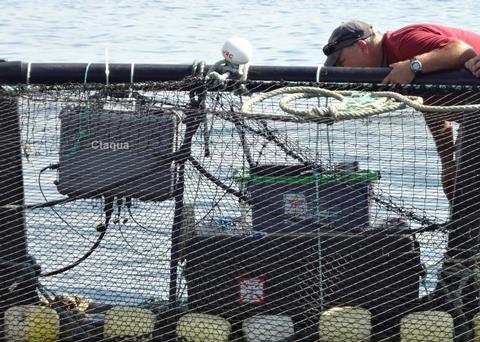
The Andalusian Aquaculture Technology Centre (CTAQUA) project, Designing technologies to calculate total fish biomass levels in offshore aquaculture facilities, focused on offering technologies to prevent economic damage from incorrect measurements – a common mistake in the sector.
Results found that hydroacoustic systems can be used as non-invasive systems to measure biomass levels of sea bream and sea bass.
In addition, estimations of fish density are largely affected by the time of day in which measurements are taken, while acoustic measurements of fish density can be used to document changes in the abundance of fish in marine cages.
Experts also found that correct measurements can be taken from the surface, contrary to the current suggestion that measurements should always be taken from the sea bed.
CTAQUA says the project’s results confirm the need to continue research.
As a result, the team has recommended that a systematic and in-depth study be carried out to monitor the cages during a longer period of time, from growing to harvesting.