




Scientists are set to study the earbones and organs of more than 2000 albacore tuna to better understand the growth, age and breeding patterns of this increasingly important species.
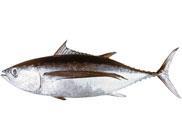
The rising catch of albacore has generated a need for more information about the species to assess stock levels and provide advice on harvest levels in Australian and international waters.
To meet this need, scientists from the CSIRO Wealth from Oceans Flagship are studying the biology of albacore stocks from eastern Australia and the wider south-western Pacific Ocean to determine their age, growth and reproductive characteristics.
The two-year study – funded by the Fisheries Research and Development Corporation and CSIRO, the Department of Agriculture, Fisheries and Forestry, and the Western and Central Pacific Fisheries Commission – builds on earlier studies in 2007 and 2008–09.
Project leader, Jess Farley, says fishery-wide information about how albacore age, grow and reproduce is needed to provide reliable stock assessments and set appropriate levels for future catches.
The age of the albacore will be estimated by interpreting growth bands formed in their earbones (otoliths) and dorsal spines in a process similar to reading growth rings of trees. Albacore reproductive organs will be examined to determine the location, timing, frequency and magnitude of spawning.
“Previous studies have shown that albacore grow to 1.2m in length and at least 30kg in weight, and live up to 14 years,” Ms Farley says.
“More detailed biological information will allow us to calculate growth rates, age at maturity and longevity, and to see whether these differ by gender and region.
“We aim to develop a ‘maturity schedule’ for female albacore across the south Pacific to help estimate their spawning output at different sizes and ages. This is the key to understanding the productivity of the stocks.”