


Ghana’s small-scale fishers, fish traders and processors have come together to present ten key points they feel should be included in the country’s fisheries law reforms.
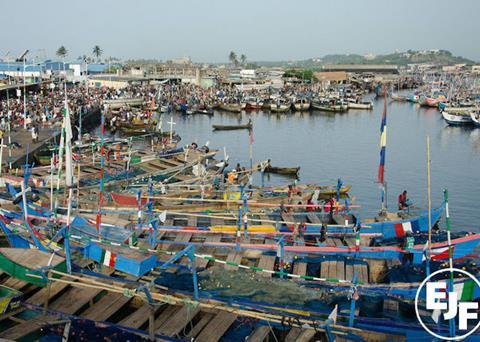
The country is currently undergoing a review of its national fisheries law framework and the ten-point communiqué, presented to the Ministry of Fisheries and Aquaculture Development via the Ghana National Canoe Fishermen Council and the National Fish Processors and Traders Association, calls for stricter penalties for fishing with light, chemicals and explosives; mitigation of impacts from offshore oil development; empowerment of communities to be able to enforce the law at a local level; and an end to the damaging illegal practice known as ‘saiko’.
“EJF fully supports the recommendations made in the communiqué,” said Steve Trent, executive director of the Environmental Justice Foundation. “The voices of small-scale fishers, traders and processors are a crucial part of the industry and must be heard when it comes to designing fair and sustainable fisheries management for Ghana.”
Less vessels
Other proposed measures include lengthening the closed season for trawlers; reducing vessel numbers; mandatory consultation with fishing communities on encroachment issues and offshore oil development - with compensation provided for negative impacts; and compensation for damage to fishing gear caused by industrial vessels.
Ghana’s fishing communities are becoming increasingly vulnerable as the crisis in the country’s fisheries deepens. The average annual income per traditional fishing canoe has dropped by as much as 40% in the last 10 to 15 years, and landings of small pelagic fish – key for local consumption – are at their lowest recorded level since 1980.