


The World Bank has started a five-year series of initiatives that will lend financial support to sustainable fisheries development in Lake Victoria. David Hayes reports.
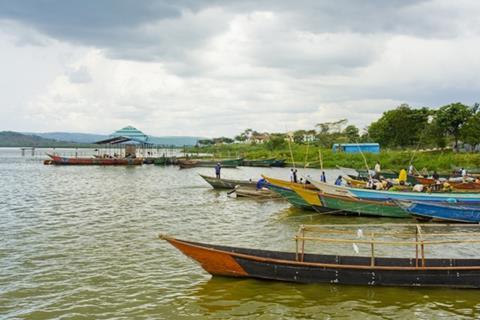
Plans to develop sustainable freshwater capture fisheries in East Africa recently received an important boost with the launch of a series of World Bank-funded schemes to improve the environmental management of Lake Victoria and protect its valuable fishing industry.
In addition to tackling overfishing, the various projects starting up under the five-year programme are designed to reduce the growing threat to aquatic life from pollution discharged by communities around the lake’s shores as well as oil discharge by shipping.
Lake Victoria is part of the Nile River basin system shared by 10 countries, while the Lake Victoria Basin region itself has a population of about 35 million people – around one-third of the combined population of East African states. With a mean depth of 40 metres and a maximum depth of 84 metres, it is the second largest lake in the world with a surface area of 68,800 square kilometres.
Tanzania owns 51% of Lake Victoria in area, Uganda 43% and Kenya 6%. The lake has a 3,450km shoreline and a catchment area of 194,000 square kilometres that extends into Rwanda and Burundi.
The region’s growing population has created various problems in recent years as the number of fishermen and fishing boats has risen causing overfishing, while pollution and siltation from industrial and agricultural activities in the Basin region are affecting aquatic life in the lake.
Overfishing is now a serious problem which threatens the future sustainability of Lake Victoria’s fishing industry. According to local press reports, the large volume of Nile perch exported to Europe has driven up local market prices and created shortages in some areas surrounding the lake.
Fish exports have risen to the point where they have overtaken export earnings from traditional cask crops such as coffee and cotton in some regions. Uganda, for example, is reported to have over 20 fish processing plants that export more than 30,000 tonnes of fish annually worth more than $150 million (€114.8 million) a year.
Vital importance
The World Bank estimates the landed value of fish caught in Lake Victoria to be $350 million (€267.8 million) to $400 million (€306.1 million) each year, while the combined annual export value of Nile perch from the three riparian countries is around $250 million (€191.3 million). More than 35 fish processing plants are believed to be in operation around the lake’s shores. Most of the fish processed is destined for export.
Some 3 million people are estimated to rely on Lake Victoria for their livelihood. And in terms of its economic value Lake Victoria fisheries account for 3% of Uganda’s annual GDP, 2.8% of Tanzania’s GDP and 2% of Kenya’s GDP.
Almost 200,000 fishermen in Kenya, Uganda and Tanzania are fully employed in fishing on the lake using a variety of fishing methods, mainly gillnetting and longlining. In addition thousands of people are employed in fish processing, while around 600,000 people are involved in fish trading of which about 40% are women.
Following the Lake Victoria Fisheries Frame Survey in 2006 which revealed a sharp decline in fishermen’s average catch, the World Bank has worked together with the governments of Kenya, Uganda and Tanzania to establish a joint programme for the three countries to establish sustainable fisheries at Lake Victoria and to promote wider economic development in the Basin region.
Encouraging communities around the lake to develop other income generating opportunities is intended to reduce pressure on Lake Victoria’s fish stocks which has built up during the past decade as more people rely on fisheries for their income.
Improving co-operation
Kenya, Uganda and Tanzania are using World Bank loans totalling $90 million (€68.9 million) to improve their joint management of Lake Victoria’s shared fisheries and water resources.
Under the programme, which is due for completion in 2013, some $22.4 million (€17.1 million) of funding is earmarked to strengthen the institutional capability and efficiency of national and regional fishery organisations serving the three countries.
The scheme will include consultancy services to assist the three countries harmonise policies, legislation and regulatory standards affecting their individual fishing industries’ use of Lake Victoria’s resources.
Support also will be provided to the relevant government ministries and fisheries organisations to jointly develop co-management systems to improve co-operation in managing the lake’s shared fishery and water resources.
Between 2000 and 2006 the water level of Lake Victoria dropped by about 1.6 metres, falling close to the lowest ever recorded level in March 1923. A drought and excessive use of lake waters by Uganda for hydroelectric power generation were the main factors causing the fall in water level.
Although the lake water level rose by just over one metre in 2007 due to above normal rainfall, the impact of the fall in water level during the two previous years showed clearly the need for better inter-government co-management of the Lake Victoria’s water resources.
The fall in water level had caused destruction of fish breeding and nursery habitats around the lake while jetties, piers and other fish landing infrastructure could not be used as the surrounding water depth had become too shallow. Shipping companies were similarly affected, some suffering large financial losses due to the drop in cargo carried and the cost of rebuilding jetties and piers in deeper water.
Tackling pollution
Pollution control and prevention is another priority with $37.2 million (€28.5 million) of funding set aside for various schemes including the rehabilitation of old, polluting wastewater treatment plants around Lake Victoria, the establishment of advisory programmes to promote cleaner industrial technology in the region and the installation of navigational facilities to prevent shipping accidents.
In addition, contingency planning will be carried out for oil spills and hazardous waste management.
Watershed management also is being addressed with $43.6 million (€33.4 million) allocated to assist development of sustainable soil and water management practices in the Lake Victoria basin region. Projects will be undertaken at a community level to encourage economic development without causing environmental damage to the lake.
Extension services to encourage efficient use of fertilizer on farms form part of the watershed management scheme. Improved management of fertilizer application will prevent excess crop nutrients draining into the lake where water hyacinth growth has started to increase again.
Lake Victoria and connected waterways are home to about 200 fish species of which three – the Nile perch, Nile tilapia and the ‘dagaa’ (Restrineobola argentea) account for over 95% of the 800,000 tonnes catch that the Lake Victoria Fishing Organisation estimates is taken from the lake each year.
Nile perch are the most valuable catch with around 75% being exported to Europe, the US and Middle East.
Nile tilapia and dagaa are caught for sale to the local market and regional fish markets. Dagaa are small sardine-like fish, most of which are dried and sold either for human consumption or for animal feed.
Dagaa are important for fish traders as a large volume is exported to other countries in the region including the Democratic Republic of Congo and South Africa. They are widely eaten by low income communities as they are cheap and nutritious.
Biomass shifts
Major changes to Lake Victoria’s fishing industry have occurred since the 1950s and 1960s when colonial governments introduced Nile perch and Nile tilapia to increase fisheries production.
The new species caused a rapid change in the lake’s fish population in the following decades. Haplochromine species which previously accounted for about 90% of the lake’s fish population and catch were reduced to just 1% of Lake Victoria’s fish biomass by the late 1970s. Many Haplochromines were consumed by the growing stocks of predatory Nile perch. Wasteful fishing methods also caused the virtual extinction of the species
Other endemic species and the native tilapia population also declined following the introduction of the Nile tilapia and Nile perch. The fishing industry appears little concerned, however, as overall fish production on Lake Victoria grew five-fold in the late 1980s and 1990s as Nile perch and Nile tilapia stocks rose and the number of fishing boats increased.
Lake Victoria is mainly a commercial fishery. In addition, a large number of artisanal fishermen use the lake working from manually propelled canoes or canoes fitted with outboard motors. Concern about overfishing has grown during the past decade due to a sharp increase in fishing boat numbers and greater distances fishermen travel for their catch.
The Lake Victoria Fisheries Frame Survey undertaken jointly in 2006 showed that while total catches had continued to increase since the last major survey in 2000, fluctuations occurred in the catches of individual species. The total estimated Nile perch catch declined during 2000 to 2006 from its peak in 1999 while the annual dagaa catch rose during the same period.
Over the same period the number of fishermen on Lake Victoria grew about 52% to 196,000 in 2006 from 129,000 in 2000 while the number of fishing boats rose by 63% to 69,000 in 2006 from 42,000 in 2000; the number of boats with outboard motors increasing more than threefold to over 12,000 by 2006.
Unsustainable fishery
Other figures indicating the unsustainable heavy exploit of Nile perch taking place was the survey’s discovery of an 88% increase in the number of gillnets being used, rising to 1.2 million in 2006 from 650,000 previously, and 160% increase in longline hooks reaching 9 million in 2006 from 3.5 million previously.
The effort required to catch Nile perch has grown considerably during the past two decades. The 2006 survey showed the catch per unit effort (CPUE), which is an index of stock abundance, declined from 22.9 tonnes per fishing boat a year in 1989 to about 4.5 tonnes per year in 2006.
Although the mean standing stock of fish in Lake Victoria has remained fairly constant over the years and was estimated at 2.1 million tonnes by the 2006 survey, individual species stocks have changed due to increased fishing.
The mean standing stock of Nile perch fell to 820,000 tonnes in 2006 from 1.3 million tonnes in 2000 and now represents 39% of the total standing fish stock down from 59% previously.
Meanwhile, the mean standing stock of dagaa was estimated at 830,000 tonnes in 2006, almost the same as Nile perch, almost doubling from an estimated 480,000 tonnes previously.
Combined standing stocks for other fish species were estimated to have reached 470,000 tonnes in 2006, up from 370,000 tonnes previously.
While the World Bank programme is intended to strengthen the capability of national and regional fishery organisations to support development of sustainable fisheries at Lake Victoria, the partner countries will continue to use a fisheries co-management approach to involve fishing communities in their programme.
Beach management units (BMUs) are the cornerstone of co-management in East Africa and work with local and national government, private sector processing plants and non-government organisations. BMUs are local fishermen’s organisations based in communities located around Lake Victoria.
About 1,000 units are in existence in the three countries. Intended to enable fishermen to participate in the management of Lake Victoria’s fishery and other resources, national and regional fishery organisations will need to increase support to BMUs to ensure their effectiveness increases in future in establishing sustainable fisheries in their own localities.
European support
In addition to the World Bank, support for BMUs and fisheries development on Lake Victoria also comes from the European Union (EU), which since 1988 has funded a series of regional fisheries research and management initiatives.
The EU has funded major policy, legal and institutional development schemes including the construction and upgrading of fish landing sites and building social infrastructure to support fishing communities.
Currently the EU is involved in financing development of 18 modern fish landing sites around Lake Victoria which will meet international quality and safety standards handling fish caught for export.
Assistance also is being provided to curb illegal fishing practices and end trade in undersize fish. The EU recently funded four fibreglass patrol boats for fisheries law enforcement teams to use to support implementation of fisheries management measures.
Some 35 canoes fitted with outboard motors also are being supplied to district fisheries authorities around the lake to use in enforcing fishing regulations.
In addition, the EU has supplied two fishery research vessels to monitor fish stocks and environmental conditions in the lake.