



Jelly FADs present a sustainable solution
Fish aggregation devices (FADs) that are biodegradable and non-entangling have been the subject of a trial funded by the EU, the International Seafood Sustainability Foundation (ISSF) and the US, through a Western and Central Pacific Fisheries Commission (WCPFC) scientific project.
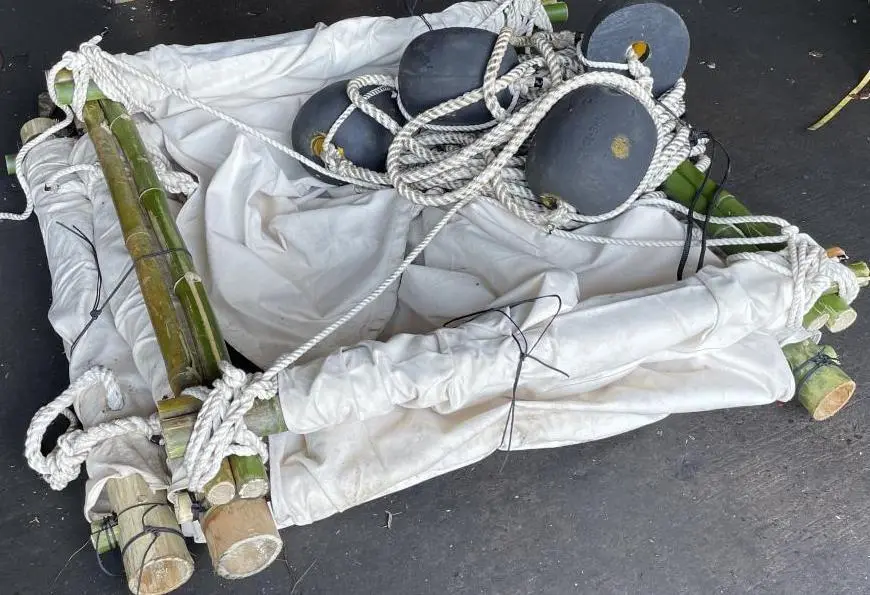
The development work has been in the hands of ISSF and a scientific team from the Institute de Ciències del Mar in Barcelona, and these jelly FADs are currently being tested by SPC as part of the WCPFC FAD trial. These jelly FADs use natural materials such as bamboo canes, cotton canvas and ropes, which become saturated with seawater after 20-25 days. Sand or clay blocks are used as ballast, and these gradually dissolve as the bamboo canes become neutrally buoyant.
“These materials give the structure a density similar to seawater, allowing it to drift neutrally in the water column like a jellyfish, hence the name,” said Dr Lauriane Escalle, the SPC project lead.
“The design has a very limited surface-level floating structure – just four plastic buoys that are the only non-biodegradable materials present, with the satellite beacon. This neutrally buoyant design reduces structural stress from wind, waves and currents and gives the jelly FAD a longer lifespan.
“This is a key design feature as biodegradable materials are not as robust as synthetic materials. The biodegradable materials should ideally degrade slowly after around 9-12 months of use and leave little in the way of an environmental footprint.”
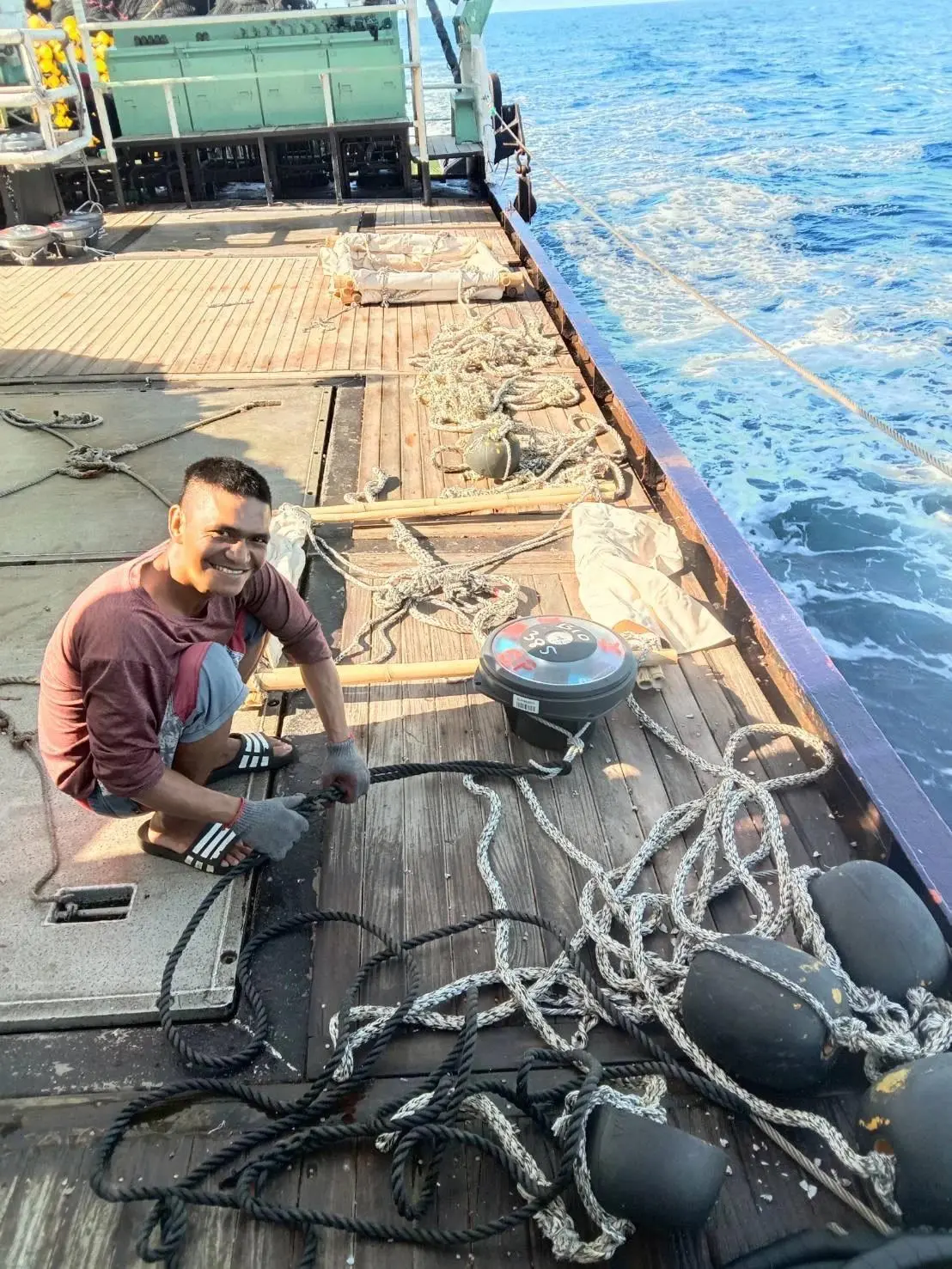
The FADs are expected to drift for around a year, with fishing taking place around them as with conventional drifting FADs. The trial aims to evaluate how effective the jelly FADs are at aggregating tuna, how they drift, and how long they last.
Satellite buoys with echosounders attached to the jelly FADs will provide crucial scientific information for the trial on how they drift and how they attract tuna. The data will be compared with similar data collected at the same time for traditional synthetic drifting FADs.
So far, 100 jelly FADs have been constructed in Pohnpei in Federated States of Micronesia for deployment by partner fishing companies, Caroline Fisheries Corporation and FCF Co Ltd. Further jelly FAD construction is happening in Pago Pago in American Samoa, and in the Ecuadorian port of Manta, and these are deployed in the eastern part of the WCPO, with the American Tunaboat Association and Cape Fisheries will be responsible for these deployments.
SPC and ISSF scientists will analyse the data collected by skippers, fisheries observers, and through the satellite and echosounder buoys, with the first results expected by the end of 2023.
Related Articles
 PROCESSING & REFRIGERATION
 SEAFOOD
 FISHING TECHNOLOGY