




No more free lunch – eliminating whale depredation
A pod system for retrieving longline catches developed by engineer Omar Sørvik has been a key part of the fishing strategy of Norwegian-operated, Montevideo-registered longliner Ocean Azul from the outset of an ambitious venture focused on toothfish across various Southern Ocean fishing areas.
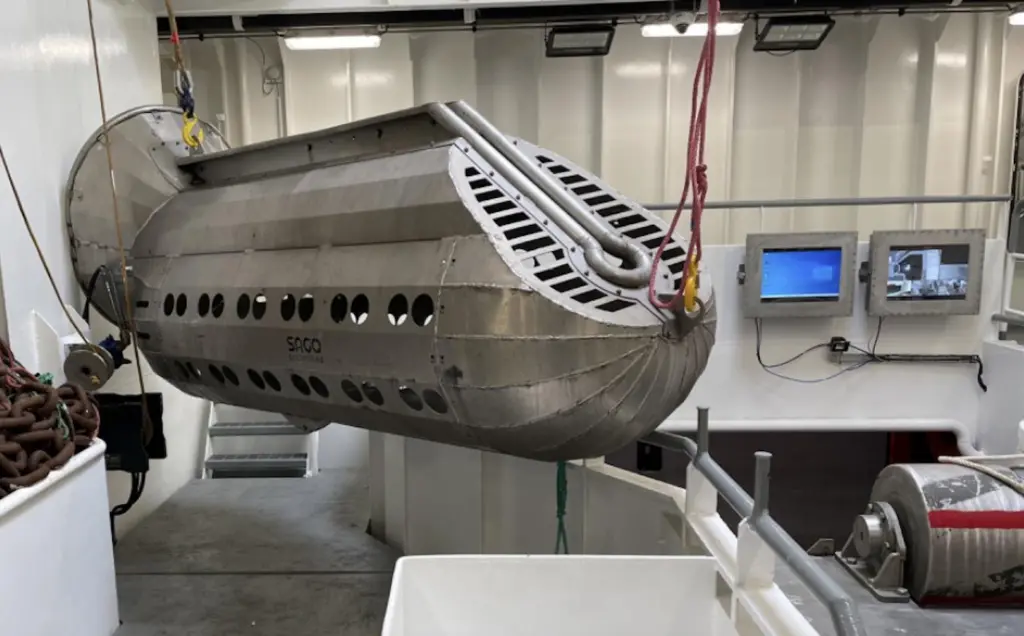
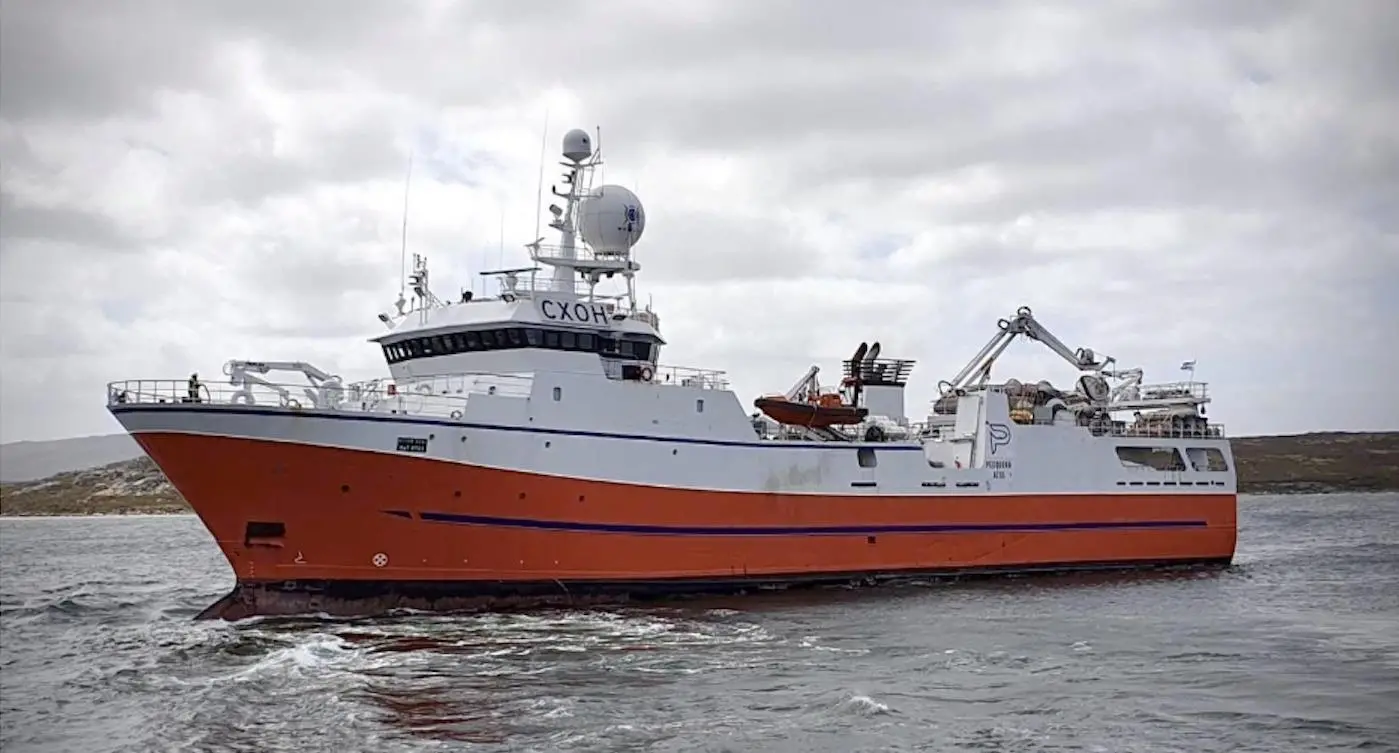
This former trawler, built in 1987, had been through a chequered career before its acquisition by the Norwegian team behind operating company Pesquera Azul, which put it through a major refit that included lengthening by more than 12 metres and the aft section remodelled to incorporate a moonpool – and a reception bay at the stern for the Sago Extreme catch protection modules.
In some of the sub-Antarctic waters where Ocean Azul operates there’s a strong whale presence, especially around South Georgia and the Sandwich Islands, in the Prince Edwards Islands Exclusive Economic Zone (South Africa) and east of the Kerguelen Islands (Australia), where cetaceans have a taste for high-nutrition fatty fish such as toothfish.
In some instances, the rate of depredation as whales pluck fish from the lines as the gear is hauled is enough to make fishing uneconomic.
“With whales around, the chances of catching your quota are slim to none. In South Georgia, I’ve seen a pod of orcas eat 10 tonnes of toothfish in a day on the averages I was getting per line. I realise whales have to eat, but the population has been steadily increasing and this is easy pickings by an order of magnitude,” said New Zealander Shane Jennings, who has more than 40 years experience running trawlers and longliners throughout the Southern hemisphere.
He explained that forfeiting so much catch means fishing vessels have to spend a lot more time at work to catch their full quota. That and having to steam extended distances to stay clear of whales results in much higher fuel consumption and costs, as well as higher emissions. The common challenge is how to achieve quotas in the shortest possible time, while avoiding using sound or other distressing methods to discourage whales.
“We desperately need a sustainable solution, both to protect fish stocks – toothfish take around 15 years to reach adulthood – and to ensure the future of the longline industry,” said Jennings, who joined the crew of Ocean Azul in 2022.
This solution came in the shape of the Sago Extreme pods developed by Omar Sørvik. These lightweight aluminium cages are shot with the longline and the arrangement is such that the line is hauled through each cage. This gathers the catch inside, below the depths at which whales like to feed, and protecting the catch of toothfish as it is hauled to the surface through the danger zone.
Rapid handling
Ocean Azul has a unique reception module built into the stern section, where the cages are retrieved and the catch routed from there to the handling deck to be processed and frozen. The cage has also delivered better catches under heavy weather conditions when under normal circumstances, fish would be likely to be lost off the line.
So far, it is the only fishing vessel anywhere equipped to use the technology, and it also operates as a conventional autoliner with its Fiskevegn setup when working grounds where there’s no danger of whale depredation.
Jennings initially expected the system would be time consuming to deploy, but was pleasantly surprised at how easy it is to set up and handle.
“All the Ocean Azul crew are well drilled in how it works. From the cage arriving in the pool to taking it off the line and deploying another one takes a matter of minutes,” he said, commenting that during last summer’s toothfish season in the Prince Edward Islands he supervised further live tests of catch cages – with some exceptional results.
“We were the only vessel in the area and the killer whales were relentless. Using the Sago system, we had loads of fish coming up as opposed to just a bunch of worthless fish lips. It proves the technology really works. Now I can’t imagine working without it in areas swimming with whales. You’d have to stay put all year long to achieve the same result,” he said.
Cost-saving
There’s been a lot of interest in the technology from fishing authorities looking for ways to enhance the sustainability of the longline fleet – and with continuous improvement Pesquera Azul is confident it can achieve a near-100% catch rate.
“The technology saves time and money and will enable fishing again in waters with a lot of whales. Without it I suspect whale depredation could get worse and worse around the world,” he added, commenting the Ocean Azul’s configuration helps, as having the reception bay in the stern made it easier to fit the gear needed to run the Sago system.
“It works just fine, and the vessel is very responsive. With eight years longlining for toothfish under my belt, I can definitely say the moonpool, Sago system, hook capacity, together with the Ocean Azul’s size, makes this state-of-the-art for the industry,” he said.
“During the summer we experienced everything the southern Indian Ocean can throw at you. Endless storms and very tough seas – but in these conditions the ship is in its element. Because of its size and weight, it is extremely stable and provides a superior working platform. Even in 50-knot winds and five to six-metre waves, you can still put your coffee mug down without it tipping over. The spacious working area makes it a very safe for the crew with non-skid grating throughout, including in the moonpool room.”
Jennings grew up in a small crayfishing community an hour north of Christchurch on New Zealand’s South Island, where he started fishing on a crayfishing boat at 16 and gained his skipper’s ticket to run a crayfishing boat at just 18. Since then, he has worked all over the Southern Ocean.
“It’s demanding but at the same time very rewarding, not least when you work for a company like Pesquera Azul which is doing all it can to make the industry more sustainable,” he said.
“The accommodation has plenty of space in the cabins and communal areas, which is great for the crew to relax between shifts. I’ve worked on a lot of ships and Ocean Azul is one of the most modern and comfortable. That’s very important when you’re away from home for months.”
Related Articles
 FISHING TECHNOLOGY
 NEW VESSELS
 FISHING TECHNOLOGY