


The development of efficient, cost-effective light-emitting diode (LED) technology has led to a growing list of innovative residential and industrial applications. With NOAA Fisheries’ By-catch Reduction Engineering Programme funding, researchers have found that LEDs can play an important role in productive and sustainable fisheries as well.
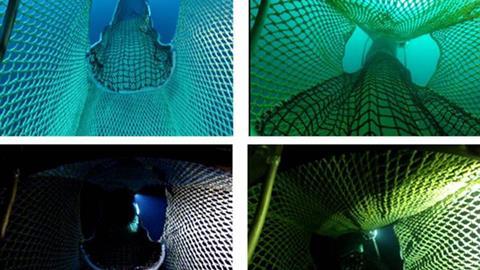
A study by the Pacific States Marine Fisheries Commission and the Northwest Fisheries Science Center shows that LEDs are highly effective in directing Chinook salmon to escape windows in Pacific hake trawl gear. By-catches of Chinook salmon in the largest groundfish fishery on the US west coast, can be an issue, and if these by-catch levels are high the outcome can be management measures such as temporary closures.
Data show that Chinook salmon are much more likely to exit the nets where lights are placed, with 86% of escaped salmon shown to use the well-lit, LED-framed openings. While further research is underway, the data suggest the LEDs can increase the salmon’s escapement overall.
Mark Lomeli, a researcher at the Pacific States Marine Fisheries Commission, said that it is “always a concern for everyone involved” when an ESA-listed species is being caught, and so the agency wanted to develop a salmon excluder design to lower their incidental catches.
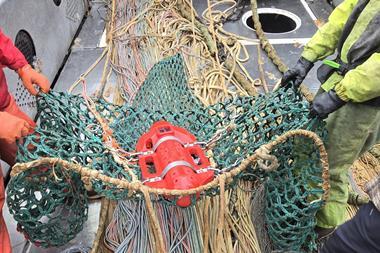
“Together with fishermen, we came up with a design that uses two sets of large, open escape windows that allow the salmon to swim out. We used a camera with an LED light attached to it to see if the escape windows were working, and we noticed the salmon seemed to be swimming toward the light. That made us wonder if we could modify our design with lights to influence where the salmon escape and how effectively they escape,” he said.
Escape artists
Lomeli also explained that data and video observations indicate that at deeper, darker depths, light from the LEDs enhance the salmon’s ability to perceive the escape areas and the areas outside the nets.
Hake are not as powerful swimmers as Chinook salmon, so they do not make use of the same escape opportunities.
“Our design is meant to exploit the strong swimming behaviour of the salmon – they’re quite powerful and can get to where they’re trying to go. When hake are toward the back of the trawl nets, where the excluder device is positioned, they’re generally too fatigued to swim out the escape windows.”
Wider applications
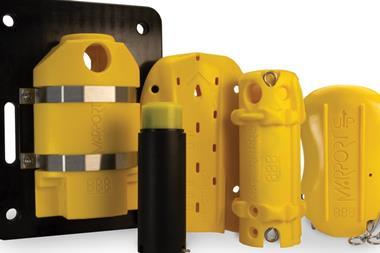
While the LEDs used in the NOAA study are similar to commercially available lights, these have been produced by a company in Florida for longline fisheries, and are made to be robust enough to stand up to seagoing conditions.
According to Lomeli, this same technology has been used to effectively reduce bycatches of another ESA-listed species, eulachon, as well as juvenile rockfish and flatfish in the ocean shrimp trawl fishery off Oregon.
“We also think the LEDs could be used in other fisheries – for example, in the walleye pollock midwater trawl fishery in Alaska – to reduce Chinook salmon bycatch,” he said.
“Many fishermen are aware of this technology now and [can] use it if they think Chinook by-catch will be an issue. It’s easy to use, relatively cheap, and widely available. You can easily clip the lights to the webbing around the escape openings.
“With these research results in hand, the lights are on the shelf for them when they need them. We think these LEDs are low-hanging fruit for contributing to the recovery of this species, and can also play an important role in the stability of this fishery.”