


Biodegradable approach to tropical tuna fisheries
Fish Aggregating Devices (FADs) have become a vital tool for tropical tuna fisheries and a need has developed to modify and simplify their construction to reflect the demands of both the industry itself and consumers. The new version FADs designed by Zunibal, a leading supplier of floating data buoys used by the tuna sector, includes an approach using a bio-based and compostable material. This offers an innovative alternative that significantly reduces waste generation and promotes the sustainability of tuna fishing.
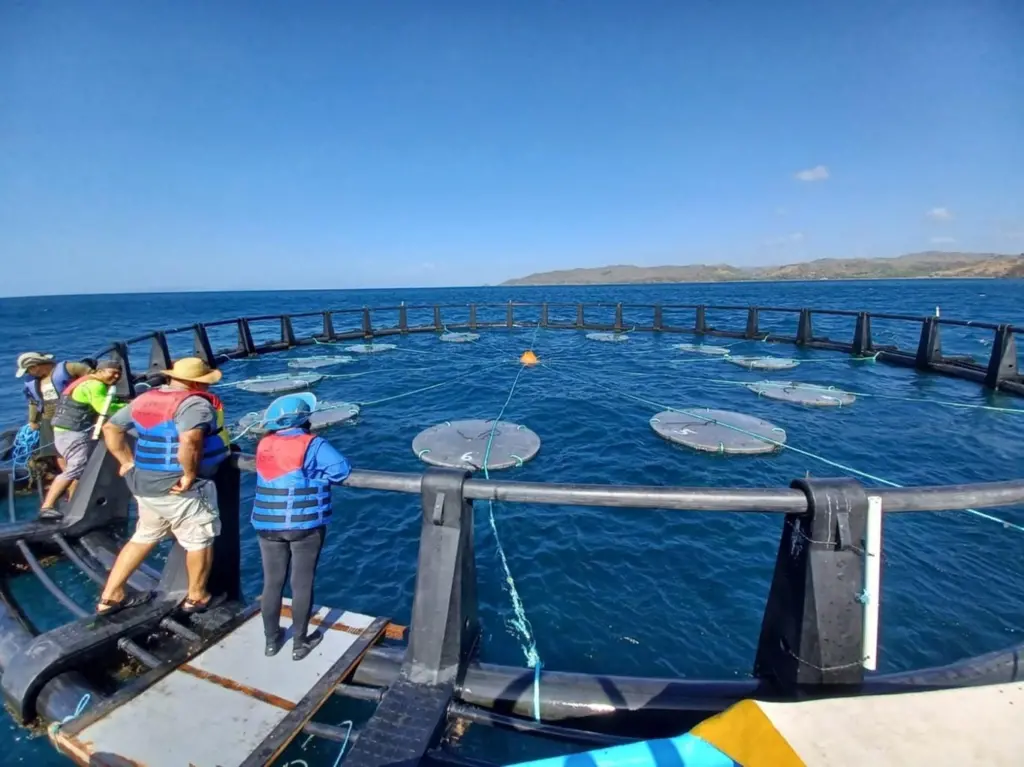
The tests are in progress with a first phase in a tropical, semi-controlled environment at the IATTC Achotines Laboratory facilities in Panama. In parallel, real-condition tests are underway with 210 devices distributed between the Atlantic and Indian Oceans to evaluate their effectiveness.
This innovation was initially presented to the fishing industry last year, when Zunibal, in collaboration with AZTI and representatives of the major tuna fleets, began the process of preparing the trials of the platform in tropical marine environments.
During the preparation of the trials, and thanks to the close collaboration between Zunibal, AZTI and the industry, the opportunity was identified to adapt the platform, originally designed to function as a floating element of the FAD, for submerged use, more suitable for oceans such as the Indian Ocean.
To achieve this Zunibal and AZTI have collaborated to built and incorporate a submerged, non-meshed grid made from the same compostable bio-based material into the trials. This design, like the floating version, limits the number of elements required to construct these devices, making them easier to recover in the event of loss at sea or stranding.
“These two designs eliminate or significantly reduce the need for synthetic canvas and raffia, or flotation components such as foam floats (skittles). In this way, by using materials that improve the characteristics of the FAD, we can minimise its impact on the environment,” said Iker Zudaire, AZTI’s sustainable fishing expert.
The two new FAD prototypes are being validated in two test phases. The first is being carried out in semi-controlled tropical conditions at the Achotines Laboratory facilities of the Inter-American Tropical Tuna Commission (IATTC) in Panama, starting on 1st March with an expected test duration of 18 months.
The second phase is being carried out in real conditions, with the collaboration of companies such as Albacora, Nauterra, Pevasa, Echebastar and Inpesca, which began with FAD deployment during May, June and July, including 60 floating platforms in the Atlantic Ocean and 150 submerged platforms in the Indian Ocean.
The main challenge is to study the effectiveness of the new material for the construction of FAD platforms and compare them with conventional ones to confirm that they not only contribute to reducing the environmental impact of the tuna sector but are also useful tools for fishing practice.
“This project, which will run until 2025, is part of the work that AZTI and Zunibal are developing with the European tropical tuna purse seine sector and the IATTC to minimise the potential negative impacts of fishing activities on FADs,” said Zunibal’s Álvaro Núñez.
“The industry and the scientific community must work together to ensure the sustainability of marine resources, particularly in tropical tuna fisheries. The adoption of practices based on scientific research will ensure optimal operations and effective long-term management, which is essential to preserve both the ecosystem and the economic viability of the sector.”
Related Articles
 FISHING TECHNOLOGY
 NEW VESSELS
 FISHING TECHNOLOGY