


EU fishing vessels will continue to have access to UK waters through to 2038 as part of the package of new deals agreed at the first-ever EU-UK summit.
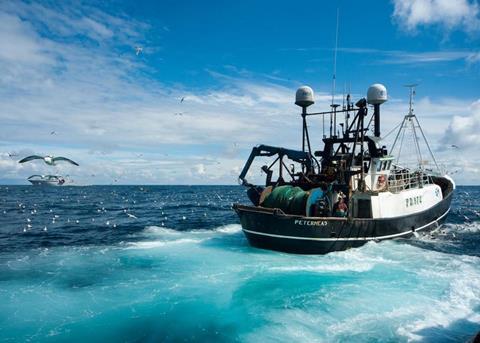
With the 12-year fishing agreement getting some criticism from the UK sector, Prime Minister Sir Keir Starmer defended the new arrangements, saying they provide long-term certainty for fishing fleets, as the old deal necessitated annual negotiations on fishing access. He also insisted fisheries would be better off, pointing to the Sanitary and Phytosanitary (SPS) agreement with the EU.
“We’ve reached a deal today on fish, protecting our access, rights and fishing areas with no increase in the amount that EU vessels can catch in British waters,” he said. “Our fishing industry will also benefit from the new SPS agreement which slashes costs and red tape for our exports into the European market.
Starmer said the new agreement would make it easier for fishermen to sell their catch to Europe.
“It is incredibly important for fish, because over 70% of our seafood goes into the European market. So, for the first time under this arrangement, our fishing communities are able to sell more easily into the European market.”
In a later statement, he said: “Selling iconic Scottish products like salmon – the UK’s biggest food export – has become needlessly difficult. Red tape meant a GBP 75 million drop in exports to the EU from 2019-2023.
“So, this agreement will tear down those barriers to trade, making it much easier to sell fantastic Scottish goods to EU markets.”
Alongside the EU access agreement, UK government has also launched a new GBP 360 million Fishing and Coastal Growth Fund, aimed at modernising the country’s fishing fleet, enhancing workforce skills, and revitalising coastal communities to boost tourism.
The fund will invest in new technology and equipment, deliver new training and skills to back the next generation of fishers and promote the seafood sector to export our produce across the world.
Under new plans to be set out soon by the government, coastal communities will receive a cash boost for new community facilities, better transport links and investment in apprenticeships.
Proposals would see offshore wind farms required to invest into coastal communities benefiting for families, businesses and local community groups across the country.
UK Secretary of State for Environment, Food and Rural Affairs Steve Reed said the agreement reached with the EU protects Britain’s fishing access, fishing rights and fishing areas with no increase in the amount of fish EU vessels can catch in British waters.
“The government is backing coastal communities by investing GBP 360 million into our fishing industry, securing the future for the next generation of fishers and breathing new life into our coastal communities as part of the Plan For Change,” he said.
The All Party Parliamentary Group (APPG) on Fisheries confirmed it is to meet to scrutinise all aspects of the UK-EU deal on fisheries.
The APPG has been collating priorities for future UK-EU fishing arrangements since January, ahead of next year’s expiration of the Trade and Cooperation Agreement’s (TCA) adjustment period on fisheries. With the government promising to secure the “best possible outcome” for UK fishermen and women, the UK’s fishing industry was clear on their ask – that fishing would not again be made a totemic issue, to be traded against other areas.
According to the APPG’s 2022 report, the original Brexit deal on fisheries was poorly perceived by industry for failing to live up to government promises, quota gains that fell short of expectations, and continued access for EU vessels to UK waters. The impacts of that deal were felt at sea and on land, it said.
The APPG said it will look at the details of the new agreements and their implications for the long-term sustainability of the UK’s fishing communities and fisheries, alongside the wider seafood sector. As part of this, it will be scrutinising the SPS deal be pressing for details of supports to industry in the face of any agreed arrangements, including relating to Fishing and Coastal Growth Fund.
APPG Co-Chair Alistair Carmichael MP said: “A 12-year deal on fisheries indicates that fishing has once again been treated as a second-class concern and is deeply disappointing. With the expiry of the fisheries deal adjustment period there was an opportunity to revisit and undo some of the difficulties of the Brexit deal.
“Indications that fishing has been traded for a deal in another area does a huge disservice again to the communities around our coasts. If there is a silver lining for fishermen, it will be in easements for trade and stability for key export markets – but that is still far from the ‘sea of opportunity’ that was promised in the past. The APPG will be scrutinising the details and will continue to work in support of a viable future fishing industry.”
APPG Co-Chair Melanie Onn MP said: “The impact of Brexit has been significant for the UK’s fishing and seafood sectors – affecting fleets and also trade with the EU, our largest trading partner. I’ve seen this first-hand in my own constituency of Great Grimsby and Cleethorpes, where around 6,000 livelihoods are supported by processing. We welcome the improved opportunities for trade with the EU that the SPS deal announced today will enable by making it easier for producers to sell British fish to our largest trading partner.
“While sadly weighed against other objectives time and again, the fishing and seafood sectors are vitally important all around the coast of this nation, providing livelihoods, sustaining families and communities. In the face of this, since 2020 the sector has continued to work to provide nutritious food to markets.”
With full details, the APPG will discuss an updated plan of work to support the continued efforts of the catching, processing and related sectors in this, and to safeguard the future for the UK’s fleets, seafood businesses, and coastal communities, she said.