



Sustainable fisheries championed at ICCAT
This year’s annual meeting of the International Commission for the Conservation of Atlantic Tunas (ICCAT), held in New Cairo, Egypt, ended on 20 November 2023 with members adopting some key recommendations to promote sustainable practices, and also ensure the responsible use of marine resources and enhance the conservation of vulnerable species.
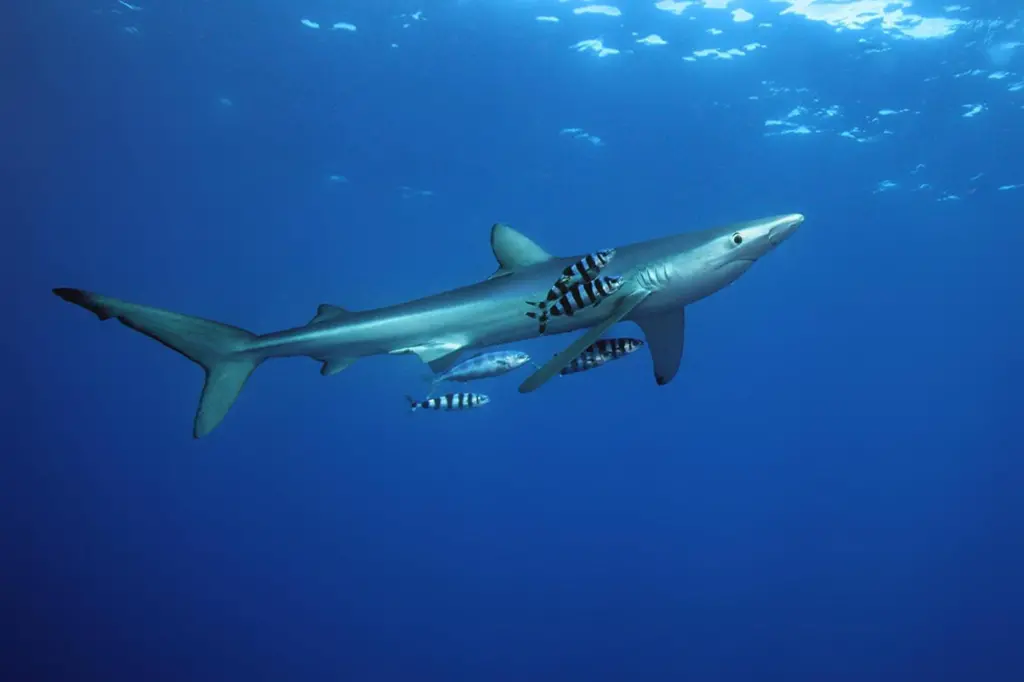
Several important proposals on the protection and sustainable management of sharks were adopted. However, no agreement was reached on a new management framework for bigeye tuna,
Driven by a robust proposal from the EU to tackle the overfishing of South Atlantic blue shark, ICCAT members reached agreement on a new allocation key to limit catches, in line with scientific advice. The newly-established allocation key takes into account current fishing patterns as well as the needs of developing coastal states.
In line with the aim of setting sustainable harvesting levels in the South Atlantic, the North Atlantic blue shark TAC has been set at 30,000 tonnes, well below the maximum sustainable yield (MSY).
ICCAT adopted two important recommendations for the conservation of vulnerable marine species: a proposal on whale sharks, tabled by the EU, and a proposal on mobulid rays, tabled by the UK and co-sponsored by the EU.
The recommendations are a direct result of EU efforts to drive forward the conservation of vulnerable marine species.
On proposals from the EU, ICCAT modernised some parts of the framework to manage bluefin tuna farming activities. In particular, the reference to an outdated reference framework to limit farming capacity was addressed. Furthermore, ICCAT adopted the framework for a pilot project on bluefin tuna farming in the Cantabrian Sea.
With regards to monitoring, control and surveillance, the EU’s proposal on electronic monitoring standards (EMS) was adopted which will allow for a significant improvement in data collection and monitoring of fisheries.
Discussions also took place on control, enforcement and the fight against IUU fishing, with the EU raising issues regarding some vessels operating in the area.
However, the annual meeting concluded without an agreement on a new multi-annual conservation and management programme for tropical tunas, leading to the rollover of the current measure.
According to the European Commission, the EU remains committed to find a consensual solution. Likewise, in the absence of an agreement this year, work will continue on a management procedure for North Atlantic swordfish.
ICCAT is the regional fisheries management organisation (RFMO) responsible for the conservation of tunas and tuna-like species in the Atlantic oceans and adjacent seas. Currently there are 52 contracting parties’ delegations, including the EU representing the interests of the EU member states.
Related Articles
 FISHERIES
 FISHERIES
 FISHERIES