





Pacific salmon task force completes research
A task force convened to explore the challenges faced by Pacific salmon has made a raft of recommendations.
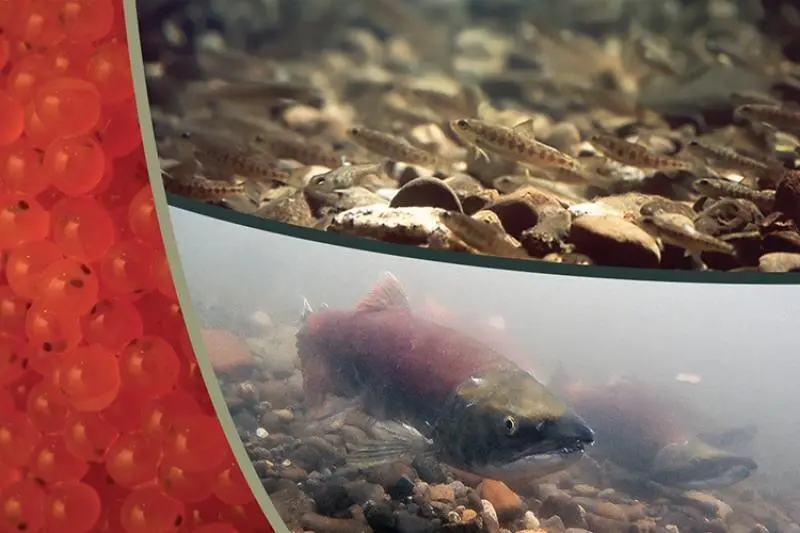
Under the Alaska Salmon Research Task Force Act, NOAA Fisheries and the State of Alaska have been instructed to review existing research to better understand why the species is declining in some regions.
The most pronounced declines of chum salmon and Chinook salmon in Alaska have occurred in the Arctic-Yukon-Kuskokwim region and a specific working group was created to focus on this area.
“The 19-member task force and its 44-member Arctic-Yukon-Kuskokwim Working Group did an impressive job compiling and integrating diverse information and data from scientists and Indigenous and Local Knowledge holders to inform development of this important science plan,” said Janet Coit, assistant administrator, NOAA Fisheries.
“Thanks to their work, we have a meaningful strategy to better understand mechanisms driving Alaska salmon production to provide a path for mitigating negative impacts due to climate change and other factors.”
The task force has identified a number of recommendations based around a ‘gravel-to-gravel’ approach which focuses on the salmon’s need for freshwater. The research had a dual basis, recognising the importance of Indigenous knowledge and practices combined with western science.
To mitigate the potential impacts identified – climate change, salmon health, food limitations, harvest and bycatch, predators, freshwater habitat changes, freshwater harvest – the task force recommended research to learn more.
Specifically it recommended priority research to:
- Improve understanding of the social impacts of declining salmon returns to food security, nutrition and physical/mental health, social cohesiveness, culture and language/knowledge transfers, and traditional ways of life
- Improve stock identification methods
- Better identify ocean distribution and marine migration routes
- Expand ocean ecosystem surveys
- Identify strategies to minimise human impacts on freshwater and coastal habitats
- Make use of new technologies
- More effectively monitor salmon key stocks
- Improve stock assessments for in-season management
- Model life-cycles for climate resilience
- Better manage and share data
Related Articles
 FISHERIES
 FISHERIES
 FISHERIES