



Opportunities and challenges in Western Pacific fisheries
America’s Western Pacific Regional Fishery Management Council says that performance of federally managed fisheries in the region is good with no overfishing.
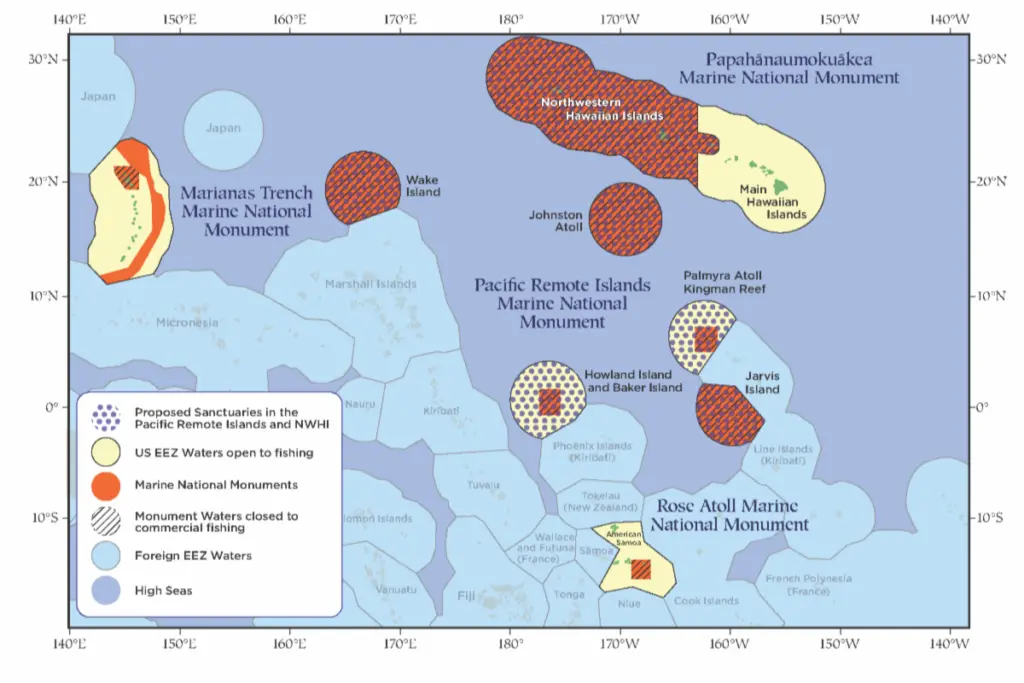
That’s according to the 2023 Stock Assessment and Fisheries Evaluation (SAFE) report, which observes catch increases across a range of open ocean and bottomfish species.
One highlight is in Hawaii where commercial landings for bottomfish were up at 242,170 pounds. None of the bottomfish were overfished or experiencing overfishing. There were 576 bottomfish license holders, 37 less than in 2022.
Future plans
For fishing years 2024-2027 for the Hawaiian Islands deep-seven bottomfish complex, the Council recommends the annual catch limit (ACL) to be set at 493,000 pounds. The fishery is healthy and total catch in recent years has been around 200,000 pounds. With this increase in quota, fishers will be able to operate year-round without fear of the fishery closing.
With the remaining ACL, potentially up to 530 more people could enter the fishery.
Going forward, the 2024 annual SAFE report, will include key fishery and market indicators, such as impacts from military activities, weather conditions and funding and staffing issues, as well as fishery-independent data in Guam and Hawai‘i.
Council advisors are working on ways to improve data collection. The Annual SAFE Report data for 2023 will soon be available at wpcouncildata.org
Challenges
Despite this good news on the state of the fishery, there are still challenges to be addressed in other areas.
A recent council meeting called attention to impediments to US fisheries due to unfair trade practices by foreign fisheries.
In particular, the practice of “dumping” cheaper, lower-quality fishery products into the United States, which it said undercuts the profitability of US fisheries.
The Council recommended convening a group of experts, inviting federal agencies and the fishing industry, to address the issue.
In addition to trade issues, the Council heard updates from the US Coast Guard regarding high seas boarding and inspection (HSBI). This program monitors compliance of Western and Central Pacific Fisheries Commission (WCPFC) regulations.
Members expressed concern over recent reports of HSBI boardings by China, including Chinese Coast Guard vessels intimidating Philippine fishing vessels.
In order to increase the efficacy of HSBI and promote safety at sea, the Council recommends that the US government continue its efforts to elevate the WCPFC Resolution on Labor Standards as binding, to allow HSBI parties power to enforce human rights at sea.
Related Articles
 FISHERIES
 FISHERIES
 FISHERIES