




NOAA to tackle rife fisheries observer harassment
Although US fisheries are among the safest in the world, there are inherent risks that observers face while working in remote and offshore locations, with potential exposure to harassment and unsafe working conditions during the course of their work, according to the findings of a a multi-year study conducted on behalf of NOAA Fisheries.
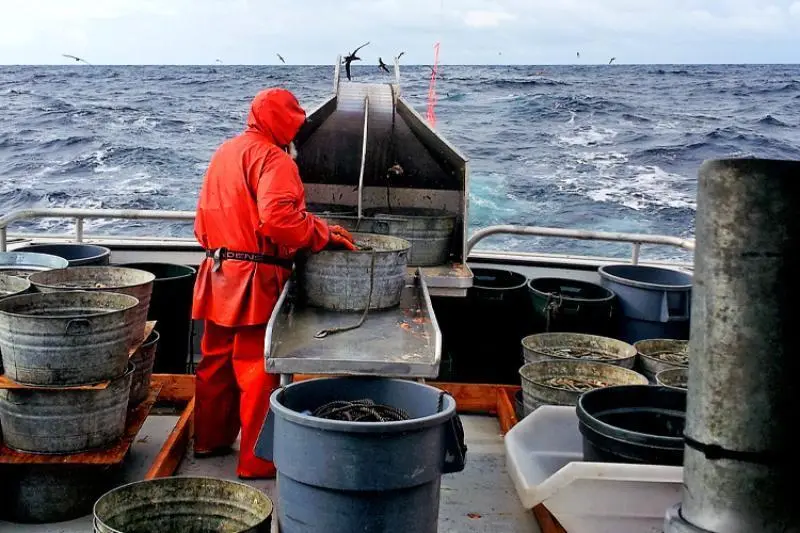
In an effort to get a more complete understanding of harassment rates and strengthen protective measures for observer safety, the researchers focused on the North Pacific Groundfish and Halibut Observer Program – the largest fisheries monitoring programme in the United States.
The team estimated that 45% of observers who experienced victimisation disclosed harassment in a given year. They also estimated the true prevalence of harassment for fishery observers in the North Pacific varied from 22 to 38% of observers annually (2016-2022). That’s more than twice that estimated from observer’s official statements following fishing trips.
“This is an incredibly important study that provides proof positive that official statements don’t capture the whole picture of harassment rates – it presents a new method for better accounting for non-disclosure. It also is the first time that we have been able to quantify non-reported harassment incidents of fishery observers,” NOAA Fisheries Acting Administrator Emily Menashes said. “The work of this team is a critical step to help us focus our continuing efforts to end these types of behaviour and provide a safer working environment for fisheries observers.”
NOAA said the study provides a more complete understanding of the rate at which harassment goes unreported and the true prevalence of victimisation, and with it, it can “redouble its efforts, with partners, to develop targeted strategies for combating harassment, and track efficacy of those efforts over time”.
Each year, to quantify cases of harassment, authorities rely on official statements submitted by observers following their assignment. However, the study found that many victims tend not to disclose harassment events they experience.
Scientists at the Pacific States Marine Fisheries Commission and Alaska Fisheries Science Center, and special agents at the Alaska Office of Law Enforcement undertook the study. They modelled it after the Bureau of Justice’s National Crime Victimization Survey. They designed and distributed an anonymous survey to NOAA Fisheries observers working in Alaska. They collected responses between 2016-2022 to understand barriers to disclosure and estimate disclosure rates.
Researchers also hoped to better understand the experiences of observers and to ultimately improve practices and enforcement regarding harassment.
“Official statements submitted by observers reflect both an incident of harassment and also an observer’s willingness to disclose, tangled up together” said Lacey Jeroue, co-author and Alaska Marine Mammal Observer Program Project Manager, Pacific States Marine Fisheries Commission. “Relying on official statements alone makes it impossible to know if risk reduction strategies moved the needle on actual harassment or just the tendency to disclose it.”
Supplementing official statements with estimates of disclosure rates from anonymous survey data provided a means of mitigating biases. It allowed researchers to obtain estimates of harassment untangled from fluctuations in reporting tendencies. Harassment in the study was classified as: 1. Sexual harassment; 2. Assault; and 3. Intimidation, coercion, and hostile work environments.
Scientists estimated disclosure rates overall was 45% and found that those rates were not influenced by observer gender or experience but heavily influenced by the type of the harassment experienced. The reported types of harassment for 2016-2022 were: Sexual harassment (18%); assault (57%); and intimidation, coercion, and hostile work environment (37%).
The researchers estimated that about one-third of the 350 to 400 North Pacific observers experienced victimisation annually. Sexual harassment of females has been increasing over the last six years, while disclosure rates remain the same.
It was found that female observers were at least twice as likely to become targets of victimisation as males. Furthermore, during 2016-2022, researchers estimated that 24-60% of female observers were victimised annually, compared to 12-24% of male observers.
“Enforcement investigations on the deterrence and detection of observer sexual assault, assault, harassment, observer safety, interference and significant sample bias violations are our highest priority,” said James Binniker, director, NOAA Fisheries Office of Law Enforcement. “There is zero tolerance for assault or harassment of observers in any form, and criminal prosecution will be sought for the most serious of these incidents. We encourage any observer who feels they may have been a victim of harassment to contact our 24-hour Law Enforcement Hotline.”
NOAA also provides numerous victim advocacy resources such as NOAA’s Sexual Assault/Sexual Harassment Helpline and RAINN.
Based on the findings of the study, NOAA Fisheries intends to take aggressive steps to improve observer safety beginning with:
- Re-evaluating observer safety training programmes to identify areas for improvement
- Reminding vessel owner/operators of their responsibilities under the NOAA Notice on Preventing Observer Harassment to promote a safe working environment for fishery observers
- Implementing further outreach to commercial fishing and processing vessel crew as well as shore-side processing plant owners to raise awareness and understanding that mistreatment of observers is unlawful and that the detection and prosecution of such violations is one of the highest enforcement priorities
- Stressing the important role that fisheries observers play in enabling fisheries to sustainably target commercial fish species and minimise bycatch in all education and outreach efforts
“Observers are our eyes and ears on the water, collecting needed data and information to sustainably manage US commercial fisheries,” Menashes said. “Observers deserve to work in a safe environment free from harassment of any kind. Our responsibility is to make the workplace for fishery observers as safe as we possibly can.”
Related Articles
 FISHERIES
 FISHERIES
 FISHERIES