


New tools to boost social sustainability in EU fisheries
The EU Social Partners in fisheries, Europêche and the European Transport Workers’ Federation (ETF), have unveiled innovative tools to strengthen the social dimension of the Common Fisheries Policy (CFP).
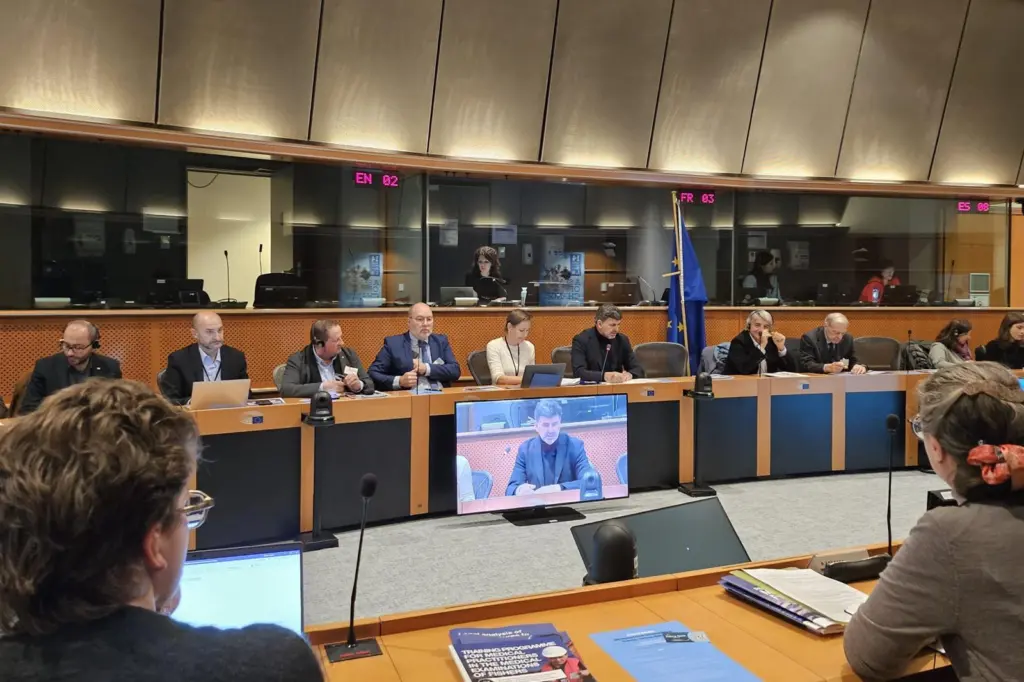
At a European Parliament conference hosted by MEPs Nicolás González Casares and Paulo do Nascimento Cabral, the initiative showcased results from Pillars of the Sea 3: Roadmap towards socially sustainable fishing.
This EU-supported project focuses on improving working conditions, fair recruitment and safety standards in fisheries across Europe.
“This initiative underscores our shared commitment to advancing social sustainability in fisheries,” said Ron Verboven, ILO EU Director. “The tools and guidelines developed here set a global benchmark for improving health, safety and labour practices in the fishing industry.”
Fisheries roadmap
Key achievements include a training programme for medical practitioners conducting health exams under the ILO Work in Fishing Convention, guidelines for ethical recruitment of migrant fishers and a multilingual Fishery Speak app to enhance communication for multinational crews.
These tools aim to improve health, transparency, and safety across the sector.
The project also explored measures to combat forced labour, including trade restrictions on seafood from non-compliant vessels, aligning with the EU Farm to Fork Strategy.
Europêche and ETF emphasised the critical role of socially responsible fisheries in fostering sustainable practices and ethical sourcing in Europe. Supported by the European Commission, the initiative complements CFP objectives while addressing global challenges in the fishing industry.
As Pillars of the Sea 3 concludes in 2024, stakeholders hope its outcomes will inspire ongoing advancements in fisheries’ social and environmental sustainability.
Related Articles
 FISHERIES
 FISHERIES
 FISHERIES