





New call for halting Gulf of St Lawrence shrimp fishery
With shrimp stocks in the estuary and Gulf of St Lawrence in eastern Canada are on the brink of complete collapse, the Listuguj Mi’gmaq Government is calling for a moratorium to protect what few shrimp are left. It explained the St Lawrence ecosystem is experiencing major changes caused by climate change.
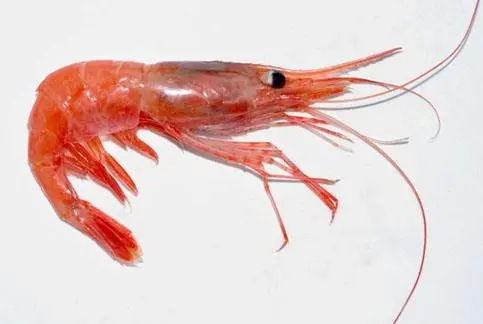
Average water temperatures are at recorded highs, while shrimp landings are at historic lows, it said, adding that with water temperatures and predation by other species only expected to increase, northern shrimp stocks in the estuary and Gulf of St Lawrence are not expected to improve in the foreseeable future.
“As Mi’gmaq, we are guided by the principle of ango’tmu’q: taking care of something in a careful manner. It would be a violation of ango’tmu’q for us to continue fishing shrimp,” said Scott Martin, Chief of the Listuguj Mi’gmaq Government. “We will not fish our quota next year, and we call on the minister to impose a moratorium.”
With northern shrimp playing a key role as a forage species, its low abundance could have negative consequences for other species that depend on them as a food source, like redfish, cod and halibut.
Diane Lebouthillier, Minister of Fisheries, Oceans, and the Canadian Coast Guard, was due to meet with First Nations and industry stakeholders in Québec City on 7 and 8 December to discuss the future of the shrimp fishery.
The Listuguj Mi’gmaq Government will push for a moratorium at that meeting.
“We need to be realistic,” said Martin. “Climate change has killed the northern shrimp fishery. That’s the truth. No one wants to be the person who hauls in the last shrimp.”
However, not all fisheries are in such a dire state. Lobster stocks, for example, have never been better. Both total landing and catch per unit effort are at all-time highs.
All available data indicates the lobster stocks are healthy, according to the Listuguj Mi’gmaq Government. It sees the lobster fishery as presenting an opportunity to mitigate some of the impact of the failing shrimp fishery and an opportunity for Canada to implement First Nations’ fishing rights under the Peace and Friendship Treaties, which the Supreme Court of Canada upheld in the Marshall decisions.
The Minister could do both by issuing new lobster licences and distributing them to First Nations first, in acknowledgement the priority of rights-based fisheries, the Listuguj Mi’gmaq Government said.
“There has never been a better time to open new access to the lobster fishery,” said Martin. “Fisheries management needs to be flexible in response to climate change. Warmer water is changing the ecosystem. The way we fish needs to change too.”
Related Articles
 FISHERIES
 FISHERIES
 FISHERIES