The US state of Maine has received more than US$17.2 million from the National Oceanic and Atmospheric Administration (NOAA) to help improve data on endangered North Atlantic right whales (NARW), Governor Janet Mills and Department of Marine Resources (DMR) Commissioner Patrick Keliher have confirmed.

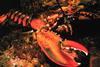
Maine lobster

Maine lobster

Source: NOAA

Data will be collected enabling Maine to be protective of whales in a way that also doesn’t devastate Maine’s lobster industry

The money is the result of The Consolidated Appropriations Act passed by Congress in December of 2022 which established a $26 million fund for states with lobster fisheries. This fund is administered by the Atlantic States Marine Fisheries Commission, which divided the money among states based on active lobster harvesters.

“Maine’s lobster industry has a long and proud tradition of responsible harvesting practices and good environmental stewardship, including significant investments by lobstermen in to protect right whales,” Mills said. “These funds will ensure that federal regulators can no longer burden this vital industry with management decisions based on poor data that threaten the livelihoods of thousands of Mainers. I thank Maine’s Congressional Delegation for its work to secure this important funding.”

“The goal of this research is to collect data that tells us what is happening in the Gulf of Maine, so we can be protective of whales in a way that also doesn’t devastate Maine’s critically important lobster industry,” Keliher said.

The lack of data on NARW presence and fishing effort in the Gulf of Maine has resulted in high uncertainty in existing models that the federal government uses to determine the risk of serious injury and mortality to right whales by lobster gear. This funding will allow DMR to expand NARW research and improve the assessment of risk to NARWs posed by fixed gear fisheries in advance of future federal rulemakings.

“That uncertainty has caused federal regulators to make assumptions that have resulted in sweeping regulations which have caused significant economic hardship for Maine’s critically important lobster industry,” Keliher said.

DMR will use the funds to improve data on NARW presence by conducting passive acoustic monitoring (PAM) at 26 sites throughout the Gulf of Maine. These sites will be in addition to eight PAM moorings deployed since 2020 in collaboration with Northeast Fisheries Science Center and the University of Maine.

In addition, DMR will conduct surveys of NARWs in the Gulf by boat and airplane, as well as surveys of the primary food source for NARWs, a species of zooplankton known as Calanus finmarchicus.

Federal regulators use a model, known as the Decision Support Tool (DST), which incorporates data on whale density and lobster fishing gear location and configuration to assign the risk of serious injury and mortality to NARWs. The model allows federal regulators to assess how that risk changes under different management scenarios.

Maine’s recently enacted reporting and tracker requirements for state and federally permitted lobster harvesters is a critical component of this work, and it will greatly improve available data on fishing effort in the Gulf of Maine.

“Having better data on whale distribution in addition to gear location and configuration will vastly improve the ability of the federal government to focus their efforts on the areas of greatest risk,” Keliher said. “DMR’s approach is to not use assumptions, but rather the best available data so NOAA understands that the Maine lobster fishery is not the threat they make it out to be. This will allow them to develop more targeted management measures, which will reduce the burden on this industry.”

DMR anticipates that these funds will continue be available into the future. DMR plans to use future funds to build on its research programme and to develop a new approach to risk modelling that incorporates data on changes in lobster and NARW populations and habitat use.

It will also investigate the use of dynamic management, an approach in which temporary closures are only established in specific areas if whales are detected.