



LobStAR launched to get a grip on declining Dutch stocks
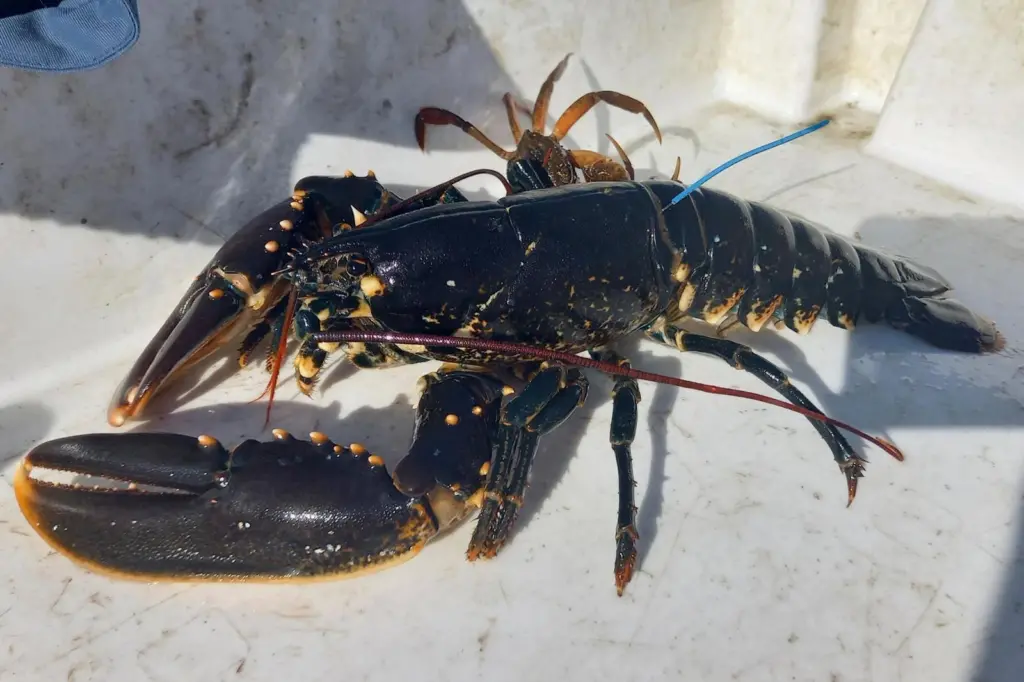
Despite natural fluctuations, fishers, divers and scientists are becoming increasingly concerned about unexplained structural decline of European Lobster (Homarus gammarus) in the Netherlands’ Eastern Scheldt lobster fishery. It has also been determined that while precise stock assessments are essential for understanding these declines and implementing sustainable management, the scientific knowledge on lobster stocks in the Netherlands is lacking.
Seeing a need for action, local fishers in the Association of Professional Fishers Oosterschelde, Westschelde and Voordelta (OWV) developed a fishing plan to improve regional fisheries management. They engaged with the government and stakeholders to develop science-based fishery management strategies.
Using the European Maritime and Fisheries Funds (EMFF), OWV teamed up with Wageningen University & Research to implement “LobStAR”, a plan to improving stock assessments through scientific innovations and improvements in research and technology.
Sinke Sinke, Chair of OWV explained: ’’The lobster stock goes up and down due to natural factors. But how the lobster stock develops over time is not clear, while that information is important for sustainable management.”
The LobStAR project has several objectives, including:
- Improving understanding of the biology of the Eastern Scheldt lobster
- Designing a simple system for automatic catch registration
- Developing a simplified system of stock estimates
- Developing an app for data management and calculation for use by the sector
- Applying the vast empirical knowledge of local fishers to stock assessment and management
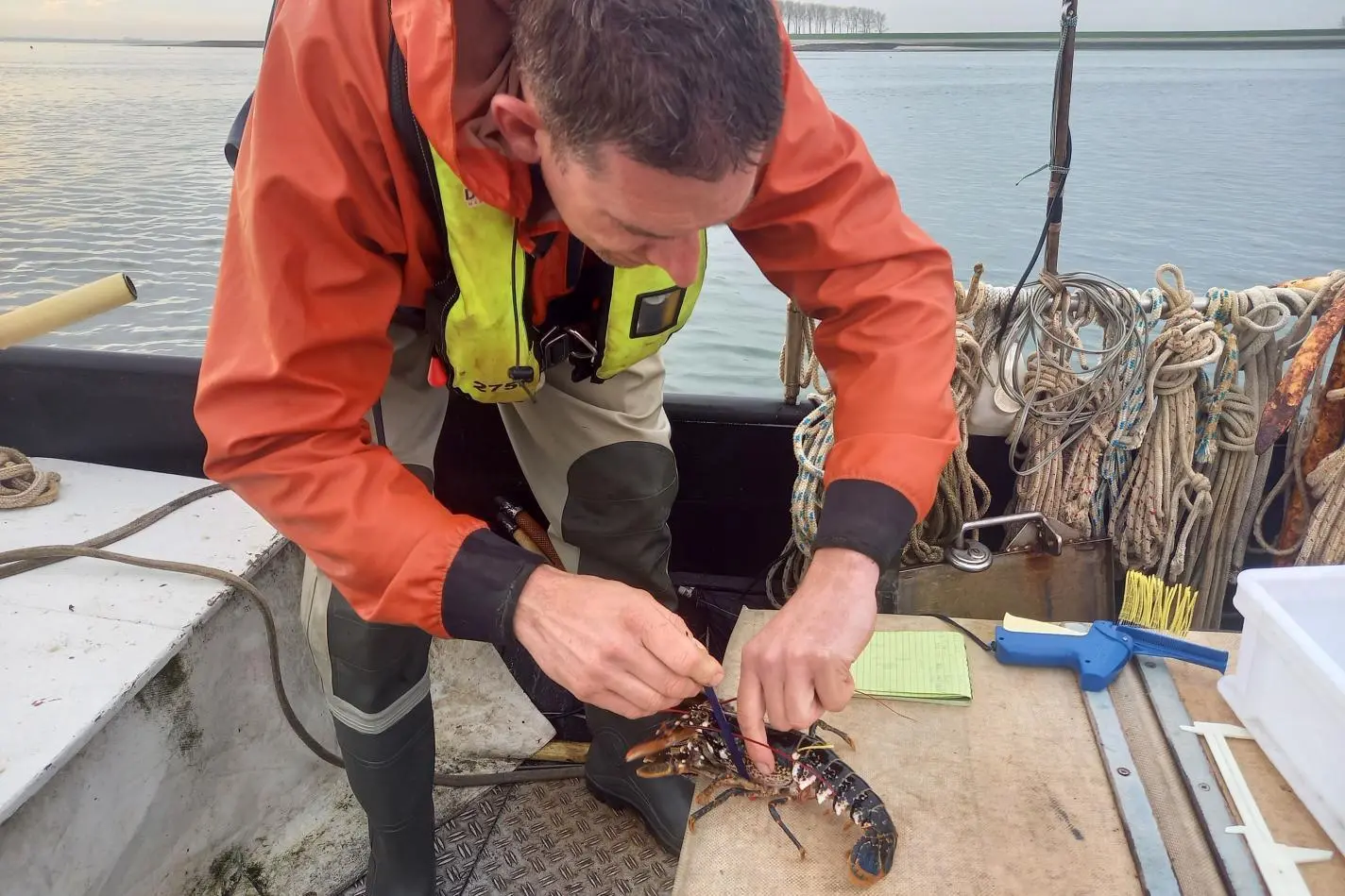
To begin with, experiments were conducted to monitor growth, reproduction and mortality of the Eastern Scheldt lobster to better understand its lifecycle and development. Researchers studied the lobsters’ basic energy use and the relation between activity level and water temperature, and collaborated with fishers on field experiments where lobsters were tagged and released for long-term monitoring.
To enrich this data, researchers also tested CatchCam, an automatic catch monitoring system which gathers important data on fishing effort and the catch.
Researcher Edwin van Helmond from Wageningen Marine Research said the aim is to make information collection easy for the fisher.
“Once the computer programme works well, it will no longer be necessary to collect this information manually. In fact, it will no longer be necessary to have scientific observers along,” he said.
CatchCam takes a digital photo of each catch which automatically enters in a database the lobsters’ size, sex and length of carapace, which seconds later is sent to the fisher. It automatically registers the precise location, registering only the catch and not personnel onboard. The system operates autonomously, so fishers can go about their business while important data is collected.
Eventually, laboratory and field data from the project will be used to develop a simple stock assessment model, which in the future will be able to inform fishery management in the region.
The project also conducted interviews and workshops with fishers, and developed an annual questionnaire to appraise stock dynamics. This is to enable comparisons with quantitative results.
The EU Directorate-General for Maritime Affairs and Fisheries has recognised that LobStAR’s methods and findings are easily transferrable across regions and species, and stated that such scientist-fisher collaborations that combine scientific expertise with fishers’ knowledge and digital tools will help create a sustainable future for marine resources.
Related Articles
 PROCESSING & REFRIGERATION
 FISHERIES
 FISHERIES