




Kadis urged to affirm stance on bottom trawling
Following the conclusion of second edition of the European Ocean Days, held in Brussels from 3 to 7 March 2025, ocean advocates BLOOM, Blue Marine Foundation, Défense des Milieux Aquatiques, Empesca’t, National Geographic Pristine Seas, Oceana, Only One and Seas At Risk, in collaboration with fishers and scientists are urging EU Commissioner Costas Kadis to call for a ban on destructive fishing practices like bottom trawling in marine protected areas (MPAs), following his comments when asked about the regulation of bottom trawling in MPAs, Kadis stated, “’my answer is: it depends”.
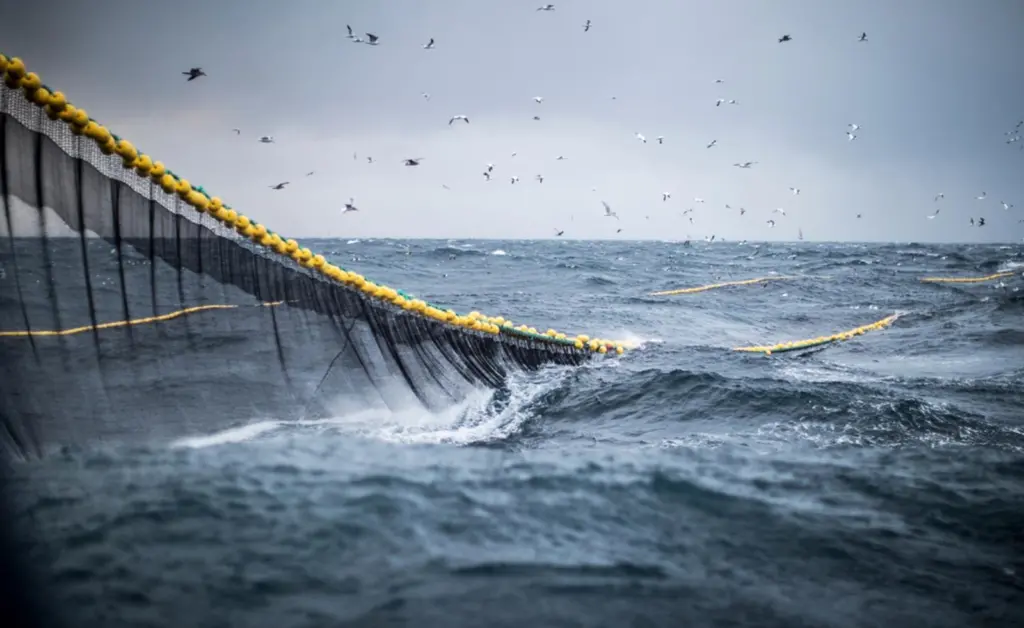
However, the NGOs, industry and scientific community insist that destructive fishing practices such as bottom trawling not only negatively impact marine ecosystems but also undermines economic sustainability, depletes fish stocks and undermines the ocean’s capacity to mitigate climate change.
“As scientists, we cannot accept a ‘case-by-case’ approach when the evidence is overwhelming – destructive fishing such as bottom trawling is incompatible with marine conservation and has no place in MPAs. The science is clear: bottom trawling devastates the seafloor, depletes fish populations, and releases vast amounts of carbon dioxide, contributing to the warming of our planet,” said Enric Sala, Explorer in Residence and Executive Director at National Geographic Pristine Seas.
“Allowing exceptions into protected waters undermines efforts to replenish European seas and threatens Europe’s environmental leadership. We hope that Commissioner Kadis will clarify his position and commit to a full ban on bottom trawling in all protected areas.”
Seas At Risk Executive Director Dr Monica Verbeek said that for too long, EU member states have defied rules on the protection of marine habitats and continue to allow destructive bottom trawling in protected areas.
“The Oceans Pact is Commissioner Kadis’s chance to right this wrong – not only by ensuring proper enforcement of existing restoration and fishing rules, but also by introducing new rules to properly protect MPAs.”
Oceana Europe Deputy Vice President Vera Coelho said that more than three decades after EU laws were adopted to protect marine life, most EU marine protected areas remain mere lines on maps.
“In 2023, more than 250 scientists called for a ban on such activities in EU MPAs, because destructive fishing is simply not compatible with the notion of ‘protection’. With just a few months to go until the United Nations Ocean Conference in June, the European Commission must show political leadership to save the ocean and commit to fully enforcing EU nature laws as a key measure under the EU Ocean Pact,” she said.
According to the group, the economic case for banning destructive fishing, in particular bottom trawling, is just as strong as the environmental one. Citing New Economics Foundation (NEF) socioeconomic analysis, they argue that removing bottom trawling from MPAs would result in a net economic gain of EUR 8.4 billion over two decades and that for every euro invested, there would be a EUR 3.41 return, with benefits outweighing costs within just four years.
Meanwhile, small-scale fishers argue that industrial bottom trawling not only depletes fish stocks but also undercuts the sustainability and future of coastal communities that depend on responsible fishing practices.
Renato Galeotti, President of Associazione Casette dei Pescatori in Vada, Italy, said: “Local knowledge and scientific research go hand in hand. Fishers see changes in the ocean first-hand, and science helps us understand them. Both tell us the same thing – bottom trawling has no place in marine protected areas if we want to protect marine life and the future of fishing.”
Isaac Moya, fisherman and Co-Founder of the Sustainable Fisheries Collective in Empesca’t, Spain, added: “We depend on a healthy ocean to make a living. Bottom trawling in MPAs damages the seabed and disrupts marine life, making it harder for sustainable fishers to survive.”
With just over three months to go until the United Nations Ocean Conference (UNOC 2025), which will take place in Nice 9-13 June, and where Europe is preparing to present its Ocean Pact, NGOs remain firm that implementation and new regulations will be essential to ensure the health and well-being of the ocean. To align with the EU’s commitment to protect 30% of its ocean by 2030, they say the European Commission needs to:
- Implement a ban on destructive fishing practices, and in particular bottom trawling in EU MPAs, ensuring these areas actually protect biodiversity and support fish populations
- Strengthen enforcement and protection measures to stop destructive fishing fleets from exploiting loopholes that render MPAs meaningless
Related Articles
 FISHERIES
 FISHERIES
 PROCESSING & REFRIGERATION