






ISSF: Global tuna stocks’ health improves
Of the total commercial tuna catch worldwide, 88% comes from stocks at “healthy” levels of abundance, according to the International Seafood Sustainability Foundation’s (ISSF) latest Status of the Stocks report. This, the global coalition says, is an improvement of two percentage points compared to its previous March 2024 report findings.
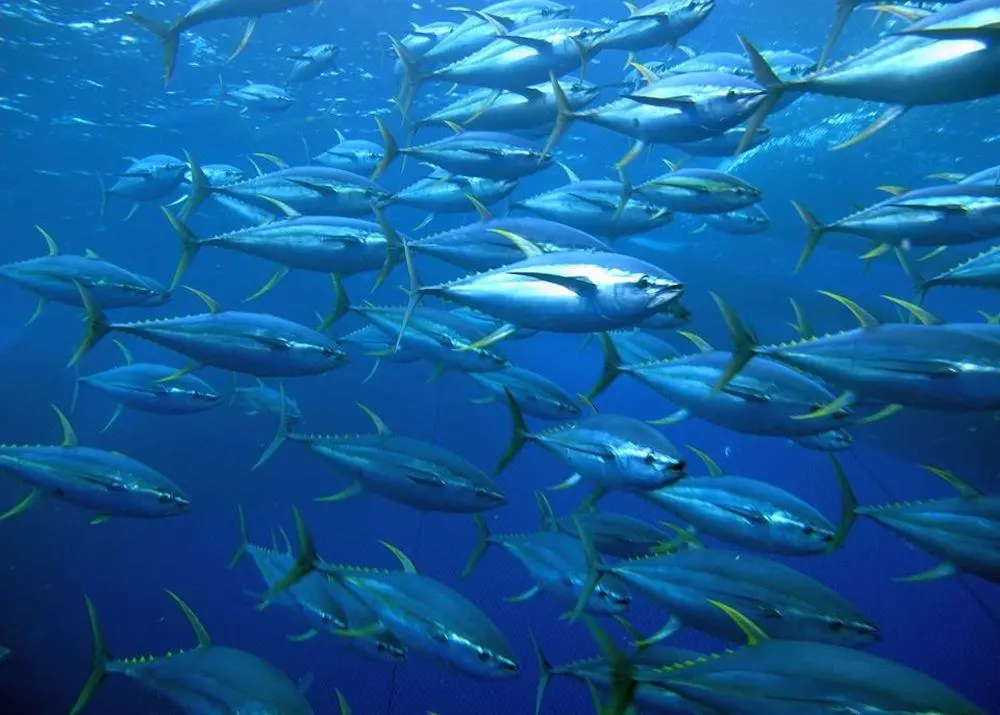
The analysis also finds that overfished stocks account for 10% of the total catch – unchanged from the last report. The percentage of the catch that came from stocks at an intermediate level of abundance decreased from 4% – as reported in March – to 2%.
Changes in stock status ratings since the March report include:
- Abundance or spawning biomass (SSB) and exploitation rate or fishing mortality (F) ratings for Eastern Pacific Ocean bigeye improved from yellow to green
- Pacific Ocean bluefin’s F rating also improved from yellow to green
- SSB and F ratings for Atlantic Ocean Mediterranean albacore changed from orange to yellow. However, there is high uncertainty about the stock status due to poor monitoring and basic fishery statistics
According to the November 2024 report, the following tuna stocks are considered overfished and/or subject to overfishing:
- Indian Ocean bigeye and Indian Ocean yellowfin stocks are overfished and subject to overfishing, unchanged since the March report
- Pacific Ocean bluefin is overfished, also unchanged since the March report
In terms of Regional Fisheries Management Organisations (RFMO) stock management, key updates since March 2024 include:
- Indian Ocean Tuna Commission (IOTC) adopted a new management procedure for skipjack tuna that will help reverse overcatch and ensure the long-term sustainability of the species
- IOTC and the Inter-American Tropical Tuna Commission (IATTC) released updated fish aggregating device (FAD) measures, helping to improve how FADs are used and managed, reducing the impacts of FADs on the ecosystem, and increasing monitoring of these devices at sea
ISSF publishes its signature Status of the Stocks report several times yearly using the most current scientific data on 23 major commercial tuna stocks. The latest report also notes that 66% of the global catch is made by purse seining, followed by longline (9%), pole-and-line (8%), gillnets (3%) and miscellaneous gears (14%).
The total tuna catch in 2022 was 5.2 million tonnes, a 2% increase from 2021. Fifty-seven percent of it was skipjack tuna, followed by yellowfin (30%), bigeye (7%) and albacore (5%). Bluefin tunas accounted for 1% of the global catch.
Related Articles
 SUSTAINABILITY
 FISHERIES
 FISHERIES