





Is a repeat of the herring crash of the 1960s afoot?
The industry is warning of a repeat of the herring crash of the 1960s as Governments fail to stop overfishing.
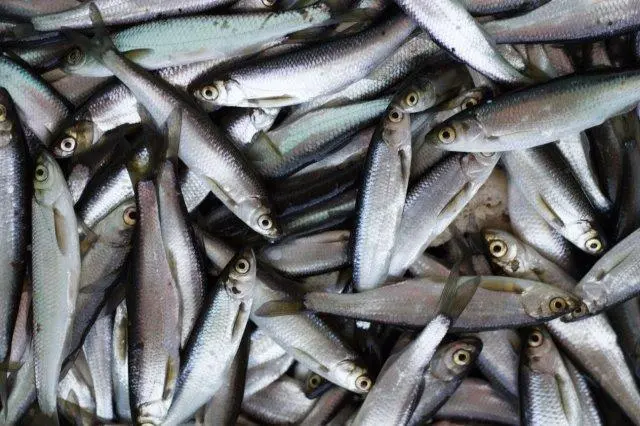
Back then the crash caused a significant change to diets across Europe as no one ate herring any more and moved to tuna. Now experts warn, it’s happening again.
“The declining health of Atlanto-Scandian (AS) herring and the latest alarming forecast should send a sharp reminder to governments that stocks are at risk of collapse when they are overexploited year on year,” said Erin Priddle, regional director for the Marine Stewardship Council in North Europe.
”We only need to look back to recent history when overfishing and mismanagement led to the collapse of AS herring stock in the 1960s and subsequent five-year closure of fishing activities, to allow the stock to recover. Many fisheries and herring processors went bankrupt as a result, resulting in the loss of thousands of jobs.”
Critical danger
The International Council for the Exploration of the Sea (ICES), the science organisation responsible for advising governments on sustainable catch limits, has advised that a steep cut of 44% in AS herring catches – equivalent to 302,932 metric tonnes is required.
But ICES predict that even if that figure is adhered to, herring stock levels will still fall below a significant critical level by 2025, risking the long-term sustainability of the stock.
Analysis by the MSC shows that the AS herring stock has dropped from 7 million metric tonnes in 2008 to 3.7 million metric tonnes with catches in 2022 exceeding ICES advice by 36%.
MSC says that at the heart of these worrying developments lies the inability of fishing nations to agree on quota sharing in line with scientific advice.
Instead, AS herring, as well as Atlantic mackerel and blue whiting, are being fished according to quotas that are set unilaterally by individual nations, resulting in ongoing overexploitation of these resources.
The MSC is calling on governments from the fishing nations of the North East Atlantic to reach a quota sharing agreement in line with scientific advice.
It said that the upcoming Coastal States meetings in October 2023, will be a critical opportunity to move beyond the current deadlock and agree a quota share allocation that aligns with ICES advice, helping safeguard the future health of these stocks for future generations.
Solutions are within reach. A recent MSC report, North-East Atlantic Pelagic Fisheries – Management Challenges for Straddling Fish Stocks, outlined different management tools that governments could consider to successfully reach a deal, such as majority voting, dispute resolution procedures and adaptive allocation principles.
These management tools are already used in other parts of the world – such as the Chilean jack mackerel fishery – which has enabled negotiators to arrive at a compromised outcome and find solutions to help secure the future sustainably of this stock.
Related Articles
 FISHERIES
 FISHERIES
 FISHERIES