



The European Union and World Wildlife Fund have welcomed action by the Indian Ocean Tuna Commission (IOTC) on drifting fish aggregate devices (FAD) but rue a missed opportunity to safeguard stocks.
At the IOTC’s 28th annual meeting, delegates agreed to adopt stringent measures to manage FADs but failed to close fisheries to allow bigeye and yellowfin tuna to recover from overfishing.
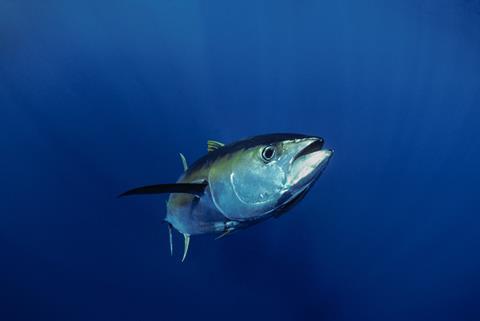
“It is deeply disappointing that IOTC has failed to curb overfishing,” said WWF’s Indian Ocean tuna manager, Umair Shahid, adding that the Scientific Committee has found yellowfin tuna’s spawning stock biomass to have halved over the last 15 years.
Similarly the EU ‘regrets that its proposal to establish a fisheries closure of one month in the Indian Ocean was not adopted. “It would have helped the recovery of the yellowfin and bigeye tuna stocks, which are currently overfished,” it said.
More positively, the commission agreed a series of measures to reduce the harmful impact of drifting FADs, with an immediate ban on the use of fully non-biodegradable materials and other measures such as a reduction in numbers to follow.
WWF also highlighted a failure to better protect sharks; a recommendation that fins must remain naturally attached and a ban on wire tracers and shark lines was rejected.
In total, ten proposals and two recommendations were adopted with the decision to reduce yellowfin catch deferred to the next session in 2025 when new data will be available.