
IFPO: Freeze Iceland’s bid for Irish blue whiting
The Irish government must seriously “up its game” at the European Union talks on Iceland’s bid to access Irish fishing waters, insist Irish fishing leaders, with Irish Fish Producers Organisation (IFPO) CEO Aodh O Donnell urging it to fight for its fishing industry in the same way that other EU member states do.
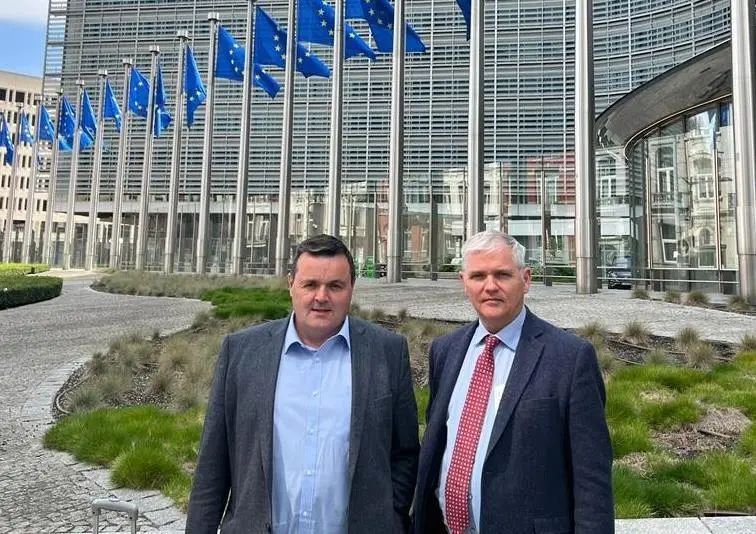
“The Irish blue whiting quota is worth around €15 million for 2024,” O Donnell said. “If this new deal goes ahead, Iceland can catch almost the same amount of blue whiting in Irish waters as we do. They have a population of less than 380,000 compared to our population of over 5.2 million. They are not an EU member. How is this a fair deal?
“Are we getting to catch around €15 million of extra fish in Iceland or EU waters for this deal? No. Instead, we believe a small fraction of this is on the table for Ireland. However, countries like Denmark, the Netherlands and Sweden will each gain more than Ireland from this deal.”
According to O Donnell, the “heart of the matter” is that the EU is using Ireland’s EU waters to get better deals for other EU and non-EU States at Ireland’s expense.
“It’s both unbelievable and outrageous. Can anyone imagine the Spanish or Dutch governments accepting a flawed deal like this?”
Ahead of an EU Council meeting of marine ministers, O Donnell highlighted that fishing representative bodies in Ireland are extremely concerned about “secretive” EU talks with Iceland. “There’s a genuine fear that the negotiations may be close to a deal granting Iceland valuable access to our rich waters – without our input or adequate consultation.”
He said, “Why would the minister agree to give Iceland access to our waters when there is almost nothing in the deal for Ireland’s fishing industry. This is a colossal and embarrassing failure of negotiating skills. The sector is already suffering from the loss of 26% of our mackerel quota to the UK in the disastrous Brexit deal. So, why not use access deals – like this one – to seek a rebalancing of Ireland’s quota to address these losses fully?’’
IFPO noted the minister is describing the EU-Iceland talks as “informal” but has failed to confirm if agreement has been reached already.
The organisation has also voiced concerns about sustainability.
“Iceland has been a main driver in unsustainable fisheries for mackerel and blue whiting in the Northeast Atlantic. They have a record of fixing inflated quotas and building new vessels to expand their catches. At the same time, Ireland is forced to decommission our whitefish fleet and downsize because of reductions in our allowable catch.
“Our small fleet and onshore factories are struggling with reduced fishing quotas. Iceland’s access would be at the further expense of the livelihoods of Irish fishers, coastal communities, and the sustainability of stock in our waters,” O Donnell said.
Brendan Byrne of the Irish Fish Processors and Exporters Association (IFPEA) shares IFPO’s concerns.
“We fail to understand why our minister and his officials are negotiating an agenda driven by the EU Commission. This agenda is not in Ireland’s interest but benefits Iceland as a non-EU member. Have we not learnt any lessons from the past?”
Byrne said the effects of this EU agenda have wider economic consequences for Ireland too. He pointed out the volume of Ireland’s pelagic fish exports dropped by 45% last year, according to the latest Bord Bia report.
“That represents a fall of an estimated 31% in the value of these exports – a loss of €56 million to the Irish economy in one year alone,” he said.
Byrne also accused the minister of being “out of touch” with his industry both at grassroots level and those representing the overall industry, and said the views of the majority of industry are not being reflected.
IFPO and IFPEA are calling on the minister and his department to come clean now about what proposals are on the table before a damaging deal is struck. Both organisations also want the minister to demand a better deal for Ireland from these negotiations.
“There must be an open consultation and a fully transparent dialogue with the beleaguered Irish fishing industry,” O Donnell said.