




Icelandic fleet’s catch volume and value fall in first-half of 2023
The volume of fish and shellfish landed by Iceland’s fishing fleet in the first-half of this year totalled 772,954 tonnes, which represents a 10% decrease on the corresponding period of 2022. In value terms, the catch slipped 1% to less than ISK 101 billion.
By species, the demersal volume for the period 1 January through 30 June 2023 fell 13% to 207,994 tonnes, with its value down 6% to ISK 67.1 billion. Within this category, cod’s volume and value decreased 14% and 5% respectively to 118,092 tonnes and ISK 44.5 billion, saithe’s volume and value fell 42% and 35% to 20,700 tonnes and ISK 5 billion, and the redfish volume and value decreased 23% and 6% to 16,616 tonnes and ISK 4.7 billion. Bucking the trend, haddock increased 33% in volume and 9% in value to 31,808 tonnes and ISK 9.6 billion.
A 9% lower pelagic catch led to a 9% rise in value, with totals of 551,587 tonnes and ISK 26.9 billion. Of this, herring increased 85% in volume and 151% in value to 1,369 tonnes and ISK 90 million, mackerel was up 87% in volume and 150% in value to 2,232 tonnes and ISK 149 million, and blue whiting climbed 41% in volume and 47% in value to 222,145 tonnes and ISK 7.9 billion. However, there was 27% drop in the capelin volume and a 3% fall in its value at 325,749 tonnes and ISK 18.8 billion.
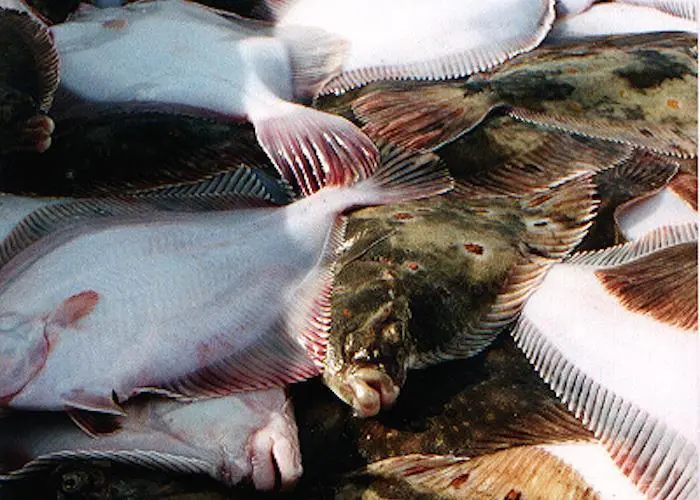
Meanwhile, Iceland’s flatfish catch for the six-month period increased by 14% to 11,140 tonnes, with a value of ISK 6.3 billion – up 25%. Its shellfish catch was down 11% in volume to 2,232 tonnes but had an 8% higher value of ISK 538 million.
Related Articles
 FISHERIES
 FISHERIES
 FISHERIES