





Fraserburgh releases expansion plans, calls for support
Fraserburgh Harbour, one of Scotland’s most important commercial fishing ports, has moved a step closer to realising its expansion masterplan with the completion of its technical feasibility study with maritime engineering specialist, Arch Henderson.
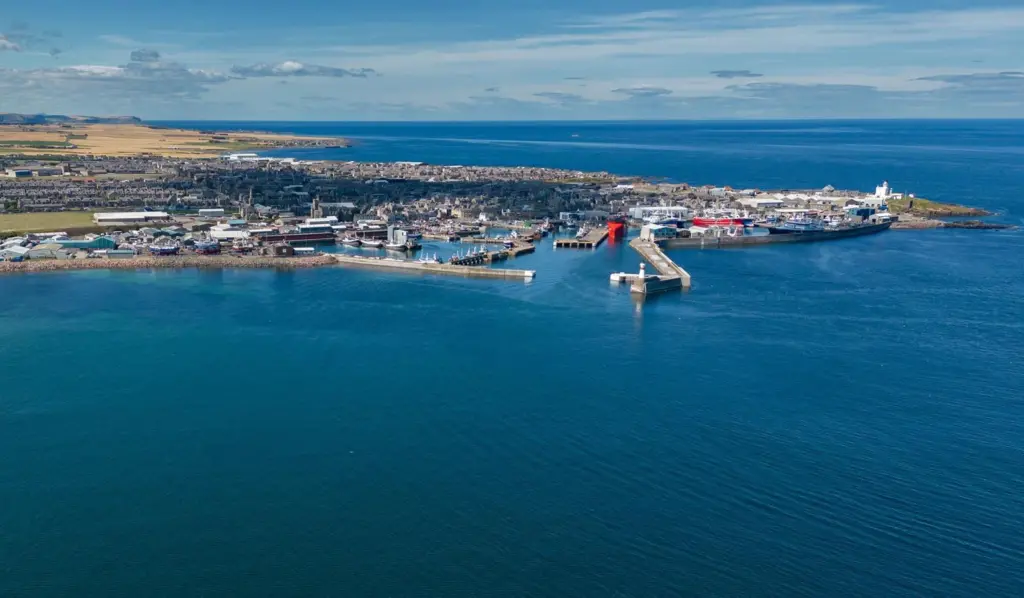
Finalised during the summer, the study provides the technical rationale for the new south harbour as well as the improvements to the existing harbour, which have been developed to secure the future of the trust port by providing the facilities which will support economic growth and employment in the town and wider region, whilst supporting climate change objectives.
According to Fraserburgh Harbour, the masterplan addresses key infrastructure challenges which will allow it to better service and secure an ever-developing fishing industry.
Harbour Development Manager Pamela Neri said the plan has now reached a critical stage in its progress: “Now is the time for industry and government to assist us in taking this major project to the next level. We are now in a position to publish the masterplan technical feasibility study which can be viewed alongside the project’s economic viability. The latter confirms that the approximately GBP 300 million investment required will generate a minimum net gross value added of GBP 366 million over 50 years, whilst safeguarding and creating up to 1,121 full time equivalent jobs across a number of industries.
“The fishing industry has been at the heart of Fraserburgh for over 200 years. As fishing vessels are set only to increase in size, and require deeper waters, it is critical that the structural development detailed in our masterplan will allow us to continue servicing those who berth and land at Fraserburgh, whilst attracting additional vessels to the harbour.”
Neri continued: “The masterplan also addresses the opportunities within the offshore wind sector which are inherent both in our location and in our renowned repair and maintenance facilities and supply chain businesses. Already home to Ocean Winds’ Moray East Windfarm Operations and Maintenance base, there is significant potential for the harbour to develop in tandem with the UK renewable energy industry.”
The masterplan has also been developed as a driver of economic resilience, community wealth building and economic impact, with the expectation that it will contribute to a range of policies and plans at a national, regional and local level including the 2030 Climate Change Plan; Scotland’s 10-year National Strategy for Economic Transformation; the Aberdeenshire Local Development Plan and Aberdeenshire Council’s Regeneration Strategy.
Related Articles
 FISHERIES
 PROCESSING & REFRIGERATION
 FISHERIES