



Fishery subsidy crackdown
A landmark agreement that limits harmful fisheries subsidies has been agreed by the World Trade Organisation (WTO).
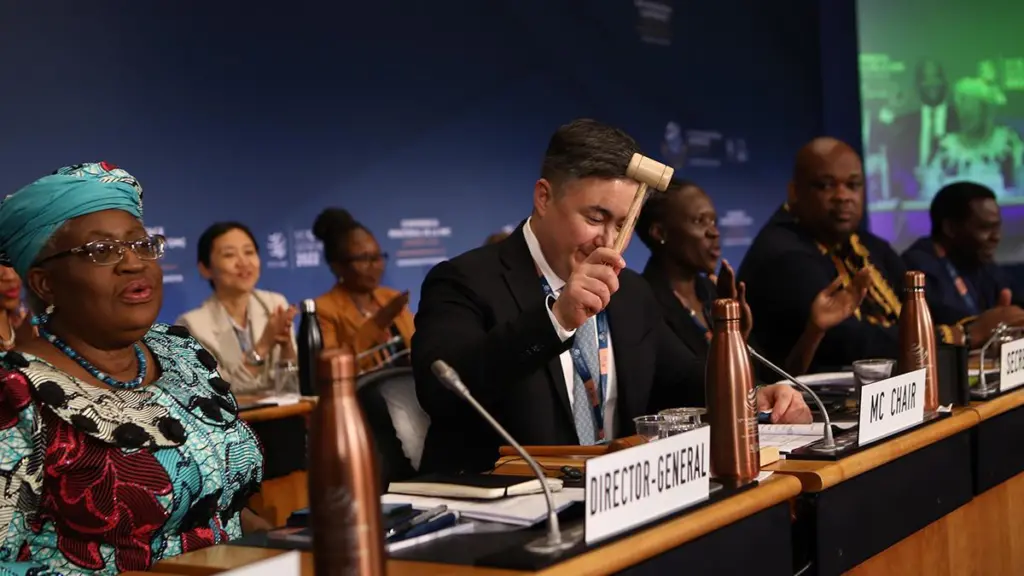
The WTO’s 12th Ministerial Conference (MC12) in Geneva concluded on 17 June with members agreeing to a deal that includes a strong prohibition of subsidies contributing to illegal, unregulated and unreported (IUU) fishing as well as an absolute prohibition of subsidies for fishing on the unregulated high seas.
According to the organisation, round-the-clock negotiations among delegations produced the “Geneva Package”, which contains a series of “unprecedented decisions on fisheries subsidies”, WTO’s response to emergencies, including a waiver of certain requirements concerning compulsory licensing for COVID-19 vaccines, food safety and agriculture, and WTO reform.
WTO Director-General Ngozi Okonjo-Iweala told the meeting, “The package of agreements you have reached will make a difference to the lives of people around the world. The outcomes demonstrate that the WTO is, in fact, capable of responding to the emergencies of our time.”
She continued, “They show the world that WTO members can come together, across geopolitical fault lines, to address problems of the global commons, and to reinforce and reinvigorate this institution. They give us cause to hope that strategic competition will be able to exist alongside growing strategic cooperation.”
The new subsidies agreement states that no WTO member shall grant or maintain any subsidy to a vessel or operator engaged in IUU fishing or fishing related activities in support of IUU fishing, and also that no member shall grant or maintain subsidies for fishing or fishing related activities regarding an overfished stock.
Additionally, no member is permitted to grant or maintain subsidies provided to fishing or fishing related activities outside of the jurisdiction of a coastal member or a coastal non-member and outside the competence of a relevant regional fisheries management organisation (RFMO).
Furthermore, in order to strengthen and enhance notifications of fisheries subsidies, and to enable more effective surveillance of the implementation of fisheries subsidies commitments, each member must provide information on the status of the fish stocks in the fishery for which a subsidy is provided (e.g. overfished, maximally sustainably fished, or underfished) and the reference points used, and whether such stocks are shared with any other member or are managed by an RFMO.
Information must also be provided on the conservation and management measures in place for the relevant fish stock; the fleet capacity in the fishery for which the subsidy is provided; the name and identification number of the fishing vessel or vessels benefitting from the subsidy; and catch data by species or group of species in the fishery for which the subsidy is provided.
Each member must also notify the newly-created Committee on Fisheries Subsidies in writing on an annual basis of a list of vessels and operators that it has affirmatively determined as having been engaged in IUU fishing.
These requirements apply to all 164 WTO member governments.
Overall, the agreement requires two thirds of WTO membership (at least 109 countries) to ratify the agreement for it to enter into force.
The European Commission was among those to welcome the agreement on harmful fisheries subsidies, pointing out that it’s in line with the UN Sustainable Development Goal 14.6 (UN SDG).
It called the absolute prohibition of subsidies for fishing on the unregulated high seas “a landmark prohibition” for the most vulnerable areas lacking an established and coordinated fisheries management regime and said the provision on overfished stocks will bring sustainability rules for subsidies regarding most vulnerable stocks.
For the agreement regarding subsidies on overcapacity and overfishing to enter into force, negotiations on UN SDG 14.6 need to be concluded, the Commission said.
“The EU is fully committed to complete the agreement with the elements not yet agreed as soon as possible.”
Related Articles
 FISHERIES
 FISHERIES
 FISHERIES