


Fisheries action = climate action, Irish leaders told
Ireland’s government has been urged to implement cross-departmental action that enables the fishing industry to transition to low impact, low emissions fisheries that in turn deliver on commitments to halt biodiversity loss and take action on the climate crisis.
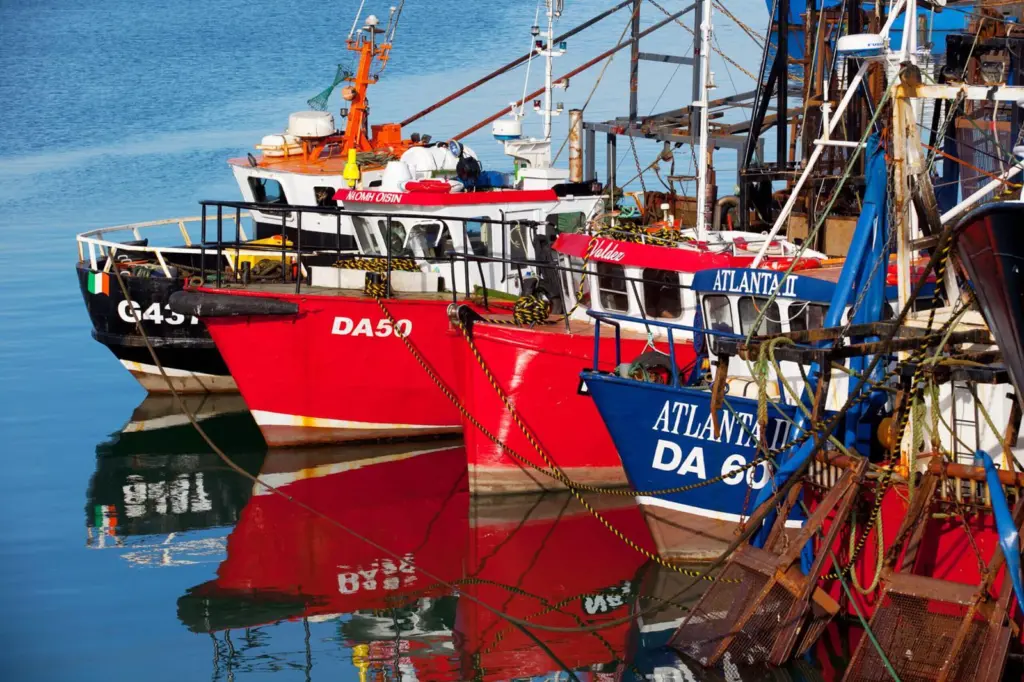
NGOs Birdwatch Ireland and the Our Fish campaign have called on Minister for Agriculture, Food and the Marine, Charlie McConalogue, Minister for the Environment, Climate and Communications, Eamon Ryan, and Minister for Housing, Local Government and Heritage, Darragh O’Brien, to recognise the critical role that fish play in capturing carbon from the atmosphere as part of the ocean carbon pump.
They want fisheries management to be seen as carbon management by incorporating it into Ireland’s climate action plans.
“If Ireland is to meaningfully deliver on its climate and biodiversity obligations and secure the long-term viability of the fishing industry, the government must grasp that good fisheries management is good carbon management, and take commensurate, widespread action to minimise destructive bottom trawling, eliminate fossil fuel subsidies, and prioritise low impact fishing practices,” Birdwatch Ireland’s Marine Policy & Advocacy Officer Sinéad Loughran said. “Ireland’s fishing communities would reap socio-economic benefits if the government takes the leap from the current mis-management regime to one where the role of fisheries management becomes part of climate action.”
“Fish are keystones of the ocean’s biological pump, the system constantly at work capturing and storing excess carbon from the atmosphere, where they play a critical role in the ocean’s capacity to sequester carbon,” said Angela Martin of Agder University, Norway . “When more fish are left in the ocean, they not only enable whole ecosystems to thrive, they also help more carbon sink to the ocean floor. The removal of too many fish using methods like bottom trawling can add excessive emissions and damage this carbon-storing habitat – and this has potentially huge implications for climate and biodiversity obligations.”
The NGOs say the EU has the legislative power to facilitate a transition to low impact and low emission fishing in Article 17 of the Common Fisheries Policy (CFP), which outlines the requirement to allocate quotas based on transparent, objective environmental, social and economic criteria.
“Put simply, the current EU system of subsidising high impact, fossil fuel intensive fishing activities is akin to cutting off your nose to spite your face – it puts short-term operational costs ahead of environmental sustainability, climate resilience, jobs and economic profitability,” Our Fish Programme Director Rebecca Hubbard said. “As an influential player in EU fisheries, Ireland should instead be prioritising access to fishing opportunities for low-impact and low-emissions fishing fleets in order to accelerate the transition to fisheries management that delivers climate, biodiversity and social benefits.”
Loughran said the transition to a low impact and low emissions fishing industry requires a concerted effort from the Department of Environment, Climate and Communications, the Department of Housing, the Department of Finance, and the Department of Agriculture, Food and the Marine.
“While the government’s Climate Action Plan recognises the role of blue carbon, by failing to embrace the role of marine biodiversity, including fish, in the ocean’s carbon pump, it risks missing out on the ocean’s potential for tempering the impact of climate change,” she said.
According to Loughran, by excluding fishing industry emissions, both directly through fuel consumption and indirectly through the disruption or removal of oceanic carbon stores, the government has created a huge gap in Ireland’s total emissions inventory.
However, by taking into account the true extent of national emissions, the Irish government has the opportunity to implement a whole-of-economy approach to climate action as obligated under the Paris Agreement, and outlined in the Climate Action Plan, she said.
“Recognising the role of the fishing sector in climate action and Ireland’s obligations under EU fisheries law would help to ensure that support and funding is provided for the transition to climate and nature-compatible fisheries management that we urgently need.”
Related Articles
 FISHERIES
 FISHERIES
 FISHERIES