



European fishers irked by import-friendly ATQ regs
European Council’s new regulation for autonomous EU tariff quotas (ATQs) for certain fishery products has been called into question for granting certain third-country seafood species access to the EU market at reduced rates or duty-free.
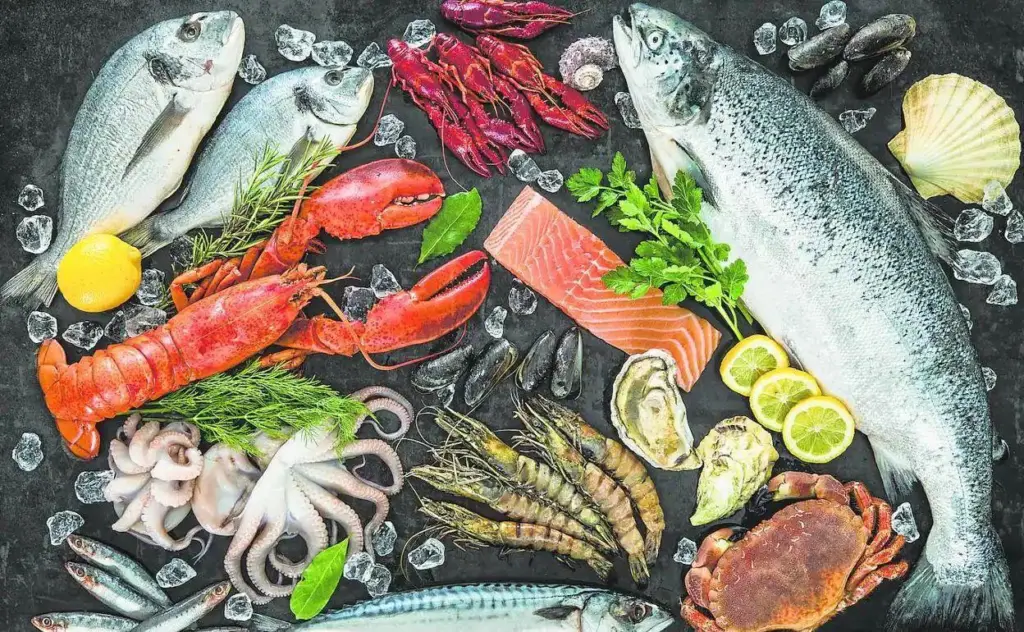
The new ATQ regulation – for the years 2024, 2025 and 2026 – is intended to grant the EU’s fish processing industry the right to import seafood products not available in sufficient quantities in the region at favourable rates.
European fishing industry body Europêche welcomed the decision taken to deny Russia the right to duty-free status for its fisheries products, saying the move is in line with the sanctions implemented in the wake of the Russian invasion of Ukraine. It said it also hopes the measure will apply to Russian fishery products processed in other non-EU countries such as Norway or China that are later sold in the EU market.
However, Europêche also expressed its disappointment that the Council didn’t take a similarly strong approach to the sustainability of the new ATQ system. It said that while an “increasing array of rules and restrictions” are being applied to EU vessels as the European Commission seeks to building its latest fisheries policies proposals under the imperative to tackle a climate and biodiversity crises, the EU is giving away free market access to increased volumes of foreign seafood supplies.
It has calculated the new regulation will grant zero-duty access to more than 900,000 tonnes of imported seafood, compared to 831,000 tonnes in the previous regulation.
This, Europêche said, is being done “without adhering to the fundamental principles of sustainability, reciprocity and mutual benefit”. It also maintains this “paradoxical approach” undermines the coherence of the proposed policies and also exposes a critical loophole in allowing a lack of accountability in ensuring that global seafood imports align with the sustainability objectives championed by the EU.
According to the organisation, an external study was undertaken on ATQ’s sustainability in 2022, but no impact assessment was conducted for this new regulation to check whether the ATQs supplies are coherent with the current EU policy initiatives on sustainable sourcing and trade. Furthermore, no sustainability criteria were added to the new proposal.
It was also frustrated that while the Commission initially proposed a two-year period regulation to integrate some sustainability rules as soon as possible, the Council went back to the usual three-year implementation period.
“The European trade policy is our most powerful weapon to achieve fair competition and the promotion of core principles such as sustainability and social fairness in the field of fisheries. Including sustainability in the ATQ system is paramount to safeguard EU’s own fishing interests,” Europêche Director Daniel Voces said.
The organisation’s President Javier Garat added: “The 2024-2026 regulation on ATQs was adopted by the Council three months after the proposal from the Commission, which shockingly has not been published at any point of the negotiation. This has never happened and cannot happen. Transparency has been put aside during this process, and with it the principles of democracy, accountability, public participation and trust.”
Regarding the new quotas, hake, flatfish and tuna loins are of particular concern for the EU fleet, Europêche advised, saying that EU flatfish quotas are abundant and “absolutely no shortage in raw material occurs” and that there was therefore no need for the extra supply to the European market and no justification for maintaining an ATQ of 7,500 tonnes.
Likewise, the Ukrainian war is impacting the commercialisation of Pacific and Argentine hake, for which the 40,000-tonne ATQ mainly benefiting (at 95%) China’s production, was no longer necessary, it said.
Similarly, it insisted there was “a real need” for decreasing the 35,000 tonnes of tuna loin quotas, as these are “heavily impacting” the European fleet. It noted that China, Indonesia, Thailand and Vietnam benefit and receive a 98% allocation of tuna loin quotas, but these countries are “particularly criticised” for not respecting minimum global standards, and are far from the EU’s rules on management and control of fishing activities, working conditions, health and sustainability of resources.
Europêche.also pointed out that Vietnam was “yellow-carded” by the EU in 2017 for not doing enough to tackle illegal, unreported and unregulated (IUU) fishing and this is still in force at present, but the country still enjoys duty-free treatment.
The European Parliament Committee on Fisheries has also heavily criticised Chinese-flagged vessels for IUU fishing, it said.
On the market side, the ATQ quota for tuna loins is exhausted on the first days of January each year, and Europêche said the “massive entrance” of low-standard, cheap raw material creates a price distortion and prevents the European fleet from selling its products into the European Union.
According to the organisation, as well as the fleet raising concerns, the vast majority of stakeholders within the EU advisory councils for the market and the long-distance fleet advocated to suppress the ATQs for products originating from China, including tuna loins.
This is in light of China’s link to IUU fishing and serious labour abuse, it said. Additionally, West African ACP countries, long-term partners of EU and whose canneries work with EU-flagged vessels, also called for a progressive reduction of the tuna loins ATQs.
“The problem is that China’s expanding fishing fleet is depleting the world’s oceans in the very same waters where our vessels operate. Even worse, the unsustainable fish they capture ends up in our market. On top of that, the EU is granting tariff derogations to these products without any reason or merit, other than the low price. This has to stop,” Garat said.
Related Articles
 FISHERIES
 FISHERIES
 FISHERIES