






EU stakeholders discuss future of bottom trawling
One month after the publication of the European Commission’s ‘Action Plan: Protecting and restoring marine ecosystems for sustainable and resilient fisheries’, fishing industry leaders and EU member state representatives have met in Brussels to jointly analyse the nature, impact and consequences of the new initiative.The meeting reported that all parties agreed on the need to protect vulnerable marine ecosystems as well as sustainable fisheries and considered a different approach than that of the Commission to achieve this goal.
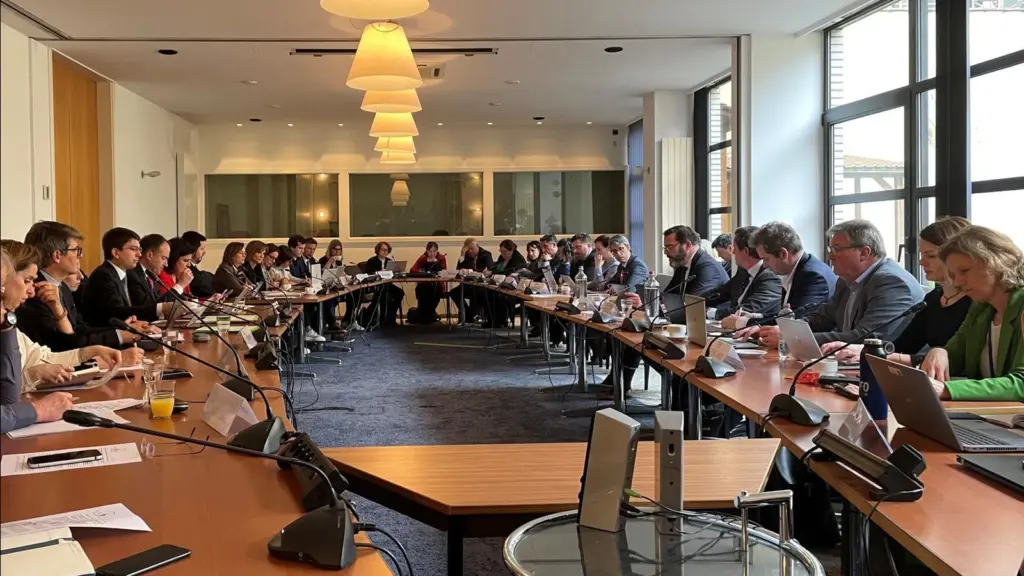
The meeting reported that all parties agreed on the need to protect vulnerable marine ecosystems as well as sustainable fisheries and considered a different approach than that of the Commission to achieve this goal.
Some member states also voiced concerns about the Commission’s proposal to gradually ban bottom fishing in 30% of EU seas by 2030, given the lack of socio-economic impact assessment and the necessary underpinning science. The legal nature, proportionality, and the timeline to implement the measures proposed by the Commission was also questioned by some countries.
The EU fishing sector, represented by the European Bottom Fishing Alliance (EBFA), Europêche and EAPO, expressed its gratitude to EU governments for the continued dialogue in search of the best way to implement EU regulations and the CFP, and for identifying ways to effectively protect vulnerable marine ecosystems.
It was also reported that the fishing sector unanimously feels the Action Plan places a heavy and disproportionate burden on the EU fleet, which is still struggling with the consequences of Brexit, the Covid pandemic, inflation and the energy crisis.
Furthermore, according to the sector, it places additional stress on member states that will have to deal with objectives not justified by science and bound to negatively affect entire fishing dependent communities under an unrealistic timetable.
It was stated the bottom fishing ban is a completely new objective, and that if there is any change to the Common Fisheries Policy, the Commission should follow the established legislative process – through the European Council and European Parliament.
EBFA Chair Iván López van der Veen said national authorities “have a specific mission and responsibility vis-à-vis their citizens” to implement EU rules, secure jobs, and supply the market with sustainable seafood.
“It is therefore difficult to understand that the European Commission has chosen to adopt an Action Plan, without consulting member states, despite putting them at the centre of the debate with the fisheries package,” he said.
“The legal nature of the instrument selected also raises legal questions. Since it is not EU law, citizens and companies, or even member states affected have no right to challenge in court the disproportionate impact of the Action Plan, leaving them defenceless. In a nutshell, no consultation, no debate, and no possible legal defence because of the path the Commission selected to bring its proposals forward.”
According to EBFA, the sector therefore considers the prohibition of bottom mobile gears as an objective clearly disproportionate, unjustified, not based on the best available science and contrary to international commitments.
Related Articles
 FISHERIES
 FISHERIES
 FISHERIES