


EU member state’s maritime plans are failing to account for climate change and are not on track to meet carbon reduction and marine protection targets, according to the World Wildlife Fund.
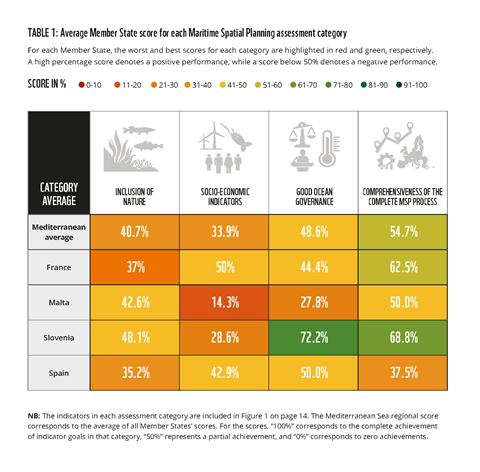
The WWF’s latest assessment on maritime spatial planning (MSP) in EU Mediterranean waters reveals the region is slow to apply an ecosystem-based approach to long-term management.
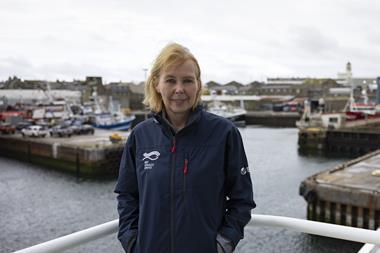
“At a time where our nature and climate are in crisis, maritime spatial planning in the Mediterranean is a catastrophe that puts job security and the future of one of our planet’s most iconic seas at risk,” said Dr Antonia Leroy, head of ocean policy at WWF European Policy Office.
Four member states – Cyprus, Croatia, Greece and Italy – have missed the deadline of March 2021 to implement maritime plans. Had they been included in WWF’s analysis the regional average score for an ecosystem-based approach to MSP would fall from 45% to 22%.
“To ensure the health of Mediterranean ecosystems, it is crucial that national plans be immediately developed where not already done,” continued Leroy, adding that existing plans must also be improved.
The report also shows that no Mediterranean member state is on track to achieve the European Green Deal target of increasing the share of renewable energy to 40% by 2030, and no national plan adequately addresses the uncertainties of climate change despite the region’s vulnerability.
This, says WWF, will make it increasingly difficult for the EU and its neighbours to overcome the impacts of climate change, threatening fisheries in the region.
WWF is calling for a dedicated regional working group to focus on integrating and implementing an ecosystem-based approach to MSP, helping safeguard maritime livelihoods for generations to come.