



Five new research projects backed by the European Maritime, Fisheries and Aquaculture Fund (EMFAF) have begun work on sharpening the scientific basis of EU fisheries management.
Together worth nearly €2.5 million, the initiatives were selected under the 2024 call for Scientific Advice for Fisheries, which sought stronger, policy-relevant science and closer links between researchers and the fishing sector.
The projects span a wide range but share a common goal to improve the accuracy, usability, and consistency of data underlying stock assessments and decisions under the Common Fisheries Policy.
Several build directly on earlier work from the International Council for the Exploration of the Sea, while others were shaped with support from fishing organisations and advisory councils.
The research comprises:
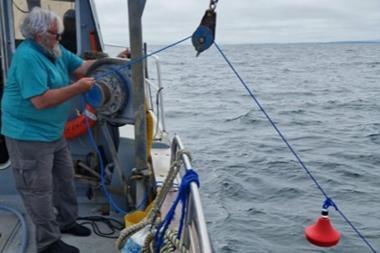
IMBUS, which receives €478,985, targets one of the biggest data streams in European fisheries: bottom-trawl surveys. The project aims to standardise quality control aboard survey vessels and make ICES survey data easier to access and apply, including for ecosystem and climate-related analyses.
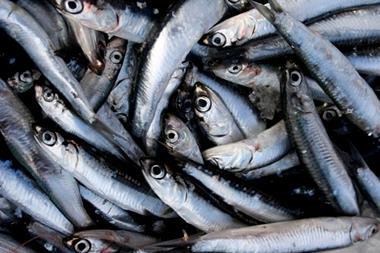
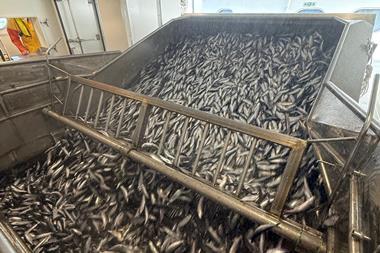
REMINDER, funded with €567,244, responds to a sudden decline in key crustacean plankton species in the Baltic Sea that contributed to weakened herring stocks. Its work centres on monitoring mysid shrimp abundance and understanding how changes in their distribution affect herring condition and productivity.
Smart4SAM (€371,109) expands the SmartDots platform used for interpreting fish age and maturity from images. The project will add reference collections, integrate uncertainty into stock-assessment models, and experiment with AI tools to strengthen data interpretation for vulnerable and commercial stocks.
Small-scale fisheries remain a persistent blind spot in EU datasets, and EM4SSF (€430,813) aims to address this by developing a harmonised reporting framework tested across case studies in Italy, Spain, France, Portugal, Denmark and Greece.
Finally, PAMBAS (€599,980) focuses on deep-sea shrimp fisheries exploited by the Spanish fleet in west Africa. Its work will improve biological data, refine stock identification and test assessment models to support management under existing EU–African partnership agreements.