


CMFRI: Monsoon trawl ban not detrimental to prawn resources
The monsoon trawl ban implemented in southwest India is not detrimental to kiddi (karikadi) prawn resources, finds a new study conducted by the ICAR-Central Marine Fisheries Research Institute (CMFRI).
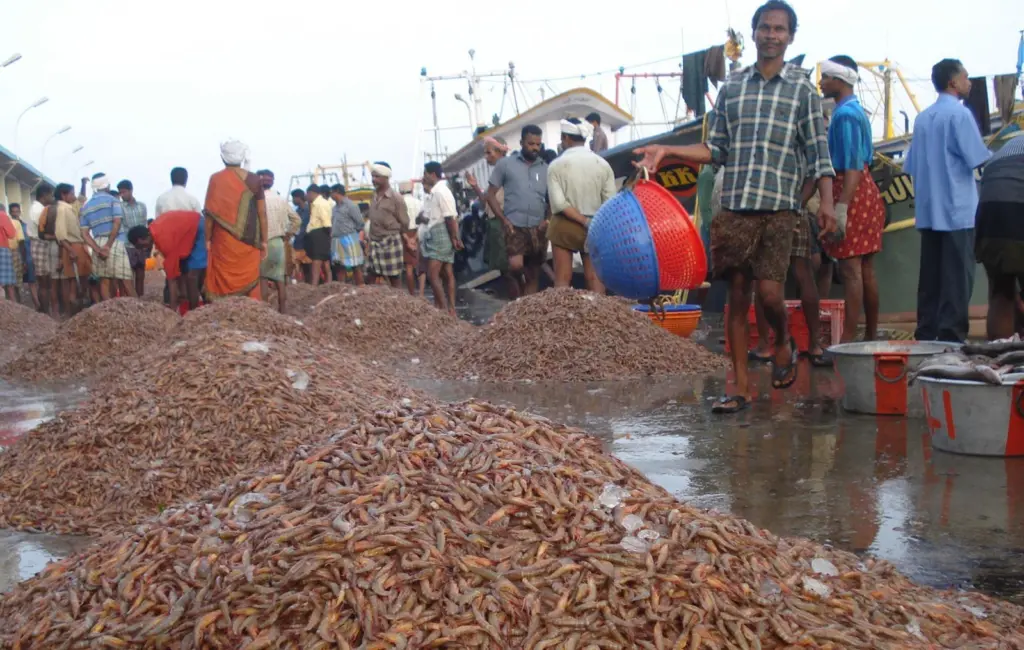
Instead, CMFRI maintains the research reaffirms the efficacy of the trawl ban by demonstrating its role in ensuring the long-term viability of the karikadi fishery along the Kerala coast, particularly by fostering species recruitment during the monsoon season.
Kiddi prawn (Parapenaeopsis stylifera) is a substantial fishery along India’s southwest coast due to its high demand in domestic and international markets.
Fluctuations in the karikadi catch following the implementation of mechanised fishing ban during the monsoon season had led fishermen to believe unharvested prawns would be lost forever as these resources moved away from the nearshore to deeper waters. However, CMFRI’s study found that even as these species do migrate to deeper areas, they remain accessible to current fishing methods from areas at depths of 50 to 100 metres immediately after the trawl ban period.
“Monsoon rainfall drives karikadi prawns to deeper waters due to their preference for high salinity and low temperatures,” the study states.
Moreover, the karikadi population in near-shore waters during the monsoon season is exclusively made up of juveniles, according to the study.
Restricting fishing during this period facilitates continued recruitment of prawns, enabling the resources to grow in size and numbers. As a result, the southwest monsoon trawl ban is advantageous to this species, it observed.
According to the research, trawling activity can be focused towards 50–100 metre depths between August and September (immediately following the ban period) to collect the resource that migrates to deeper waters during the monsoon. It further found a proportion of unharvested large-sized karikadi prawns are resettling along the Indian coast once the salinity is at their preferable range in the coastal waters.
“This study was carried out to address the socio-economic issues raised by the trawl fishermen of Kerala during a stakeholder meeting held at CMFRI,” said Dr A P Dineshbabu, Head of the Shellfish Fisheries Division of CMFRI and the lead author of the study.
The study provided scientific evidence for how the species is distributed uniquely, using GIS-based spatial distribution tracking to explore how the movement and maturity of kiddi prawns correlate with environmental factors, he explained.
Related Articles
 FISHERIES
 FISHERIES
 FISHERIES