





Cefas appoints new chief scientist
The United Kingdom’s Centre for Environment, Fisheries and Aquaculture Science (Cefas) has appointed Professor Grant Stentiford as its new Chief Scientist. Stentiford will lead Cefas’ scientific research and provide expert advice to government, industry and academia – helping tackle global problems of climate change, biodiversity loss and food security.
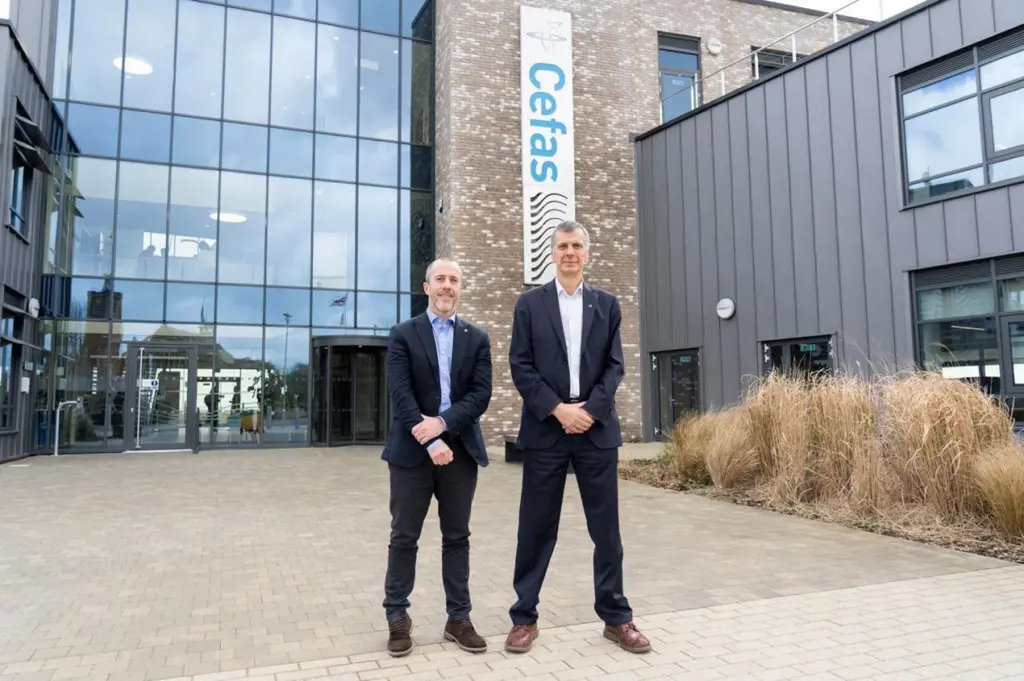
Stentiford has over 20 years’ experience in marine science research and management. He has led the International Centre of Excellence in animal health, published over 170 scientific papers, and advised various national and international organisations on the identification and impact of aquatic animal diseases in farmed and wild environments. His expertise in aquatic animal health and sustainable food systems is placed in context with the One Health approach and will be instrumental in driving Cefas’ research programmes and enhancing the organisation’s impact in marine science.
“I am honoured to be taking on the role of Cefas Chief Scientist. As the government’s marine and freshwater science experts, I look forward to working with an excellent team of scientists, advisors and other specialists to develop and deliver innovative research programmes which look to address the complex challenges facing our ocean and implicate the sustainable management of our aquatic resources,” Stentiford said.
“A new era of Cefas science will build upon our core expertise in support of government by enhancing the use of emerging approaches such as genomics, artificial intelligence, data science and systems thinking to offer integrated evidence.”
Stentiford takes over from Professor Stuart Rogers, who has spent his whole career at Cefas, serving as Chief Scientist for the last 10 years. Rogers led Cefas through a period of growth and transformation, positioning the organisation as a world leader in marine science and technology.
“During my 38 years at Cefas, I’ve seen great change inside the organisation and across the wider marine science landscape. Our science has made an increasing contribution to the sustainable development of our coasts and seas, improved fisheries management and greater protection of threatened species and habitats. It’s been a privilege to work at Cefas and especially as Chief Scientist, and I am delighted to be handing the baton to Prof. Stentiford. His experience, expertise, and leadership skills will be vital in advancing the organisation’s mission to provide high-quality science and expert advice to support the sustainable use of our marine resources,” Rogers said.
Stentiford said 2025 will see the publication of a new Science Strategy for Cefas.
“As this strategy is deployed, we expect to take an increasingly integrated approach to our science and evidence provision – working across thematic areas on what we do best and developing new partnerships in the UK and overseas to ensure a sustainable future exists for our shared underwater environment,” he said.
Related Articles
 FISHERIES
 FISHERIES
 FISHERIES