




Campaign launched to end destructive fishing in EU protected waters
A campaign calling on the EU to take tougher action against member state countries that still allow bottom trawling in their marine protected areas (MPAs) has been launched by a group of civil society organisations after a new report found that the destructive fishing practice is still taking place in 90% of offshore EU MPAs.
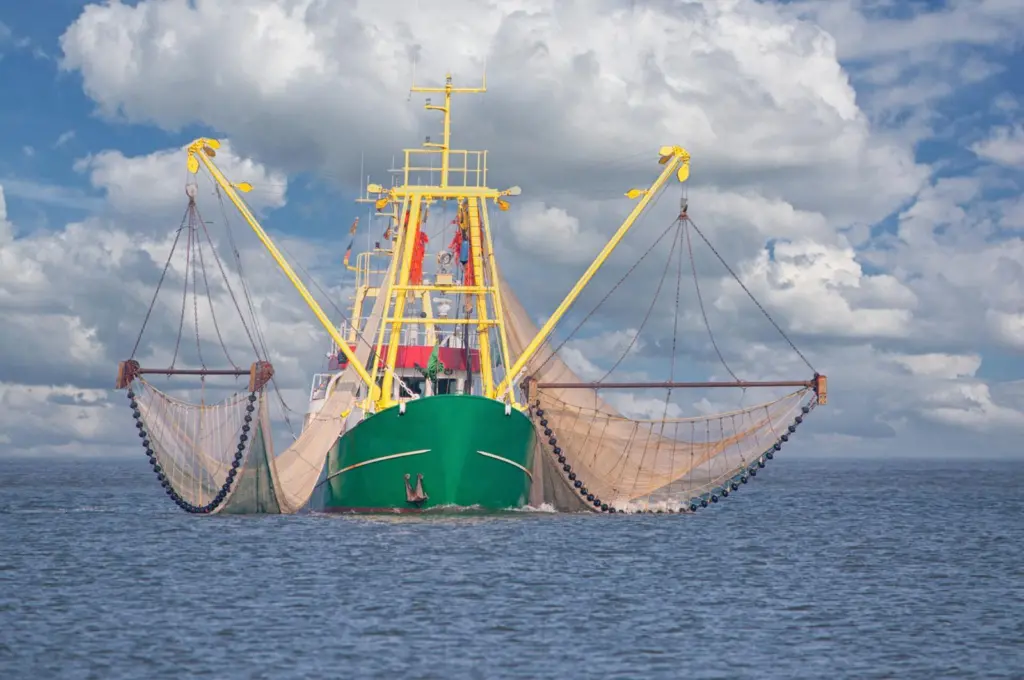
The report, co-authored by Marine Conservation Society, Seas At Risk and Oceana, shows that in the seven countries analysed, 4.4 million hours of apparent bottom trawling was allowed in MPAs between 2015-2023 – equivalent to more than 500 years’ worth of trawling.
Using data compiled by Global Fishing Watch, the breadth and hours of fishing activity were calculated in Denmark, Germany, Ireland, the Netherlands, Portugal, Spain, and Sweden. The Netherlands was found to have the highest number of bottom towed fishing hours recorded within the MPA sites studied, followed by Germany, Denmark, and Spain.
The report coincides with the release of scientific advice by the International Council for the Exploration of the Sea (ICES), which suggests that closing 30% of EU North Sea, Celtic Sea and Baltic Sea waters to bottom fishing would result in reductions of landing values of less than 0.1-6.6% per year, with considerable benefits for the marine ecosystems that underpin commercially exploited fish species.
Seas At Risk and Oceana have joined forces with Only One, a campaigning organisation for the ocean sector, to launch an EU-wide initiative and publish an interactive map illustrating what’s happening in EU MPAs, and to urge the European Commission to ban destructive fishing such as bottom trawling in all of these areas.
Currently, the EU Marine Action Plan asks countries to set out national roadmaps to ban bottom trawling in MPAs, starting with those with ecologically important seabed features by the end of 2024, and across all MPAs by 2030.
The organisations highlighted that first deadline to submit national roadmaps passed on 31 March, but so far only a few EU countries have complied, adding that it’s hard to know if any of the submitted roadmaps have been made public as requested by the European Commission.
“Our campaign is putting a stop to ‘out of sight, out of mind’ when it comes to what EU governments are allowing in so-called protected waters,” Seas At Risk Senior Marine Policy Officer Tatiana Nuño said. “While EU politicians waste precious time with pre-election populist posturing, the biodiversity and climate crises rage on unabated. The elections must mark a fresh start for EU leaders to actually protect Europe’s seas, which would benefit not just marine biodiversity but also the sustainability of fishers and the communities that depend on this sector.”
Nuño added: “It’s time to stop bulldozing the seabed, and to ban bottom trawling in EU MPAs once and for all.”
Oceana Europe Campaign Director for Marine Protection Nicolas Fournier said the analysis reveals a “decade-long silent tragedy hitting EU seas and fishers” and that most countries are ignoring EU nature laws, with impunity, by allowing the most destructive fishing practices in the most sensitive and protected waters.
“The EU Marine Action Plan offered a path to put an end to this situation, but by defending industrial fishing interests, countries are upholding the status quo. If it is to meet its marine biodiversity targets by 2030, the next European Commission has no other option but to enforce a ban on bottom trawling in EU MPAs,” he said.
One One’s Head of Campaigns Maissa Rababy said: “It’s long past time for coastal fishers and their allies across the continent to have their voices truly heard in Brussels and with national governments. Stay tuned as these supporters raise their voices to those in power – again and again, at key moments – until bottom trawling is banned in EU MPAs.”
Related Articles
 FISHERIES
 FISHERIES
 FISHERIES